
A plastic part can be fully molded, dimensionally acceptable, and still fail at the sample stage because the surface does not look right. That happens more often than many teams expect. In injection molding, surface finish is not a detail added after the mold is built. It changes how the part reflects light, how visible scratches become, how strongly parting lines and ejector marks show up, and how easily the part releases from the mold.
That is why injection molding surface finishes should be decided early, not after the first samples arrive. A glossy housing and a matte textured housing may use the same material and nearly the same geometry, but they behave very differently in cosmetic review, mold polishing, draft requirements, and production stability. SPI and VDI are both common injection molding surface finish standards, but they are not simply two names for the same thing. In practical terms, SPI is more closely tied to smooth and polished mold finishes, while VDI 3400 is more closely tied to textured and matte surfaces.
The real decision is not which finish sounds more premium. The real decision is which finish fits the appearance goal, the mold design, the draft angle, and the production risk of the part.
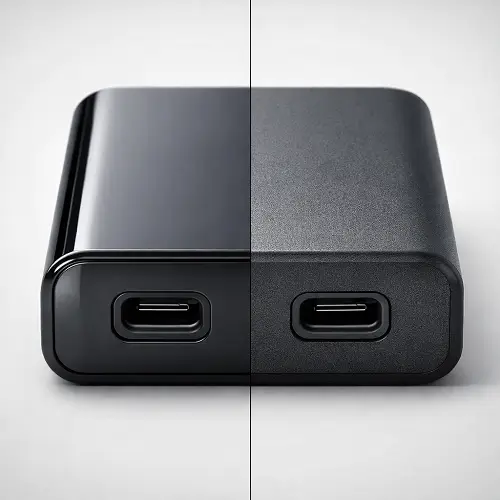
Why Surface Finish Matters in Injection Molded Parts
Surface finish affects much more than appearance. A smoother finish can make a molded part look cleaner and more refined, but it can also make light scratches, sink shadow, flow marks, parting lines, and ejector marks easier to see. A textured finish can reduce glare and soften the visual impact of minor surface disturbances, but it usually needs more draft and more careful mold preparation to release consistently.
This is why mold surface finish should be treated as part of DFM, not as a cosmetic add-on. If the finish is chosen too late, the project often discovers that the selected appearance standard does not match the draft, the visible surfaces, or the mold condition that was already built.
SPI vs VDI: When Should You Choose Each One?
Before getting into standards and grades, it helps to answer the practical question first: which direction usually makes more sense for the part? The table below is a real-world selection guide, not a copy of a standards handbook.
| Project Goal | Usually the Better Direction | Why |
|---|---|---|
| High-gloss or polished cosmetic housing | SPI A / B | Smoother reflection and cleaner polished look |
| Matte or technical-looking enclosure | VDI | Lower glare and more textured visual effect |
| Transparent or display-facing part | SPI A | Better suited to polished appearance |
| Part that will be handled often and may get light scratches | VDI | Texture often hides minor handling marks better |
| Part where parting lines and ejector marks are visually sensitive | Often VDI | Texture can reduce how aggressively these marks show |
| Tight draft geometry with limited release angle | Usually easier with smoother finish | Texture generally needs more draft |
| Strong “premium shine” is part of the design language | SPI | More polished visual target |
| Practical, low-reflection, less delicate appearance is preferred | VDI | More forgiving cosmetic direction |
That table is the short answer. The rest of the article explains why those choices work the way they do.
What Is SPI Surface Finish in Injection Molding?
SPI surface finish is one of the most commonly used mold finish standards for polished plastic parts. In practice, SPI finishes are usually associated with smoother, lower-roughness surfaces and are grouped into A, B, C, and D categories, from high polish toward rougher utility finishes. SPI grade A and B are generally the smoothest groups. SPI grade C moves into lower-gloss tool finish territory. SPI D uses dry-blast style textures and is much rougher.
For molded parts, SPI is often the right language when the project cares about polished appearance, controlled reflection, or a cleaner visual face. It is especially common on visible housings, high-gloss shells, and parts where the surface is meant to look smooth rather than textured.
Common SPI grades and what they mean
The SPI system includes 12 grades. The table below simplifies them into the ranges that matter most during part selection. The roughness values shown here are practical reference ranges summarized from SPI guidance and common injection molding finish references.
| SPI Grade Group | Typical Look | Approx. Roughness Ra (µm) | Typical Use |
|---|---|---|---|
| A-1 | Mirror / highest gloss | 0.012–0.025 | Optical, display-facing, very high-polish cosmetic parts |
| A-2 | High gloss | 0.025–0.05 | Premium visible housings |
| A-3 | Medium-high gloss | 0.05–0.10 | Smooth cosmetic plastic parts |
| B-1 / B-2 / B-3 | Semi-gloss | 0.05–0.32 | Clean but less mirror-like exterior surfaces |
| C-1 / C-2 / C-3 | Matte to low gloss | 0.35–0.70 | Lower-reflection smooth parts |
| D-1 / D-2 / D-3 | Dry-blast texture / rougher matte | 0.80–18.0 | Utility parts, grip surfaces, coarse finish needs |
The important point is not memorizing every grade. The important point is understanding what happens as the finish becomes smoother: appearance becomes more refined, but the part also becomes less forgiving visually.
What Is VDI Surface Finish in Injection Molding?
VDI 3400 is one of the most common texture standards used for injection molds. While SPI is more often associated with polished finishes, VDI is more often associated with texture and matte appearance. It is widely used when the goal is lower glare, more technical-looking surfaces, or a finish that feels less visually delicate in use.
On real plastic parts, VDI texture changes how light behaves on the surface. Instead of strong direct reflection, the texture diffuses reflected light. That can make a housing feel more controlled, more matte, and often more forgiving of light scratches or minor cosmetic interruptions.
Common VDI 3400 grades and what they mean
VDI numbers generally move from finer texture toward rougher texture as the number increases. The values below are practical reference points based on common VDI 3400 roughness charts and industry finish guides.
| VDI Grade | Typical Feel | Approx. Roughness Ra (µm) | Typical Use |
|---|---|---|---|
| VDI 12 | Very light texture | 0.40 | Light matte surface |
| VDI 15 | Light texture | 0.56 | Slightly diffused surface appearance |
| VDI 18 | Satin / light matte | 0.80 | Common light-texture housings |
| VDI 21 | Clear matte | 1.12 | Reduced glare, more technical look |
| VDI 24 | Moderate matte texture | 1.60 | General-purpose matte housings |
| VDI 27 / 30 | Heavier texture | 2.2–3.2 | Stronger texture or lower-reflection parts |
| VDI 33+ | Heavy texture | 4.5 and above | Aggressive texture or tactile surfaces |
From a roughness point of view, Xometry notes that VDI 12 is roughly comparable to SPI C-grade territory, which helps explain why SPI and VDI are not direct one-to-one substitutes. They overlap in some roughness ranges, but they are still used for different visual goals.
SPI vs VDI: What Is the Real Difference on Plastic Parts?
The real difference is not just “smooth versus rough.” It is what the part looks like in real light, how the surface behaves under handling, and how much cosmetic tolerance the design has.
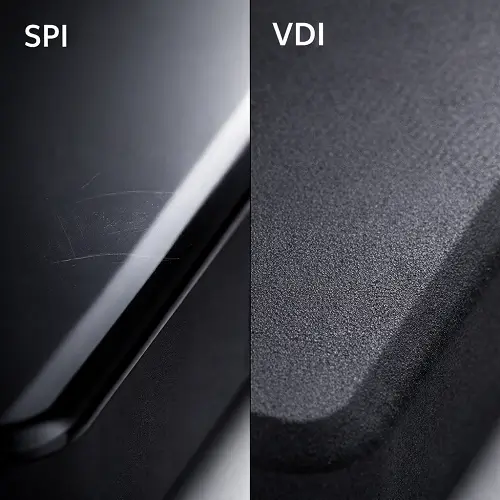
SPI surfaces usually produce cleaner and sharper reflections. That is useful when the goal is polished appearance, but it also means the eye notices interruptions more quickly. A faint parting line, light scratch, small ejector witness, or slight sink shadow can become much easier to see on a polished SPI mold finish.
VDI surfaces usually scatter reflected light more softly. That can reduce glare and often make handling marks less visually aggressive. A textured matte housing may look less “premium glossy,” but it may also be easier to approve in real production because the surface is not amplifying every small mark on the part. That is one reason many visible plastic housings end up choosing a VDI finish even when the first design render made a glossy SPI finish look more attractive.
When Is SPI Better for Injection Molded Parts?
SPI is usually the better choice when the part needs a smoother and more polished visual effect. Exterior housings, display-facing parts, transparent or near-transparent parts, and products where reflected light is part of the intended appearance usually fit SPI better.
It is also a stronger choice when the mold, geometry, and quality target can support it. A good polished SPI finish works best when the parting line is controlled well, ejector witness is kept away from the main visible face, sink risk is low, and sample handling is controlled. If the part is expected to look sharp under direct lighting, SPI is often the right direction.
SPI is usually the wrong choice when the design team wants a glossy look but the part itself is likely to show lots of light scratches, witness marks, or visual interruptions. In those cases, the finish may be technically beautiful and commercially frustrating at the same time.
When Is VDI a Better Choice Than SPI?
VDI is often the better choice when the part should look matte, lower-glare, or more technical rather than polished. It is especially useful on hand-held housings, industrial enclosures, consumer devices that should not reflect light strongly, and parts where minor handling marks are likely during use.
It is also often the better choice when the project wants to reduce how obvious cosmetic interruptions become. A textured surface will not erase a bad parting line or a poorly placed ejector pin, but it often makes those features less aggressive visually than a glossy surface would.
VDI is usually the wrong choice when the product explicitly needs a high-polish or near-mirror look, or when the geometry does not have enough draft to release a textured surface cleanly.
How Surface Finish Affects Appearance, Scratches, and Visible Defects
This is where finish selection stops being abstract. On polished SPI surfaces, the part often looks cleaner when everything goes right, but small problems become easier to see. Scratches, rub marks, ejector halos, gate witness, and sink shadow usually show more strongly because the surface reflects light more directly.
On VDI textures, the reflection is softer and more broken up. That usually makes minor cosmetic marks less obvious under normal viewing. This is one reason textured finishes are often used on housings that will be handled frequently. The product can look more stable in day-to-day use even if the underlying part quality is the same.
That does not mean VDI always hides defects perfectly. A badly controlled texture, inconsistent tooling condition, or poor draft can still produce ugly results. The real point is that SPI and VDI expose different types of problems differently. If the part is likely to live or die by cosmetic sensitivity, this decision matters a lot.
Does Surface Finish Affect Draft Angle and Mold Release?
Yes, and this is one of the most important engineering differences between SPI and VDI.
A smoother finish is generally easier to release than a textured finish. Once texture is added, especially deeper VDI-style texture or bead-blast-style matte surface, the part has more microscopic engagement with the mold steel. That means more draft is often needed to avoid drag marks, surface damage, or inconsistent release.
Protolabs recommends a minimum of 3° draft for a light bead-blast finish and 5° for a medium bead-blast finish. Fictiv also notes that recommended draft often rises with texture depth, and gives practical examples such as about 1° for VDI-18, 1.5° for VDI-24, and about 3° for VDI-33. They also note that higher polish SPI A finishes are often used around the 2° range in typical draft tables, while smoother non-textured finishes can sometimes work with less aggressive release geometry than deeper textures.
So if the part has tight draft already, this is a very practical rule: do not choose texture first and hope the mold releases later. Check whether the geometry can actually support the finish.
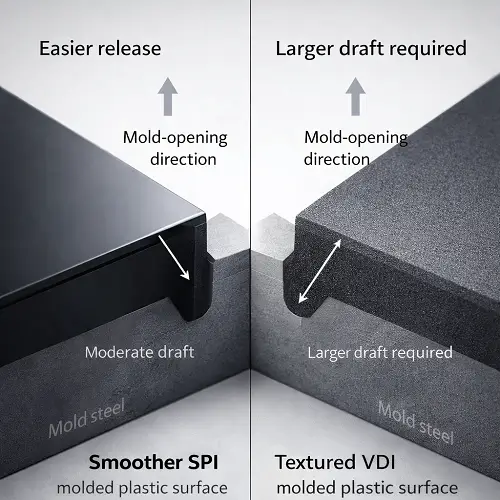
Practical draft takeaway
| Finish Type | Practical Draft Guidance |
|---|---|
| SPI A high polish | Usually easier to release than texture; many projects still keep healthy draft for cosmetic safety |
| SPI B / SPI C | Moderate draft still recommended, but usually less demanding than heavier textures |
| Light texture / VDI 12–18 | Often needs more draft than polished finishes |
| Medium texture / VDI 21–24 | Draft should be checked carefully before finish is finalized |
| Heavier texture / VDI 30+ | Often needs much more draft and better release planning |
How SPI and VDI Affect Mold Cost and Lead Time
Finish selection affects tooling cost more than many teams expect. A high-polish SPI mold finish, especially in the A grades, requires more polishing work and more control on visible steel surfaces. The cleaner the surface target, the more sensitive the mold often becomes to small imperfections during polishing and trial review. Xometry and Fictiv both note that smoother SPI A/B finishes are generally more expensive.
VDI is not automatically cheap. It may reduce the need for mirror polishing, but texture processing itself still takes time and has to be controlled. If the texture needs to look consistent across large visible surfaces, multiple inserts, or multiple cavities, that can still affect lead time and approval speed. A wrong texture choice can also delay sample approval if the molded part does not look the way the team expected.
In practical terms, the most expensive finish is often the wrong one. If the first finish choice creates cosmetic sensitivity, release issues, or review delays, the project loses time even if the nominal finish process itself was not the most expensive option.
A Realistic DFM Scenario: Choosing SPI or VDI for a Visible Housing
A visible plastic housing is where this choice usually becomes easiest to understand. Early in the project, a polished SPI surface often looks attractive because the CAD render appears clean and premium. The design seems sharp, the edges look crisp, and the part feels like it should have a refined glossy mold finish.
Then the first molded samples arrive. Under real lighting, the polished surface begins showing things the rendering did not care about. A faint parting line reads more strongly than expected. Light sample-handling marks become visible. A small ejector witness that seemed harmless in theory becomes easier to notice because the surface reflects light so cleanly. The part is still technically acceptable, but it becomes much more cosmetically sensitive than the project wanted.
At that point, switching to a VDI finish often becomes a real option. The part may lose some of the polished look, but it becomes more forgiving visually. Reflections soften. Minor scratches become less aggressive. Cosmetic acceptance becomes easier to maintain across samples and, later, across production. This is one of the most common reasons SPI vs VDI should be treated as a DFM choice, not as a late styling preference.
What Should Be Confirmed Before Finalizing Mold Surface Finish?
Before the finish is locked, the project should answer a few direct questions.
Does the part really need a glossy, polished appearance, or does it only need to look clean? Will the product be handled often enough that small scratches matter? Are parting lines and ejector marks likely to land on visible faces? Is the draft sufficient for the finish being considered? Are the visible surfaces large enough that reflection or texture consistency will become a sample-approval issue?
These are the questions that make finish selection practical. SPI and VDI are both valid surface finish standards. The mistake is not choosing one or the other. The mistake is choosing without connecting the finish to the part’s actual cosmetic risk, release geometry, and production target.
Conclusion
SPI and VDI are both common injection molding surface finishes, but they solve different problems on real plastic parts. SPI is more closely tied to smooth and polished appearance. VDI is more closely tied to matte or textured appearance. Neither one is automatically better.
The right choice depends on what the part needs to look like, how much cosmetic sensitivity the design can tolerate, how much draft the geometry has, and how much tooling effort the finish will require. A polished SPI finish may be the right answer for a high-gloss display-facing housing. A VDI 3400 texture may be the better answer for a matte enclosure that needs lower glare, better scratch forgiveness, and a more stable real-world appearance.
If the surface standard is still undecided, send your drawings to JeekMould for a DFM review and quote before tooling release. Mold surface finish is much easier to choose early than to correct after samples show the wrong visual result.
FAQs
What is SPI surface finish in injection molding?
SPI surface finish is a polish-based mold finish classification system commonly used to describe smoother and more polished injection molding surfaces.
What is VDI surface finish in injection molding?
VDI surface finish usually refers to textured mold surfaces, often used for matte or technical-looking plastic parts.
Is SPI smoother than VDI?
In most practical cases, yes. SPI A and B grades are usually smoother than VDI textures, while VDI is more closely associated with matte and textured surfaces.
Does VDI require more draft angle?
Usually yes. Textured surfaces typically need more draft than polished surfaces to release cleanly and protect the texture during ejection.
Which finish is better for cosmetic plastic housings?
It depends on the design goal. SPI is often better for polished or glossy housings. VDI is often better when lower glare, texture, and better scratch forgiveness matter more.