
Medical Plastic Parts and Injection Mold Manufacturing
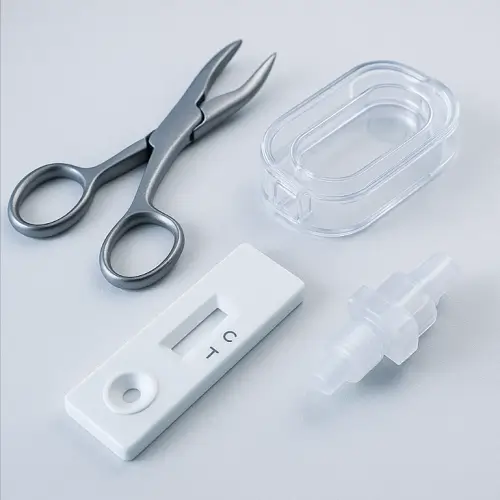
JeekMould supports medical plastic part projects from DFM review and mold making to injection molding, CNC support, surface finishing, and inspection. We work with diagnostic housings, laboratory device parts, handheld medical components, connectors, covers, brackets, and precision plastic parts.
An NDA can be signed if needed before the quotation.
Medical Precision Manufacturing Capabilities
Injection Molding
JeekMould supports injection molding for medical plastic parts such as diagnostic housings, laboratory device components, covers, cartridges, connectors, and handheld device parts.
✅ Materials: PP, PC, ABS, PMMA, PEEK, COC, and engineering plastics
✅ Support: DFM review, mold trial, sample validation, and production molding
✅ Inspection: Visual checks, dimensional inspection, and documentation review when required
CNC Machining
CNC machining supports medical prototypes, mold components, fixtures, and small precision parts used in diagnostic or laboratory equipment.
✅ Materials: Aluminum, stainless steel, brass, copper alloys, PEEK, POM, and other engineering plastics
✅ Applications: Prototypes, mold inserts, electrodes, jigs, fixtures, and low-volume parts
✅ Inspection: Dimensional checks, surface finish review, and inspection reports when required
Medical Surface Finishing
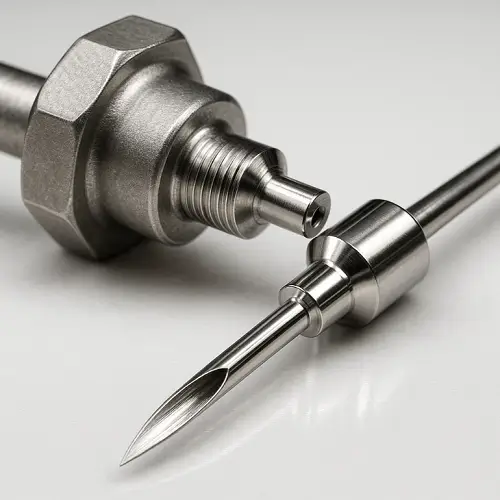
Surface finishing is selected based on material, part function, cleaning method, appearance, and assembly requirements. JeekMould can support polishing, texture, bead blasting, passivation, anodizing, laser marking, and coating review when required.
✅ Plastic Part Finishing: Texture, polishing, matte finish, painting, and laser marking for housings, covers, and handheld medical components.
✅ Metal Part Finishing: Passivation, anodizing, bead blasting, and polishing for fixtures, prototypes, and precision components.
✅ Application Review: Surface finish can be reviewed based on cleaning, assembly, appearance, wear resistance, and handling requirements.
✅ Inspection Support: Visual checks, dimensional inspection, and surface finish review can be provided before shipment.
Medical Surface Finishing Options
Overview of common surface treatments for medical device components, their functional effects, and typical applications.
| Surface Finish | Effect on Medical Components | Typical Medical Applications |
|---|---|---|
| Bead Blasting / Fine Matte | Creates a uniform low-glare surface, hides minor machining marks, improves handling and visual comfort. | Handheld diagnostic housings, device covers, control panels, grips. |
| Silk Screen & Pad Printing | Durable legends, scales and icons that withstand cleaning agents. | Pump interfaces, monitor panels, buttons, dosage and UDI markings. |
| Electropolishing | Reduces surface roughness, removes burrs, enhances corrosion resistance and cleanability for stainless steel. | Guidewires, cannulae, surgical tools, minimally invasive instrument shafts. |
| Passivation & Functional Plating | Improves corrosion resistance or conductivity without changing dimensions. | Stainless steel fittings, connectors, shielding components, sensor housings. |
| Anodizing / Hard Anodizing | Increases hardness and wear resistance of aluminum, enables color coding for sizes and instruments. | Medical carts, frames, fixture plates, equipment housings and brackets. |
| Laser Marking (UDI) | Permanent, high-contrast identification and UDI codes, sterilization-stable. | Reusable instruments, trays, implants carriers, torque tools. |
| Soft-Touch & Silicone Coating | Adds non-slip, comfortable grip and impact protection for sensitive areas. | Handheld devices, control knobs, handle zones on diagnostic equipment. |
| Powder Coating / Durable Paint | Chemical-resistant, easy-to-clean surfaces with stable color coding. | Equipment frames, enclosures, supports, trolleys and cabinet structures. |
Actual finishing solutions are selected based on device class, substrate material, sterilization method, and regulatory requirements (ISO 13485, ISO 9001, ISO 10993).
Medical Materials Selection for Device Components
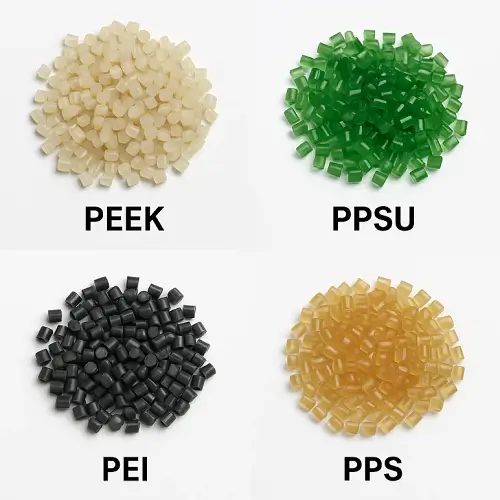
Jeek manufactures medical components using certified plastics, metals, and high-performance polymers. Each material is selected for biocompatibility, mechanical strength, sterilization resistance, and long-term reliability in clinical use.
| Material Category | Typical Grades | Key Features & Applications |
|---|---|---|
| Medical Plastics | ABS, PC, PMMA, PP, POM, COC, PSU, PEEK | Lightweight, chemical-resistant materials for diagnostic housings, handheld devices, test cartridges, and disposable components. |
| Stainless Steels | 303, 304, 316L, 17-4PH | High corrosion resistance and strength; used for surgical instruments, structural parts, fluid connectors, and fasteners. |
| Aluminum Alloys | 6061, 6082, 7075 | Strong and lightweight; ideal for imaging system frames, brackets, and medical cart structures. |
| Titanium Alloys | Ti-6Al-4V and others | Biocompatible and fatigue-resistant; suitable for implant prototypes, precision fixtures, and load-bearing components. |
| Copper Alloys | Brass, Cu-Be | High conductivity for connectors, contacts, shielding parts, and electronic interfaces. |
| Silicone & Elastomers | Medical-grade Silicone, TPE | Flexible, skin-contact safe materials for seals, valve seats, soft-touch grips, wearable and patient-contact components. |
All materials are sourced from qualified suppliers and can be specified to meet ISO 10993 biocompatibility and ISO 13485 / ISO 9001 quality system requirements.
1. What materials are commonly used in medical component manufacturing?
JeekMould works with a wide range of medical-grade materials including stainless steel 316L, aluminum 6061, titanium alloys, and high-performance polymers such as PEEK, PC, and ABS. Each material is selected based on biocompatibility, sterilization resistance, and ISO 10993 compliance.
2. How does Jeek ensure compliance with medical quality standards?
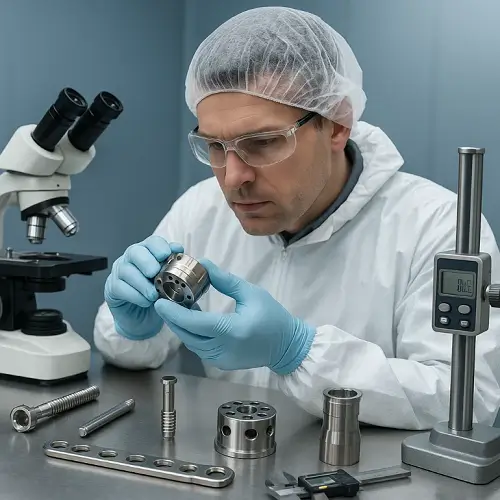
All medical manufacturing follows ISO 13485 and ISO 9001 certified processes. From raw material inspection to dimensional verification and surface finishing, every component is produced under documented traceability and process control.
3. Can Jeek produce small-batch or prototype medical parts?
Yes. JeekMould supports low-volume CNC machining, injection molding, and rapid tooling for functional prototypes or validation builds. Engineers optimize designs for manufacturability (DFM) to reduce lead time and ensure consistency before mass production.
4. What surface finishes are suitable for medical components?
JeekMould provides electropolishing, anodizing, passivation, and medical-grade coating options to enhance smoothness, corrosion resistance, and sterilization compatibility. Finishes meet hygiene requirements for surgical instruments, diagnostic housings, and patient-contact parts.