
A living hinge looks simple in CAD because the geometry is simple. In production, it is rarely that simple. That thin section has to fill cleanly, survive the first flex, avoid early whitening, and keep working after repeated opening and closing. A hinge that looks fine on the screen can still behave badly in the mold if the section is wrong, the lid is too stiff, or the gate puts weak flow right where the hinge needs the best orientation.
That is why living hinge design for injection molding is not just a matter of drawing a thin strip between two plastic walls. The hinge has to be treated as a fatigue feature. Material choice matters. Thickness matters. Transition shape matters. Flow direction matters. Even the weight and stiffness of the lid matter. A hinge can be dimensionally “correct” and still fail early because the surrounding part is asking too much from it.
For customers searching living hinge design, living hinge injection molding, or living hinge plastic, the real questions are usually practical. Which hinge type fits the product? Why is polypropylene used so often? How thin is too thin? Why do some hinges turn white on the first few bends? Why does one cap hinge work for years while another cracks in trial? Those are the questions worth answering.
Quick Design Reference
| Design factor | Practical starting point |
|---|---|
| Material | Polypropylene is usually the first choice |
| Hinge thickness | Many PP hinges start around 0.010 to 0.020 in. |
| Transition shape | Smooth blend into side walls, not sharp corners |
| Flow direction | Keep the hinge in a controlled fill path |
| Gate strategy | Avoid hesitation or weak packing at the hinge |
| Adjacent walls | Keep nearby sections balanced and not overly heavy |
Those numbers are starting points, not guarantees. A small flip-top cap, a living hinge box, and a wider one-piece closure do not ask the same thing from the hinge.
What Is a Living Hinge?
A living hinge is a thin flexible section molded as part of the same plastic part, allowing one side to bend relative to the other without a separate hinge pin, metal insert, or assembled joint. The plastic itself becomes the hinge.
That is why living hinges are so attractive in injection molding. A good hinge removes assembly, reduces part count, and keeps the lid and body in one molded piece. It is common on packaging, dispensing caps, medical trays, sample boxes, and many small molded covers.
Some people call it a live hinge. The term changes, but the design problem does not. A hinge for plastic parts only works well when the material can survive repeated flexing and the molded geometry supports that motion instead of fighting it.
Common Types of Living Hinges
Living hinges are often discussed as if they are one single feature, but in real molded products they show up in a few common forms.
The most familiar is the single strap hinge. This is the classic thin hinge section between a lid and a body. It is used on many caps, boxes, and small covers because it is simple and efficient. If someone pictures a living hinge without seeing a part, this is usually the one they are imagining.
The next is the double hinge layout, where two thin hinge sections work together. This is useful when the opening motion needs more control or when one hinge line alone would twist too easily. It can help on lids that need to align better as they open and close.
Then there is the broader box or clamshell style hinge. A living hinge box is a good example. The hinge still works on the same principle, but the lid is usually wider and the opening motion puts more demand on the whole part. These are the cases where surrounding wall stiffness starts to matter almost as much as the hinge strip itself.
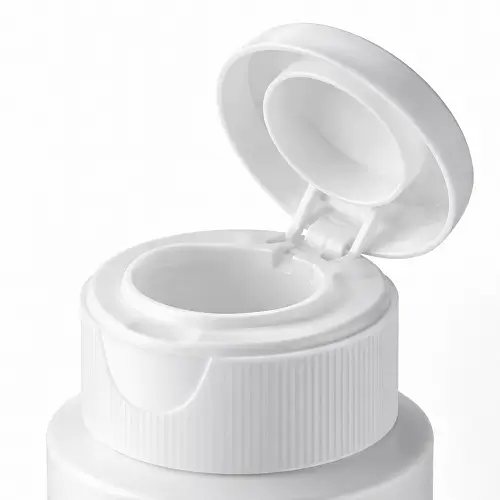
Flip-top cap hinges are another very common type. They look small, but they often see a lot of repeat use. That makes them less forgiving than they appear. A cap hinge may only be a narrow section, but if the latch force is high or the lid panel is too stiff, the hinge can whiten early even when the nominal hinge thickness looks reasonable.
There are also molded covers and access lids that use hinge-like flexible sections but are already moving toward structural parts. These deserve more caution. Once the part gets larger, heavier, or stiffer, living hinge behavior becomes harder to control.
Why Polypropylene Is Usually the First Choice
Polypropylene is still the safest starting point for most living hinge injection molding projects. The reason is simple. PP handles repeated flexing better than many common molded plastics, especially when the hinge is thin and the design is set up properly.
That does not mean every PP grade behaves identically. In real projects, grade choice still matters. A general-purpose polypropylene may produce an acceptable hinge, while a grade chosen mainly for stiffness or filler content may make the hinge less forgiving. As a broad rule, once the resin becomes stiffer, more brittle, or more heavily filled, hinge performance usually becomes harder to trust. A living hinge wants flexibility and fatigue resistance more than it wants structural rigidity.
This is where teams sometimes get misled. The main body of the part may benefit from a stiffer resin, and on paper that can look like a better material choice. But the hinge does not live on paper. The hinge lives in repeated local strain. A resin that performs well in a housing or bracket can still be the wrong choice for a molded hinge.
For most customers, that is the practical takeaway. If the product concept depends on the hinge surviving real use, the resin discussion should start around polypropylene and move away from it only for a clear reason.
Thickness and Stability: How Thin Is Too Thin?
Thickness gets the most attention in living hinge design, and it should. But the problem is not just finding a “thin” hinge. The problem is finding a hinge that is thin enough to flex and still stable enough to mold and survive use.
For many polypropylene hinges, a practical starting range is around 0.010 to 0.020 in. Small consumer caps often live toward the thinner end of that range. Larger hinges or parts with heavier lids may move upward. Once the hinge gets much below a practical processing range for the part, fill consistency becomes less forgiving. Once it gets too thick, the hinge may stop bending where it should and start forcing strain into the edges.
In real tools, that is where trouble shows up. A hinge that is too thin may not fail because the CAD section was “wrong” by definition. It fails because the fill becomes inconsistent, the section freezes too early, or minor process changes start moving the hinge behavior around too much. On the other side, a hinge that looks “safer” because it has more material often becomes stiff, resists the first fold, and starts whitening at the transition.
That is why thickness cannot be judged alone. A hinge that works on a small flip-top cap may be too thin for a wider lid, while a hinge that seems acceptable on a larger closure may feel overly stiff on a small package. Scale matters.
Radius and Transition Shape
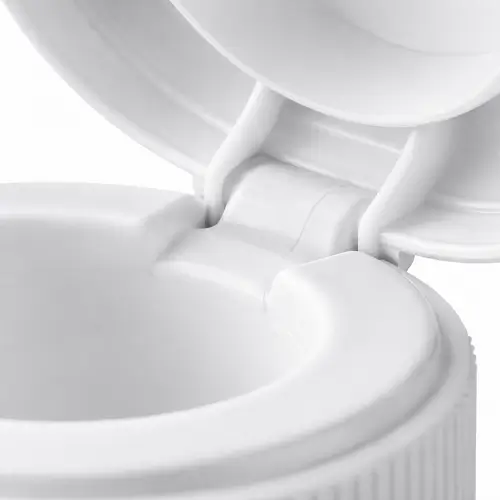
A lot of failed hinges do not actually fail in the center first. They fail right where the hinge meets the thicker body. That is why transition geometry deserves as much attention as hinge thickness.
A sharp corner at the end of the hinge behaves like a stress concentrator. A smoother transition spreads strain more gradually and gives the hinge a better chance of surviving repeated flexing. This is one of the most common reasons a hinge can pass first inspection and still fail early in use. The center section may be thin enough, but the strain is gathering too abruptly beside it.
This is also where some designs look fine in section view and still feel wrong when the part is handled. The hinge itself may be acceptable, but the adjoining wall is thick, the blend is too abrupt, and the lid is asking the hinge to bend around a hard edge instead of through a controlled flexible zone.
If a hinge turns white on the first few bends, one of the first places to look is not the center thickness alone. It is the transition.
Small Lids and Large Lids Do Not Behave the Same Way
This point gets missed all the time. A living hinge does not work in isolation. The lid or flap attached to it changes the load completely.
A small cap with a light lid can often tolerate a fairly compact hinge design because the opening load is modest. A larger cover or living hinge box behaves differently. Even if the hinge section itself looks reasonable, the bigger lid panel can make the hinge feel stiff because there is simply more plastic being rotated through the opening motion. That extra stiffness shows up as higher opening force, more visible whitening, and shorter fatigue margin.
In other words, the hinge may not be the only thing that is too stiff. Sometimes the hinge section is close to acceptable, but the lid side is too thick, too wide, or too resistant to bending. In trial, that often looks like a hinge problem. In reality, the opening load is coming from the whole lid.
This is one of those project details that does not show up clearly in a simple hinge thickness rule. A hinge on a narrow dispensing lid and a hinge on a broad rectangular cover should not be designed with the same expectations.
Flow Direction and Gate Location
Flow direction is one of the most important parts of living hinge injection molding, and one of the most overlooked.
A hinge can look perfect on a drawing and still behave badly if the mold fills it poorly. In successful PP hinge designs, the gate and flow path are usually arranged so the hinge sits in a controlled fill pattern. That helps create the molecular orientation that makes the hinge more durable in repeated flexing.
When the gate leaves the hinge in a hesitation zone, things go wrong fast. Some hinges will still mold and still open, but the first manual flex tells the real story. This is where you see parts that technically “work” at T1, but the hinge starts whitening after a few bends in the customer’s hand. The section is there, the geometry is there, but the flow never gave the hinge much margin.
That is also why some hinge problems are not really hinge problems. They are gate problems that show up in the hinge. A team may keep adjusting section thickness, but if the flow is dying right before the hinge or packing it unevenly, the hinge will keep behaving inconsistently.
A hinge design guide that ignores gate location is not much of a guide.
What Usually Causes Living Hinges to Fail
Most failed living hinges follow a familiar pattern.
One common cause is excessive thickness. The hinge looks stronger, but instead of flexing cleanly it pushes strain into the transition. Another is a sharp blend into the adjoining wall. The hinge section may be close, but the edge of the hinge becomes the real failure point.
Wrong material is another major cause. A design that might survive in polypropylene can fail quickly in a more notch-sensitive resin. This is especially common when the material was chosen for the body of the part and the hinge was expected to adapt.
Poor flow direction is another one. Some of the most frustrating hinge problems come from parts that look fine dimensionally but flex badly because the gate placement never supported the hinge. On real projects, this is where you get hinges that open in trial, but show whitening immediately when someone folds them several times by hand.
There is also a common production-side misunderstanding. If a hinge survives the first mold trials, people assume the design is sound. That is not always true. Some hinges make it through early samples but show their weakness only when repeated handling begins or when the process window shifts in production. Passing first shots is not the same as having good fatigue margin.
A Practical Hinge Design Guide for Real Parts
A good hinge design guide should help answer two questions. How should the hinge be designed, and should a living hinge be used at all?
A living hinge is usually a strong choice when the part can be molded in polypropylene, the opening motion is simple, the lid is not excessively heavy, and one-piece molding adds real value. This is why living hinges are so common in packaging and molded consumer products. The hinge can eliminate assembly and keep the part simple.
A living hinge is a weaker choice when the part must use a resin that does not flex well, when the lid panel is large and stiff, or when the flow path cannot support the hinge properly. At that point, a separate hinge or another closure method may be more reliable.
This is where customer decisions become more realistic. A living hinge is elegant when the design supports it. It is not automatically the best answer just because it removes hardware.
Typical Applications
The most familiar examples are small hinged caps, living hinge boxes, medical containers, sample boxes, and packaging closures. These parts benefit from one-piece molding and usually do not need a separate hinge component.
That said, the same application label can hide very different design demands. One flip-top cap may open with light force and survive very well. Another may use a stronger snap, a wider lid, or a stiffer wall layout and place much more demand on the hinge. Two parts can both be called “living hinge caps” and still require different section strategy and gate thinking.
This is why copying a hinge from another product is risky. The part may look similar, but the opening load, wall stiffness, and flow path may not be similar at all.
Designing for Production, Not Just CAD
There is always a gap between drawing a hinge and molding one.
In CAD, the hinge only has shape. In production, the hinge has shape, resin behavior, fill history, cooling history, and repeated use. That is why living hinge design for injection molding should be reviewed like a real molding feature, not just a neat section on a drawing.
A hinge that looks centered in CAD may not fill symmetrically in the tool. A hinge that looks generous in thickness may still be too stiff because the adjoining lid is heavy. A hinge that opens once in trial may still be marginal because the first few customer bends already show whitening.
Those are not unusual problems. They are the normal ways weak hinge designs reveal themselves.
Conclusion
A good living hinge comes from getting several things right at the same time. The material has to support repeated flexing. The hinge thickness has to be thin enough to bend but stable enough to mold. The transition has to spread strain instead of concentrating it. The flow path has to support the hinge instead of starving it.
For most projects, polypropylene remains the best starting point. From there, the hinge should be treated as a fatigue feature, not just a thin connector between two plastic bodies. Small lids and large lids should not be judged the same way. A hinge that looks acceptable in section can still fail because the lid is too stiff, the transition is too abrupt, or the gate leaves the hinge with weak orientation.
If a part includes a flip-top lid, a living hinge box, or any one-piece closure geometry, the smartest time to review it is before tooling release. Resin choice, hinge section, transition shape, and fill direction should all be checked together while changes are still easy.
JeekMould supports living hinge design review, mold design, and custom injection molding for plastic parts with integrated hinge features. When a project depends on hinge life, early DFM usually saves much more time than trying to correct whitening, cracking, or poor opening behavior after the tool is built. You can upload your CAD files to JeekMould to request a quote and get early feedback on hinge section, material choice, and mold flow before tooling is released.
FAQs
What is a living hinge?
A living hinge is a thin flexible section molded into the same plastic part, allowing one side to bend relative to the other without a separate hinge component.
What material is best for a plastic living hinge?
Polypropylene is usually the best starting point because it handles repeated flexing better than most common injection molding resins.
How thick should a living hinge be?
Many PP living hinges begin around 0.010 to 0.020 in., but the final target depends on part size, lid stiffness, resin grade, and expected use.
Why do living hinges turn white?
Whitening usually comes from local stress. Common causes include excessive thickness, sharp transitions, poor flow direction, or a resin that is not well suited for repeated flexing.
Is a live hinge different from a living hinge?
No. In most injection molding discussions, live hinge and living hinge refer to the same one-piece flexible hinge concept.
Where are living hinges commonly used?
They are common on hinged caps, packaging, living hinge boxes, medical containers, and many molded lids or covers that benefit from one-piece construction.