
High-Density Polyethylene (HDPE) is widely used in injection molding, but it is often treated as a generic plastic rather than a material with specific strengths and limitations. In real production, the key question is not whether HDPE can be injection molded, but whether it is suitable for a given part geometry, tolerance requirement, and service environment.
HDPE does not compete with engineering plastics in appearance or high-temperature capability. Its value comes from stable molding behavior, strong chemical resistance, and predictable cost performance. When these characteristics are understood early in the design phase, many downstream problems related to warpage, dimensional drift, and process instability can be avoided.
What Is High-Density Polyethylene (HDPE)?
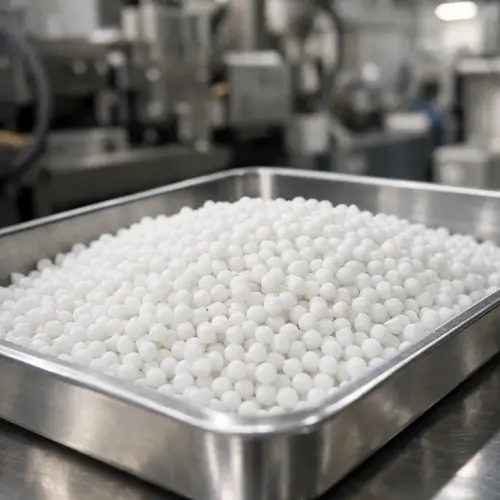
High-Density Polyethylene is a highly crystalline thermoplastic belonging to the polyethylene family. Compared with LDPE and LLDPE, HDPE has a more compact molecular structure, which results in higher stiffness, improved chemical resistance, and more pronounced shrinkage during cooling.
In injection molding applications, HDPE is primarily selected for functional parts rather than cosmetic components. Engineers rely on HDPE for its repeatability and durability in production, not for surface finish or decorative appearance.
Key Properties of HDPE Relevant to Injection Molding
Density and Crystallinity
HDPE typically has a density between 0.94 and 0.97 g/cm³. Its high crystallinity leads to noticeable shrinkage during cooling, but once the process is stabilized, the internal structure of the molded part remains uniform.
Uneven cooling can cause warpage after ejection, especially in parts with thick sections or asymmetric geometry. This behavior is predictable and can be managed through proper part design and mold cooling layout.
Melting Temperature and Thermal Behavior
The melting temperature of HDPE generally falls within the range of 130 to 135 °C. In the molten state, HDPE flows consistently and tolerates variations in injection speed and packing pressure, which contributes to a relatively wide processing window.
HDPE is not intended for long-term exposure to elevated temperatures. Under continuous heat or repeated thermal cycling, dimensional stability and mechanical performance may degrade.
Mechanical Properties
HDPE offers moderate tensile strength and elastic modulus. It is not designed for high-load structural applications, but it performs reliably under impact and repeated handling.
From an engineering standpoint, HDPE prioritizes resistance to failure and long-term durability rather than maximum stiffness or strength.
Chemical Resistance
One of HDPE’s strongest advantages is its resistance to a wide range of acids, bases, and common industrial chemicals. This makes it well suited for injection molded parts that come into contact with liquids, cleaning agents, or humid environments.
Typical Applications of HDPE Injection Molded Parts
HDPE is commonly used in injection molding for applications such as:
-
Industrial containers and fluid-handling components
-
Protective housings and enclosures
-
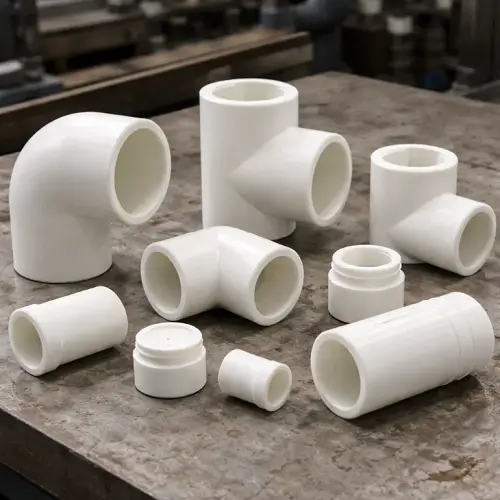
Pipe fittings and connectors
-
Functional structural parts with low cosmetic requirements
These applications share a common focus on durability and environmental resistance rather than surface appearance.
Advantages and Limitations of HDPE
Advantages
Stable molding behavior and wide processing window
HDPE is relatively tolerant of variations in injection speed, mold temperature, and packing conditions. With proper mold design, the process remains stable across production runs.
Good impact resistance
HDPE resists cracking under sudden impact and repeated stress, providing adequate safety margins for functional components.
Excellent chemical resistance
For parts exposed to chemicals or moisture, HDPE often outperforms many general-purpose plastics in long-term stability.
Controllable material cost
HDPE falls into the low-to-mid cost range among injection molding materials, making it suitable for cost-sensitive projects that still require dependable performance.
Limitations
High shrinkage and dimensional sensitivity
Due to its high crystallinity, HDPE exhibits significant shrinkage during cooling. Parts with uneven wall thickness or complex geometry require careful process control to maintain dimensional accuracy.
Limited surface appearance
HDPE is not suitable for high-gloss finishes or fine surface textures. Even with polished tooling, cosmetic quality remains limited.
Limited long-term heat resistance
HDPE does not perform well in sustained high-temperature environments. Prolonged exposure to heat can lead to deformation or loss of mechanical integrity.
Difficulty in painting and bonding
Low surface energy makes HDPE difficult to paint or bond without additional surface treatment, which increases manufacturing complexity and cost.
Is HDPE Suitable for Injection Molding?
From a processing perspective, HDPE is well suited for injection molding and can be molded consistently on standard equipment. The more important question is whether HDPE aligns with the functional and dimensional requirements of the part.
HDPE performs best in parts with relatively uniform wall thickness, modest dimensional requirements, and limited cosmetic demands. It is particularly effective when chemical resistance, impact durability, and cost control are primary concerns.
HDPE may not be appropriate for parts that require tight tolerances, decorative surfaces, long-term high-temperature exposure, or post-molding painting and bonding operations. In such cases, alternative materials such as PP, POM, or higher-performance engineering plastics should be considered.
HDPE Compared with Other Common Injection Molding Materials
HDPE vs. PP
HDPE generally provides better chemical resistance than PP, making it more suitable for parts exposed to aggressive substances. PP, however, offers higher stiffness and superior heat resistance.
From a molding standpoint, HDPE exhibits higher shrinkage and is more sensitive to cooling uniformity. PP is typically easier to control dimensionally, especially for parts with tighter tolerances.
HDPE vs. LDPE
Compared with LDPE, HDPE delivers higher strength and improved dimensional stability due to its denser molecular structure. This makes HDPE more appropriate for load-bearing or shape-critical parts.
LDPE excels in flexibility and ductility. It is better suited for parts that must deform without cracking, but it lacks the stiffness and stability required for structural applications.
Engineering Comparison Table for Injection Molding
| Property | HDPE | PP | LDPE |
|---|---|---|---|
| Density (g/cm³) | 0.94–0.97 | 0.90–0.91 | 0.91–0.93 |
| Melting Point (°C) | 130–135 | 160–170 | 105–115 |
| Stiffness | Medium | Medium to High | Low |
| Impact Resistance | Good | Good | Very Good |
| Chemical Resistance | Excellent | Good | Good |
| Shrinkage Tendency | High | Medium | Medium |
| Surface Finish Capability | Limited | Better | Limited |
| Dimensional Stability | Medium | Medium to Good | Low |
| Typical Injection Applications | Structural containers, housings, chemical-resistant parts | General-purpose molded parts | Flexible or low-stress components |
Cost Considerations of HDPE Injection Molding
HDPE typically falls within the low-to-mid cost range for injection molding materials. Resin cost alone is often competitive with PP and other polyethylene grades.
Final part cost is influenced by mold design complexity, wall thickness distribution, cooling efficiency, and cycle time. Because HDPE exhibits higher shrinkage, additional attention to cooling design and process control may be required, which can affect tooling and production efficiency.
When used in appropriate applications, HDPE offers a practical balance between functional performance and manufacturing cost.
Conclusion
HDPE is a reliable injection molding material when used within the limits defined by its material behavior. It is not a cosmetic plastic and not a high-temperature solution, but it performs consistently in applications that prioritize chemical resistance, impact durability, and cost control.
From an engineering perspective, HDPE is best suited for functional parts with uniform wall thickness, moderate dimensional requirements, and minimal aesthetic demands. When these conditions are met, production stability is high and manufacturing risk remains low.
Material selection should always be driven by application requirements rather than material popularity. HDPE is neither a universal solution nor a niche specialty plastic. It is a dependable option when its strengths align with the design intent and operating environment.