
In injection molding practice, low-density polyethylene (LDPE) is commonly used when flexibility, soft feel, and impact resistance are more important than strength or tight dimensional control. In real production, LDPE is rarely chosen for structural performance. It is chosen because it flows easily, fills thin sections without much effort, and produces parts that can bend and recover without cracking.
At the same time, LDPE behaves very differently from rigid plastics once it cools and leaves the mold. Understanding those behaviors early is critical, especially for parts that must assemble consistently or hold shape after handling, storage, or use.
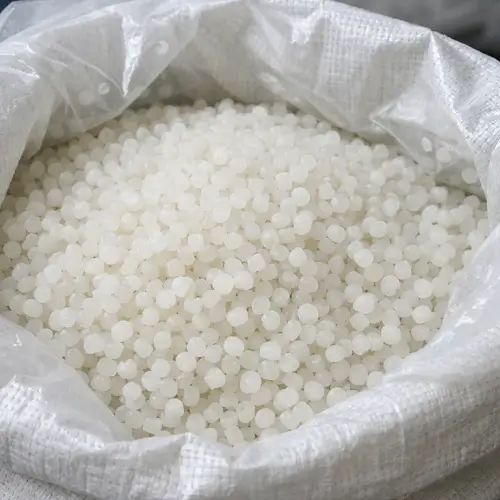
What Is LDPE Injection Molding?
LDPE injection molding is used to make plastic parts that are expected to flex in normal use. It shows up in projects where a part is squeezed, dropped, bent, or handled repeatedly, and breaking would be unacceptable.
LDPE itself is a soft polyethylene with a branched molecular structure. That structure explains most of what engineers see in production. Parts feel tough and forgiving, but they also shrink more and hold shape less reliably than rigid plastics.
Because of that, LDPE is rarely chosen for precision or load-bearing parts. It works when flexibility is intentional. When it is chosen simply because it is easy to mold or inexpensive, the problems usually appear later, after the part leaves the mold.
In practice, LDPE works best when flexibility is a requirement, not a compromise.
Key Advantages of LDPE Injection Molding
Flexibility and Impact Behavior
The most noticeable advantage of LDPE is not strength, but how the material reacts under load. Instead of cracking, LDPE parts tend to deform and recover. In many real-world applications, that behavior is more valuable than stiffness.
During assembly, handling, or transport, parts are often squeezed, bent, or dropped. LDPE usually tolerates this kind of abuse without failing. That is why it is commonly used for soft caps, protective features, and parts that are seeed frequently rather than mechanically loaded.
Flow Behavior in Molding
On the molding machine, LDPE is generally easy to run. The material fills cavities at relatively low injection pressure, even in thin-wall sections or long flow paths.
This does not mean the process can be ignored, but it does mean the processing window is wider. For parts that do not require high rigidity, LDPE is often easier to stabilize than stiffer plastics that demand tighter control.
Demolding and Production Stability
LDPE is not aggressive toward the mold. Parts typically release cleanly, with low risk of sticking. Draft requirements are forgiving, and ejection systems do not need to be overly complex.
In high-volume production, this matters. Stable demolding reduces interruptions, limits manual intervention, and helps maintain consistent cycle times over long runs.
Cost and Material Maturity
LDPE is a well-established commodity material with stable supply and predictable pricing. For parts that do not need engineering-grade mechanical performance, LDPE often provides a reasonable balance between function and cost.
That said, cost should not be the primary driver. When LDPE is chosen mainly because it is inexpensive or easy to mold, projects often end up paying for that decision later through assembly issues or dimensional drift.
Conditions Where These Advantages Apply
All of these advantages depend on one assumption: flexibility is an intentional design requirement.
Once a part is expected to hold tight dimensions, resist long-term load, or behave like a rigid component, LDPE’s advantages quickly turn into limitations. When problems show up in those cases, the root cause is usually material selection rather than processing.
LDPE Injection Molding Process Considerations
Although LDPE fills easily, stable production depends more on cooling and shrinkage control than on injection pressure.
Gate
Because LDPE flows easily, gate-related problems rarely appear as short shots. Instead, poor gate design or placement usually shows up as uneven packing. This can lead to localized shrinkage, edge warpage, or parts that look stable at ejection but deform later.
The goal of the gate is not high shear or high pressure, but balanced flow and uniform packing across the cavity.
Packing
Packing behavior has a strong influence on dimensional stability. Insufficient packing leads to sinks and variation, while excessive packing increases residual stress.
For LDPE, packing should aim for uniform material distribution rather than maximum density. Once the gate freezes, additional holding pressure provides little benefit and may increase internal stress.
Cooling
Cooling should prioritize uniformity over speed. LDPE parts are sensitive to temperature differences across the mold, especially in flat or thin-wall geometries.
Uneven cooling often amplifies warpage and edge distortion. In many cases, slightly longer but evenly distributed cooling produces more stable parts than aggressively shortening cycle time.
Venting
Venting is often underestimated in LDPE molds. The material can appear fully filled while still trapping air.
Poor venting leads to surface marks, weak areas, or cosmetic defects that may only become visible after molding. Proper venting improves consistency and reduces downstream quality issues.
Material Properties That Affect LDPE Injection Molding
Chemical Structure
LDPE is polymerized from ethylene (C₂H₄), forming long molecular chains based on repeating –CH₂–CH₂– units. Unlike HDPE, LDPE contains a large number of short and long chain branches.
This branched structure prevents tight molecular packing and lowers crystallinity. It explains why LDPE is flexible and impact resistant, but also why it lacks stiffness and shows higher shrinkage.
Density
The density of LDPE typically falls in the range of 0.910–0.940 g/cm³. This relatively low density reflects loose molecular packing caused by chain branching.
Even small density differences within this range can affect shrinkage, stiffness, and long-term dimensional behavior. For functional parts, density should be considered part of the material definition rather than an afterthought.
Melting Point
LDPE has a melting point typically between 105–115°C. This low melting range contributes to a forgiving processing window and easy flow during injection molding.
At the same time, it limits heat resistance. As temperature rises, stiffness drops quickly, and parts can lose shape at relatively modest temperatures, often after ejection rather than during filling.
Tensile Strength
LDPE has a tensile strength typically in the range of 7–20 MPa, depending on grade and processing conditions. This places LDPE firmly in the category of low-strength materials.
LDPE is not selected for strength. Its value lies in ductility and energy absorption. Under load or impact, the material deforms rather than fractures, which helps prevent cracking in service.
Typical Applications of LDPE Injection Molded Parts
LDPE injection molded parts are most often used in applications where flexibility and impact tolerance matter more than dimensional precision. Common examples include soft caps, protective covers, flexible housings, and hand-operated components that are squeezed or handled repeatedly during normal use.

These parts are usually not load-bearing and are not expected to hold tight tolerances over time. Minor deformation is acceptable, while cracking or brittle failure is not. In that context, LDPE’s ability to flex and recover aligns well with functional requirements.
Problems tend to appear when LDPE is used in assemblies that rely on stiffness or long-term shape retention. Clips that must stay tight, flat parts that must remain planar, or features that support constant load often drift over time. In those cases, LDPE itself is not difficult to mold—the difficulty comes from asking the material to behave like a rigid plastic.
Shrinkage and Dimensional Stability Challenges
In LDPE injection molding, shrinkage issues rarely show up inside the mold. Parts often look fine at ejection, and initial measurements may even pass inspection. The problem usually appears later, after the parts have been sitting for a while or when they reach the assembly stage.
Unlike rigid plastics, LDPE does not fully “stop moving” once cooling is complete. Internal stress continues to relax over time, especially in areas with uneven wall thickness or non-uniform cooling. That is why parts from the same production run can behave differently—some remain stable, while others slowly drift out of tolerance.
A common response is to increase packing pressure or extend holding time in an attempt to lock dimensions in place. With LDPE, this approach has limited effect. Once the gate freezes, additional holding pressure does little to improve dimensional control and often increases residual stress, which can make later deformation more pronounced.
In practice, dimensional stability improves less through aggressive process tuning and more through early decisions. Gate balance, cooling uniformity, and part geometry play a much larger role than final parameter adjustments. If those fundamentals are not addressed, shrinkage-related issues are usually delayed rather than eliminated.
For this reason, dimensional expectations need to be set realistically when using LDPE. Mold design and assembly strategies should allow for some degree of movement over time, rather than assuming the part will hold its exact shape long after it leaves the mold.Common Problems in LDPE Injection Molding
Dimensional Instability
With LDPE, dimensional issues usually show up later, not at ejection. Parts often measure fine when they first come out of the mold, but after sitting for a while, dimensions begin to drift. This is most noticeable when parts are rechecked before or after assembly.
At that point, the issue is rarely a processing mistake. It is the material continuing to relax. If tight tolerances are required from the start, LDPE is already a risky choice.
Warpage
Warpage in LDPE tends to develop quietly.
Parts do not always come out visibly twisted. Instead, distortion appears gradually as uneven cooling effects settle in.
Flat parts and thin walls are especially sensitive. Small temperature differences across the mold surface are enough for LDPE to amplify into visible warpage.
Surface Issues
LDPE flows very well, and that often leads to complacency. When venting is slightly insufficient, flow marks, whitening, or trapped-air defects can appear.
Some of these surface issues are easy to miss at ejection. They become obvious later—under lighting, during assembly, or once the customer starts handling the part.
Loosening After Assembly
This is one of the most common and most misunderstood LDPE problems.
Assemblies often feel fine on day one. Clips engage, fits feel tight, and everything appears correct. After some time in service, however, parts begin to loosen and clearances grow. The first suspicion is usually machining accuracy, but the real cause is material behavior.
Under constant load, LDPE slowly gives way. Once that deformation happens, process adjustments will not bring the part back.
Packing Control
LDPE is sensitive during the packing stage, but it does not respond well to being pushed harder.
Too little packing results in sinks and variation. Too much packing increases residual stress and makes later deformation more likely. Many unstable LDPE parts are the result of trying to use packing pressure to compensate for uneven flow or gate imbalance.
Post-Ejection Deformation
Some LDPE parts pass inspection at the press and fail later, outside the machine.
Stacking, storage, or elevated ambient temperature can trigger additional shape change after ejection. If quality checks stop at “looks good out of the mold,” these problems are almost guaranteed to surface downstream.
Conclusion
LDPE injection molding is usually easy to run, but it is easy to misjudge. Parts often fill cleanly and look acceptable at ejection, which can hide what really matters later—shrinkage, relaxation, and time-dependent shape change. Projects that work well with LDPE are usually those where these behaviors are understood early and designed around, not corrected afterward on the press.
When flexibility is intentional, LDPE performs exactly as expected. When higher stiffness or dimensional stability becomes the priority, materials such as HDPE are often evaluated as the next step.
If your project involves LDPE for low-volume or production-scale injection molding, sharing drawings, part photos, or basic requirements early usually helps clarify whether the material behavior matches the application before tooling decisions are locked in.You can click on us!