
Injection mold life expectancy is one of the first questions buyers ask when a plastic part moves from design to production. A mold is not only a one-time tooling cost. The mold also controls how many parts can be produced, how stable the process will be, how often maintenance is needed, and whether the project can support long-term production.
There is no single number that fits every injection mold. Some prototype molds are built only for early samples and design validation. Some low-volume molds are made for limited production. Production molds may run hundreds of thousands of cycles. High-volume hardened steel molds can be designed for more than one million cycles when the part, material, steel, and maintenance plan support that target.
Steel matters, but steel alone does not decide mold life. Mold lifespan also depends on mold class, plastic material, part geometry, runner and gate design, slides and lifters, venting, cooling, ejector layout, processing conditions, and maintenance quality.
A mold can still “run” after many cycles, but that does not always mean the mold is producing acceptable parts. Flash, dimensional drift, worn gates, sticking parts, blocked vents, rough slide movement, weaker cooling performance, and cavity surface damage are all signs that mold life is being consumed.
Quick Answer: How Long Does an Injection Mold Last?
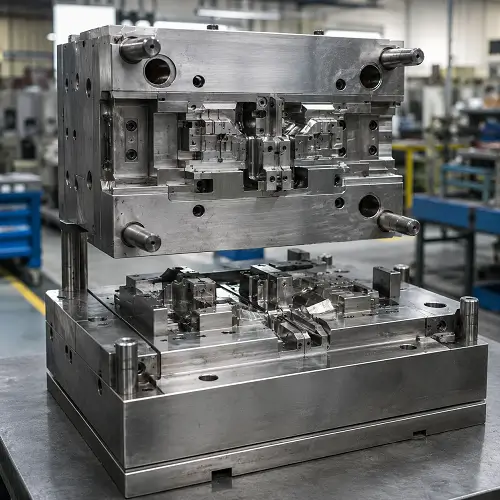
An injection mold can last from fewer than 500 cycles for a prototype tool to more than 1,000,000 cycles for a high-volume Class 101 production mold. Actual mold life depends on SPI mold class, mold steel, plastic material, part geometry, mold maintenance, and molding conditions.
For most buyers, the better question is not only “How long will the mold last?” The better question is “What mold life class is suitable for the expected production volume, material, part design, quality requirement, and budget?”
A mold running standard PP or ABS does not wear the same way as a mold running glass-filled nylon, mineral-filled PP, flame-retardant resin, or corrosive plastic. Even two molds built to the same SPI class can have different service lives if the resin, part structure, and maintenance conditions are different.
What Does Injection Mold Life Mean?
Injection mold life means the number of molding cycles a tool can run while still producing acceptable parts. One cycle usually means one open-and-close molding cycle, not one part. In a single-cavity mold, one cycle produces one part. In a 4-cavity mold, one cycle produces four parts.
That distinction matters. A mold rated for 100,000 cycles can produce 100,000 parts in a single-cavity layout, but 400,000 parts in a 4-cavity layout if all cavities run properly.
Mold life is not only about whether steel breaks. A mold may still move and close, but quality may begin to decline. Common signs include more flash, worn parting lines, loose shutoffs, rough slides, blocked vents, leaking cooling lines, damaged ejector pins, scratched cavity surfaces, and dimensions drifting out of tolerance.
A good mold life plan should focus on usable production life, not just the physical survival of the tool.
SPI Mold Classes 101–105 and Expected Tool Life
SPI mold classes 101–105 are commonly used to describe expected injection mold life, from high-volume Class 101 production molds to Class 105 prototype molds.
These classes give buyers and moldmakers a shared language when discussing prototype tooling, low-volume tooling, and long-run production molds. The SPI class is useful for early planning, but the final tooling decision still needs part and material review.
Actual mold performance still depends on mold steel, heat treatment, resin abrasiveness, part geometry, maintenance, processing pressure, cooling quality, and how the mold is handled in production.
SPI Class 101 Mold
A Class 101 mold is built for very high-volume production, typically over 1,000,000 cycles. This is the highest tooling class and usually requires strong mold construction, hardened mold steel, high-quality mold base components, guided ejection, good cooling, wear control, and a maintenance plan.
Class 101 molds are used when the product has long-term demand and the cost per part matters more than the initial tooling price. The mold costs more upfront, but the stronger construction supports longer production life and better repeatability.
This class is often used for automotive parts, consumer products with long production runs, packaging parts, appliance components, and other high-volume plastic parts where downtime and mold wear become expensive.
SPI Class 102 Mold
A Class 102 mold is normally used for medium-to-high-volume production, often in the range of 500,000 to 1,000,000 cycles. It is still a production-grade mold, but the construction level is usually slightly lower than Class 101.
Class 102 tooling can be a practical choice when production volume is high, but the project does not justify the cost of the strongest long-run mold. Steel quality, cooling, ejection, wear areas, and mold base strength still need careful review.
For many B2B plastic parts, Class 102 can offer a good balance between tool cost and production durability.
SPI Class 103 Mold
A Class 103 mold is generally used for medium production, often below 500,000 cycles. This class is common when the part is beyond prototype stage but does not require a million-cycle tool.
Class 103 molds may use pre-hardened steels or production-appropriate materials depending on the part and resin. The design should still support stable molding, but some construction details may be more cost-controlled than Class 101 or Class 102.
This class is often suitable for industrial parts, moderate-volume housings, product launch quantities, and parts where the expected demand is real but not extremely high.
SPI Class 104 Mold
A Class 104 mold is usually designed for low-volume production, often below 100,000 cycles. It may use lower-cost materials or simpler construction, depending on the part requirements.
Class 104 does not mean the mold is poorly made. It means the mold is built around a lower expected production volume. If the customer only needs a limited run, paying for a high-volume hardened steel mold may not make business sense.
This class can work well for limited production, bridge tooling, early market testing, and products with shorter life cycles.
SPI Class 105 Mold
A Class 105 mold is usually a prototype mold, often designed for fewer than 500 cycles. It is used for early samples, design validation, fit checks, functional testing, or very small production needs.
Class 105 molds may use simplified construction, softer materials, aluminum, or less complex mold bases depending on the project. The goal is speed and cost control, not long production life.
This class is useful when the design is still changing. It allows the customer to test a real molded part before investing in a stronger production tool.
SPI Mold Class Comparison Table
| SPI Mold Class | Typical Use | Expected Cycles | Practical Meaning for Buyers |
|---|---|---|---|
| Class 101 | Very high-volume production | Over 1,000,000 | Highest tooling cost, strongest long-run mold |
| Class 102 | Medium-to-high-volume production | 500,000 to 1,000,000 | Strong production mold with good durability |
| Class 103 | Medium production | Under 500,000 | Balance between tooling cost and production life |
| Class 104 | Low-volume production | Under 100,000 | Cost-controlled mold for limited production |
| Class 105 | Prototype or sample tooling | Under 500 | Fast, low-volume tool for testing and validation |
The class table helps with early planning, but it should not be treated as a mold performance guarantee. A Class 103 mold built for standard ABS may run differently from a Class 103 mold running abrasive glass-filled nylon. The mold class, steel choice, material, maintenance plan, and processing conditions all work together.
Typical Injection Mold Life by Tooling Type
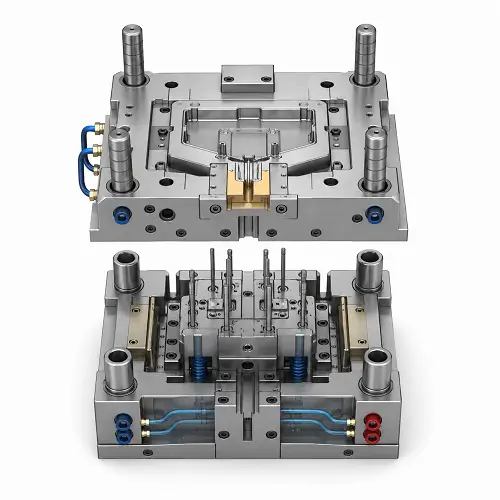
SPI classes are useful, but many customers think in simpler terms: prototype mold, low-volume mold, production mold, and high-volume mold. Both ways of thinking are useful.
Prototype Mold
A prototype mold is used to create early molded samples. The purpose is to test fit, function, assembly, material behavior, and basic manufacturability.
Prototype molds are usually not designed for long production runs. The tool may use simpler steel, aluminum, manual inserts, simplified cooling, or a lower-cost mold base. This approach keeps initial cost and lead time lower.
A prototype mold is helpful when the part design is not final. It gives the customer a chance to test real molded parts before paying for a stronger production tool.
Low-Volume Mold
A low-volume mold is used for limited production, bridge production, pilot runs, or products with lower annual demand. It is stronger than a prototype mold, but it may not need the full construction level of a long-run production mold.
Low-volume tooling can be useful when the customer needs real parts but does not want to overpay for mold life that will never be used. The mold should still be built correctly for the expected resin and part quality requirements.
Production Mold
A production mold is designed for repeat orders and stable manufacturing. It normally uses better steel, stronger mold base construction, balanced cooling, controlled ejection, and more maintainable components.
Production molds often include replaceable inserts, wear plates, hardened shutoffs, better guide components, and proper venting. These details help the mold run longer and reduce downtime.
High-Volume Mold
A high-volume mold is built for long production life and frequent use. It may include hardened steel, multi-cavity layout, hot runner system, optimized cooling, guided ejection, replaceable wear inserts, and stronger alignment components.
The initial cost is higher, but the goal is lower part cost, faster cycle time, fewer interruptions, and more consistent production over the life of the program.
High-volume molds should be planned carefully before steel is cut. A small design weakness can become expensive when the tool is expected to run hundreds of thousands or millions of cycles.
Main Factors That Affect Injection Mold Lifespan
Injection mold lifespan is controlled by several factors working together. Steel choice matters, but steel alone does not decide mold life.
| Factor | What It Affects | What Customers May See |
|---|---|---|
| Mold steel | Wear resistance, corrosion resistance, polishability, repairability | Longer or shorter tool life, surface damage, flash, maintenance frequency |
| Plastic material | Abrasion, corrosion, gas residue, cavity surface wear | Gate wear, scratched cavities, blocked vents, flash, black specks, surface defects |
| Part geometry | Shutoff wear, ejection force, cooling stress, slide/lifter wear | Sticking, drag marks, dimensional drift, broken small features |
| Mold components | Wear points, alignment, ejection, venting, cooling | Flash, burn marks, short shots, ejector marks, cooling problems |
| Maintenance | Vent cleanliness, lubrication, rust prevention, cooling flow | Fewer defects, longer tool life, less downtime |
| Processing conditions | Pressure, speed, temperature, clamp behavior | Extra wear, parting line damage, material buildup, unstable quality |
Mold Steel
Mold steel affects wear resistance, polishability, corrosion resistance, strength, machinability, repairability, and tool cost. A mold running high-volume glass-filled material needs a different steel strategy than a prototype mold for a simple PP cover.
Steel selection should match the resin, expected cycles, part geometry, surface finish, tolerance, and maintenance plan. If the steel is too soft for the material or production volume, gates, shutoffs, parting lines, and cavity surfaces may wear earlier.
Plastic Material
The resin being molded has a major effect on tooling life. Standard PP, PE, and ABS are usually less aggressive than glass-filled nylon, glass-filled PC, mineral-filled PP, flame-retardant materials, or corrosive resins.
Abrasive materials wear gates, runners, cavities, shutoffs, slides, and ejector areas faster. Corrosive materials can attack steel surfaces if the wrong steel or surface treatment is used. Materials that release gas or residue can block vents and increase cleaning needs.
Plastic material is one of the biggest reasons two molds with the same SPI class may wear differently. A mold running standard PP or ABS may last much longer than a similar mold running glass-filled nylon, mineral-filled PP, flame-retardant resin, or corrosive plastic, even if both tools were built to the same general mold class.
Part Geometry
Part geometry changes the stress placed on the mold. Deep ribs, tall bosses, thin walls, sharp shutoffs, undercuts, threads, long flow paths, and tight tolerances can increase mold wear and trial risk.
A simple open-and-shut part is usually easier on the mold than a part with slides, lifters, unscrewing cores, and several tight shutoff surfaces.
Deep ribs may increase ejection force. Tall bosses may need better cooling and stronger core support. Thin walls may require higher injection pressure. Side holes and undercuts may require slides or lifters. Each of these details can affect mold life.
Mold Components
Some injection mold components wear faster than others. Gates, runners, parting lines, ejector pins, vents, slides, lifters, shutoffs, guide pins, bushings, and cooling channels all affect mold life.
Moving components need extra attention because wear changes alignment and fit over time. Small wear in a slide or shutoff surface can eventually show up as flash, mismatch, or dimensional drift.
Maintenance Quality
Maintenance can extend or shorten mold life. Cleaning vents, lubricating slides, checking ejector movement, protecting cavity surfaces, preventing rust, and cleaning cooling channels all help preserve mold performance.
A well-built mold with poor maintenance may fail earlier than a more modest mold that is cleaned and serviced properly.
Processing Conditions
High injection pressure, aggressive injection speed, poor clamp control, excessive mold temperature, poor cooling, resin degradation, and unstable cycling can all shorten mold life.
A mold should not be forced to run at the edge of its process window for long periods. Stable processing protects both the plastic part and the tool.
How Mold Steel Affects Injection Mold Life
Mold steel is one of the biggest cost and lifespan decisions in tooling. The right choice depends on expected cycles, material behavior, surface requirements, and tool complexity.
P20 is widely used for general-purpose molds and moderate production volumes. It machines well and is often used when cost control matters. For many standard plastic parts, P20 or similar pre-hardened steels can be practical.
718 is another common mold steel used for plastic injection molds. It is often selected for better performance than basic cost-driven options, depending on the project and supplier standards.
H13 is commonly used where higher wear resistance, heat resistance, or durability is needed. It may be selected for long-run production, abrasive materials, or areas exposed to higher stress.
S136 is often used for corrosion resistance, high polish, and applications where surface quality matters. It is commonly considered for transparent parts, optical surfaces, medical-related parts, or materials that may cause corrosion.
NAK80 is known for good polishability and dimensional stability in certain mold applications. It can be useful for cosmetic parts and precision tooling depending on project requirements.
The steel grade should not be chosen from a list alone. A moldmaker should review resin, part design, expected volume, surface finish, and wear areas before recommending a steel package.
How Plastic Materials Affect Mold Wear
Plastic material can change mold life dramatically. A mold running standard ABS may wear very differently from a mold running 30% glass-filled nylon.
Standard PP, PE, and ABS
Standard PP, PE, and ABS are usually less abrasive than filled engineering plastics. These materials may allow a cost-controlled mold steel choice when production volume, part tolerance, and surface requirements are moderate.
That does not mean the mold will never wear. Gates, parting lines, ejector pins, and vents still need maintenance. But the wear rate is usually lower than with glass-filled or mineral-filled materials.
Glass-Filled Plastics
Glass-filled plastics are abrasive. Glass fibers can wear gates, runners, cavity surfaces, shutoffs, slides, lifters, ejector areas, and even machine plasticizing components.
Glass-filled nylon, glass-filled PC, and glass-filled PBT often require stronger mold steel, wear-resistant inserts, better surface hardness, or replaceable gate and shutoff areas. If these details are ignored, the mold may develop gate wear, flash, rough cavity surfaces, dimensional drift, and higher maintenance needs.
Mineral-Filled Materials
Mineral-filled PP and other filled materials can also increase tool wear. The filler may improve stiffness, heat resistance, or dimensional stability in the molded part, but the mold may need better wear protection.
High-contact areas such as gates, runners, cavity edges, and shutoffs should be reviewed carefully when mineral-filled materials are used.
Flame-Retardant Materials
Flame-retardant materials may create more residue, gas, or corrosion depending on the grade. The mold may need better venting, more frequent cleaning, and suitable steel or surface treatment.
If venting is poor or residue builds up, the mold may show burn marks, black deposits, short shots, or surface defects. Mold life is affected not only by wear, but also by cleaning frequency and corrosion risk.
Corrosive Plastics and Additives
Some materials or additives can attack mold steel. If the wrong steel is selected, corrosion may appear on cavity surfaces, vents, runners, or cooling areas.
Corrosion can damage surface finish, increase sticking, change dimensions, and make the mold harder to maintain. Stainless mold steel or protective surface treatment may be needed for certain corrosive materials.
Transparent and Cosmetic Materials
Transparent materials may not always be the most abrasive, but they expose mold surface damage quickly. A small cavity scratch, polish mark, rust spot, or vent residue can show on the final part.
For clear or high-gloss parts, mold life is not only about whether the mold still opens and closes. The cavity surface must remain clean, polished, and stable enough to produce acceptable appearance.
Common Areas Where Injection Molds Wear Out
Mold wear usually appears first in the areas that see pressure, movement, friction, heat, or repeated contact.
Gate Wear
The gate sees high-speed molten plastic every cycle. Abrasive materials can enlarge or damage the gate over time. Gate wear can change filling, packing, gate vestige, part weight, and appearance.
Parting Line Wear
The parting line seals the mold halves during injection. Wear or damage in this area can cause flash. Poor clamp balance, contamination, high pressure, or repeated impact can make the problem worse.
Shutoff Wear
Shutoffs form holes, slots, openings, clips, and sealed features. They often operate under tight contact. If shutoffs wear, flash, mismatch, or dimensional problems may appear.
Slide and Lifter Wear
Slides and lifters move every cycle. They need accurate fitting, locking, lubrication, and wear control. Poor maintenance can lead to rough movement, flash, galling, broken components, or inconsistent molded features.
Ejector Pin Wear
Ejector pins move repeatedly and can wear, bend, stick, or leave marks. Poor ejection balance can damage both the part and the mold.
Vent Blocking
Vents can become blocked by resin residue, additives, gas deposits, or dirt. Blocked vents can cause burn marks, short shots, weak weld lines, or surface defects.
Cooling Channel Scale
Cooling channels can collect scale, rust, or deposits. Poor water flow reduces cooling efficiency and can increase cycle time, warpage, and dimensional variation.
Cavity Surface Damage
Cavity surfaces can be scratched, corroded, worn, or damaged during production and maintenance. Cosmetic parts are especially sensitive because surface damage transfers to the molded plastic part.
Guide Pin and Bushing Wear
Guide components keep mold halves aligned. Wear in guide pins, bushings, or interlocks can cause mismatch, parting line issues, and mold damage over time.
How to Improve Injection Mold Life
Improving injection mold life starts before mold manufacturing. The mold should be designed around expected volume, resin, part geometry, and quality requirements.
Choose mold steel that matches the production volume and material. A low-volume PP part does not need the same tool steel as a high-volume glass-filled nylon part. A transparent cosmetic part may need better cavity steel and polishing strategy than a hidden bracket.
Use replaceable inserts in high-wear areas. Gates, shutoffs, slides, lifters, and thin steel areas can often be designed with replaceable inserts so maintenance is easier later.
Protect moving components. Slides and lifters need proper wear plates, lubrication, locking, and alignment. These areas should not be treated as minor details.
Design cooling channels correctly. Stable cooling reduces cycle time, shrinkage variation, and stress on the mold. Cooling channels also need maintenance to keep water flow stable.
Maintain vents regularly. Venting problems often show up as burn marks, short shots, or surface defects. Cleaning vents is a small maintenance step that can prevent larger production problems.
Avoid running the mold under unnecessary stress. Excessive injection pressure, poor clamp setup, unbalanced filling, or unstable temperatures can increase wear.
Build a preventive maintenance schedule. Waiting until the mold produces bad parts is usually more expensive than planned maintenance.
Signs an Injection Mold Needs Maintenance or Repair
A mold does not always fail suddenly. Most molds show warning signs before major repair is needed.
Flash getting worse is one of the most common signs. It may point to parting line wear, shutoff wear, clamp issues, or mold damage.
Parts sticking more often can point to poor draft, worn polish, ejector issues, material buildup, or cooling problems.
Dimensions drifting over time may come from wear, cooling changes, unstable process conditions, or damaged molding surfaces.
Burn marks or short shots may point to blocked vents, poor vent maintenance, or trapped gas.
Ejector marks becoming stronger can mean the part is sticking more, the ejector pins are worn, or ejection force is no longer balanced.
Slider movement becoming rough is a warning sign. Slides and lifters should move smoothly. Rough movement can lead to wear, flash, or broken components.
Longer cooling time may point to blocked cooling channels, scale buildup, or reduced water flow.
Cavity surface scratches or corrosion can affect cosmetic quality and may require polishing, repair, or insert replacement.
How to Choose the Right Mold Life Class for Your Project
Not every project needs a Class 101 mold. Paying for a million-cycle tool makes sense only when production demand, product life, and part cost justify it.
A prototype project may only need a Class 105-style tool. The goal is to test the molded part quickly and avoid high upfront cost before the design is final.
A low-volume production project may fit Class 104 or a cost-controlled Class 103 approach, depending on material and quality requirements.
A medium-volume industrial part may need Class 103 or Class 102 tooling if the design is stable and repeated orders are expected.
A high-volume product should be reviewed for Class 101 or Class 102 tooling, especially if downtime, cavity balance, part cost, and repeatability are important.
Several questions help narrow the choice:
| Project Question | Why It Matters |
|---|---|
| How many parts are expected over the product life? | Determines required mold class and cavity count |
| Is the design final? | Prototype or low-volume tooling may be safer if changes are likely |
| Is the material abrasive or corrosive? | Steel and wear inserts become more important |
| Are dimensions tight? | Mold stability and wear control matter more |
| Is the surface cosmetic or transparent? | Cavity steel and maintenance become critical |
| Does the part need slides, lifters, or threads? | Moving mechanisms increase wear and maintenance needs |
| Is part cost more important than initial tooling cost? | Higher-class tooling may reduce long-term cost |
The right mold life class should match the business plan, not just the engineering ideal.
How JeekMould Reviews Mold Life Before Tooling
JeekMould reviews mold life before tooling by looking at the plastic part, not only the mold quote. The team checks CAD geometry, material, wall thickness, expected production volume, surface requirements, tolerance needs, undercuts, thread features, cooling risks, ejection areas, and high-wear mold components.
For a simple low-volume part, a cost-controlled mold may be enough. For a high-volume part, JeekMould may recommend stronger steel, better cooling, wear-resistant inserts, guided ejection, improved venting, or a more durable mold base. For abrasive materials such as glass-filled plastics, gate areas, cavity surfaces, shutoffs, and moving components may need extra protection.
This review helps customers avoid two common mistakes: overpaying for mold life they do not need, or choosing a low-cost mold that cannot support the real production demand.
Not sure whether your project needs a prototype mold, low-volume mold, or long-run production mold? JeekMould can review your CAD model, resin, expected volume, tolerances, and tooling requirements before mold manufacturing starts. Upload your CAD files for DFM feedback, mold life review, and an injection molding quotation.
FAQ: Injection Mold Life Expectancy
How long does an injection mold last?
Injection mold life can range from fewer than 500 cycles for a prototype mold to more than 1,000,000 cycles for a high-volume production mold. The actual lifespan depends on mold class, steel, resin, part geometry, maintenance, and production conditions.
What is an SPI Class 101 mold?
An SPI Class 101 mold is a high-volume production mold typically designed for more than 1,000,000 cycles. It usually requires strong construction, durable steel, good cooling, guided ejection, and a maintenance plan.
What affects injection mold life the most?
The biggest factors include mold steel, plastic material, part geometry, mold components, maintenance quality, processing conditions, and production volume. Abrasive materials and moving mold components can shorten mold life if the tool is not designed properly.
Do glass-filled plastics reduce mold life?
Yes, glass-filled plastics can reduce mold life because glass fibers are abrasive. They can wear gates, runners, cavity surfaces, shutoffs, slides, lifters, and other high-contact mold areas. Better steel, inserts, coatings, or maintenance may be needed.
How can mold maintenance extend injection mold lifespan?
Maintenance extends mold life by keeping vents clean, slides lubricated, ejector pins moving smoothly, cooling channels clear, cavity surfaces protected, and parting lines free from damage. Preventive maintenance is usually cheaper than emergency repair.
What mold class should be used for low-volume production?
Low-volume production often uses Class 104 or a cost-controlled Class 103 mold, depending on the expected quantity, material, tolerances, and part quality requirements. Prototype projects may use Class 105 tooling.
Conclusion
Injection mold life expectancy is not a fixed number printed on a mold quote. It is the result of mold class, steel selection, plastic material, part geometry, mold components, maintenance, and production conditions working together.
SPI mold classes 101–105 provide a useful starting point. Class 101 molds are built for long-run production. Class 105 molds are built for prototypes and very small quantities. Between those two ends, the best choice depends on how many parts the project needs, how difficult the material is, how complex the molded part is, and how stable production must be.
For buyers, the goal is not always to choose the longest mold life. The goal is to choose the right mold life. A mold that is too light may create repair costs and unstable quality later. A mold that is too heavy may add tooling cost the project does not need.
A well-planned mold should match the plastic part, production volume, material, tolerance, surface requirements, and long-term business plan. If your project is still between prototype tooling, low-volume mold, and production mold options, Upload your CAD files to JeekMould for DFM feedback, mold life review, and an injection molding quotation.