
Low-volume injection molding is used when a customer needs real injection molded plastic parts, but the project does not need full mass production yet. The same type of project may also be called small run injection molding, small-batch injection molding, short run injection molding, low volume plastic molding, or low volume plastic injection molding.
These terms are close, but they usually point to the same situation: the customer needs more than a few prototypes, but the quantity is still too low for large-scale production tooling. This may mean several hundred parts for testing, several thousand parts for a product launch, or repeated small batches for a product with limited demand.
For many customers, low-volume injection molding becomes a practical middle step. The mold cost is still there, but the parts are made with real production resin, molded features, repeatable dimensions, and a surface finish closer to final production. When the quantity is already beyond a few samples, this process often gives a better balance between cost, quality, and production readiness.
The main question is not only whether the part can be injection molded. A better question is whether the project should use 3D printing, CNC machining, vacuum casting, prototype tooling, low-volume tooling, or full production tooling. That decision depends on order quantity, part geometry, material, tolerance, surface finish, timeline, and budget.
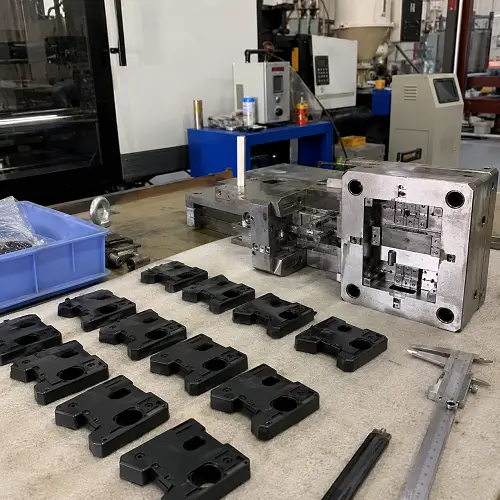
What Is Low-Volume Injection Molding?
Low-volume injection molding is a plastic manufacturing process used to produce small-run, short-run, or small-batch plastic parts with an injection mold. It is often used before full-scale production, when customers need real molded parts in lower quantities.
Compared with full production tooling, low-volume injection molding usually focuses on a simpler mold, shorter lead time, lower upfront tooling cost, and practical production quality. For customers who are not ready for mass production, this approach keeps the project moving without overbuilding the tool too early.
What Is Small Run Injection Molding?
Small run injection molding means producing a limited number of injection molded plastic parts instead of committing to a long production program. It is often used when a customer needs real molded parts, but only in a smaller order quantity.
A small run may be used for market testing, early customer orders, replacement parts, custom plastic parts, industrial components, or a limited product release. In many projects, the part design is already close to final, but demand is not high enough to justify expensive high-volume tooling.
Small run plastic injection molding is useful when 3D printing is too slow, CNC machining is too expensive per part, and full production tooling is too much investment too early. It gives the customer molded parts made from production-grade thermoplastic without requiring a full mass-production mold from the start.
Concept and Production Scope
There is no fixed number that defines a small run. For one product, 500 parts may be a small run. For another product, 10,000 parts may still be considered low volume. The right definition depends on part size, mold cost, resin, part complexity, and how often the customer expects to reorder.
From our factory experience, the better way to define a small run is by project risk. If the customer still wants flexibility, does not want to carry large inventory, or wants to test demand before scaling up, small run injection molding may be a good fit.
A customer may also choose small run injection molding when the part needs production plastic, but the business does not yet know whether the demand will grow. This is common for new products, niche industrial parts, replacement parts, and early sales batches.
Tooling Strategy for Small Runs
Small-run molds are usually designed to control tooling cost while still producing acceptable molded parts. The mold may use a single cavity, a cold runner, manual inserts, simpler cooling, or a cost-controlled steel choice when the part allows it.
That does not mean the mold can be careless. Gate location, venting, shrinkage, ejection, parting line, cooling, and mold fit still need proper review. A low-cost mold that creates flash, sticking, warpage, or short shots is not really saving money.
For small production runs, the goal is to build enough mold for the project, not more than the project needs. A simple PP cover may only need a basic single-cavity mold. A plastic housing with undercuts, clips, or cosmetic surfaces may still need more careful tooling even if the quantity is low.
Common Uses for Small Run Injection Molding
Small run injection molding is often used for new product launch batches, limited-edition products, repair and replacement parts, custom plastic components, electronic housings, industrial clips, brackets, covers, and early production before demand becomes stable.
It is also useful when the customer wants molded parts for real assembly testing. Printed prototypes can show shape, but molded parts show material behavior, shrinkage, snap-fit performance, surface finish, and assembly response more realistically.
For customers making injection molding small parts, small-run production can also be a practical choice. Small clips, connectors, housings, covers, and brackets may become expensive by CNC machining when the quantity rises, while injection molding can make the batch more repeatable.
What Is Short Run Plastic Injection Molding?
Short run plastic injection molding is injection molding for a limited production run. The term often puts more focus on the production order itself. A customer may need one short run of parts for testing, one batch for a launch, or repeated short runs based on demand.
Short run injection molding is common when the customer needs molded plastic parts quickly but does not want to commit to high-volume tooling. It can also be used when the product life cycle is short, the demand is uncertain, or the parts are needed for a specific project.
Short Run vs Small Run
Small run and short run are often used in similar ways. Small run usually describes the quantity. Short run often describes the production batch or project schedule.
For example, a customer may request small run injection molding for 2,000 plastic clips. Another customer may request short run plastic molding for a limited repair part order. In both cases, the supplier needs to control mold cost, lead time, and part quality without building a tool meant for millions of cycles.
The wording may change by industry, but the customer need is usually the same: make real molded plastic parts in a controlled quantity, without paying for unnecessary mass-production tooling.
Short Run Plastic Molding Workflow
A typical short run plastic injection molding project starts with CAD review and DFM feedback. The supplier checks wall thickness, draft, undercuts, gate location, material, parting line, tolerance, and ejection risk.
After that, the mold design is confirmed. The tool may be simpler than a high-volume production mold, but the mold still needs the correct core, cavity, runner, gate, venting, cooling, and ejection layout.
Once the mold is built, the supplier runs a mold trial, checks samples, adjusts the process, and confirms part quality. After sample approval, the short production run begins. Parts are inspected, packed, and shipped according to the customer’s requirements.
This workflow is why short run injection molding is different from simply “making a cheap mold.” Even for short production runs, the mold has to produce real usable parts.
Common Materials Used
Short run plastic injection molding can use many common thermoplastics. ABS, PP, PE, PC, PC/ABS, nylon, POM, TPU, and PMMA are all common choices, depending on the part function.
Material selection should not be based only on price. The resin affects shrinkage, strength, flexibility, heat resistance, chemical resistance, surface finish, and mold design. For short runs, material availability and processing stability also matter because there is less room for repeated trial-and-error.
A low-volume ABS enclosure, a nylon bracket, a TPU protective part, and a clear PMMA cover will not need the same tooling and processing plan. The material should be reviewed before the mold is cut.
What Is Low-Volume Plastic Injection Molding?
Low-volume plastic injection molding is a broader term for producing molded plastic parts in lower quantities than full mass production. It is often used for pilot production, small-batch plastic manufacturing, bridge production, custom plastic parts, and early-stage commercial production.
The main value is that customers can get real injection molded plastic parts without overcommitting to large inventory or expensive high-volume tooling. This is especially helpful when the product is new, demand is still being tested, or the design may need future updates.
Typical Quantity Range
Based on our factory experience, we usually help customers choose the right process by looking at order quantity, part design, material, and final-use requirements. The table below is not a fixed rule, but it gives a practical starting point when comparing 3D printing, CNC machining, vacuum casting, and low-volume injection molding.
| Quantity Range | Common Recommendation |
|---|---|
| 1–50 parts | 3D printing or CNC machining is usually easier |
| 50–500 parts | CNC machining, vacuum casting, or prototype tooling may be reviewed |
| 500–5,000 parts | Low-volume injection molding often starts to make sense |
| 5,000–50,000 parts | Small-batch or short-run injection molding is often practical |
| 50,000+ parts | Production tooling or multi-cavity tooling should be reviewed |
These ranges are only a starting point. A small precision part may justify injection molding earlier, while a large housing with complex tooling may need a higher quantity before the mold cost makes sense. The CAD model, material, tolerance, and production plan should be reviewed together.
Low-Volume Mold Options
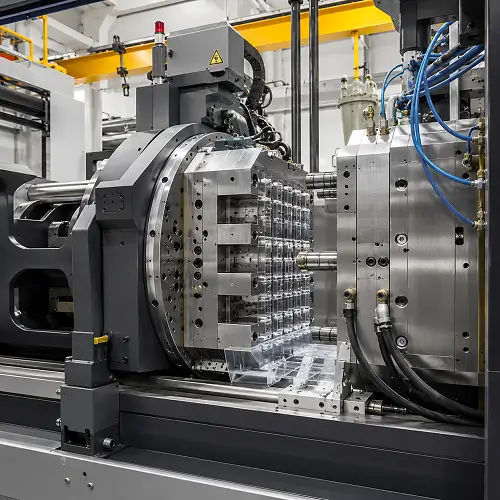
Low-volume plastic injection molding can use different tooling strategies. A simple part may only need a single-cavity cold runner mold. A part with an undercut may need a manual insert, slide, or lifter. A repeated small-batch order may need a stronger mold than a one-time prototype run.
Common low-volume mold options include prototype molds, aluminum molds, P20 steel molds, single-cavity molds, manual insert molds, family molds, and low-volume production molds. The best choice depends on quantity, material, part geometry, and whether the customer expects repeat orders later.
For a one-time small batch, a simple mold may be enough. For repeated short-run orders, it may be better to spend a little more on mold steel, cooling, inserts, or ejection so the tool remains stable over multiple batches.
Quality Control in Low-Volume Plastic Manufacturing
Low-volume does not mean low quality. Even if the batch is small, the parts may still need dimensional checks, appearance inspection, material confirmation, first article approval, and production records.
For low-volume plastic injection molding, quality control often focuses on the first sample, critical dimensions, assembly fit, visible surfaces, material behavior, and repeatability across the batch. If the parts will be used in real products, the inspection standard should match the part function, not just the order quantity.
A small batch of 1,000 plastic housings still has to fit with screws, clips, inserts, PCB boards, seals, or mating parts. That is why DFM and sample approval matter before running the full batch.
Low-Volume Injection Molding, Small-Batch Injection Molding, and Short-Run Injection Molding
These terms overlap, and many customers use them interchangeably. The differences are mostly about emphasis.
Low-volume injection molding usually describes the overall lower-quantity production strategy. Small run injection molding often highlights the limited quantity. Small-batch injection molding focuses on batch-based production and inventory control. Short run injection molding often refers to a specific limited production run.
Low volume plastic molding and low volume plastic injection molding are broader search terms, but the customer intent is similar: the buyer needs plastic parts in lower quantities and wants a practical manufacturing option.
In real quoting work, the words matter less than the project details. A supplier still has to check the CAD model, part size, material, required quantity, tolerance, surface finish, and expected future demand before recommending a mold plan.
Cost Efficiency in Small-Batch Plastic Manufacturing
When customers ask for a low-volume injection molding quote, the price usually comes from two sides: mold cost and part cost. A simple mold may keep tooling cost low, but the part still needs to run cleanly, release properly, and meet the required quality.
Small-batch plastic manufacturing becomes cost-effective when the mold cost can be spread across enough parts and the molded part cost becomes lower than CNC machining, 3D printing, or vacuum casting.
Part size, undercuts, side holes, threads, clips, material choice, tolerance, surface finish, and inspection requirements all affect cost. A simple ABS cover may be easy to quote. A PC housing with tight clips, polished surfaces, and threaded inserts may need more mold work even if the order quantity is low.
The lowest mold price is not always the best option. If the mold creates high scrap, slow cycles, flash, warpage, sticking, or unstable dimensions, the total project cost can become higher than expected.
A good low-volume tooling plan keeps the mold practical, but still strong enough for the actual batch requirement.
Low-Volume Injection Molding vs Other Manufacturing Methods
Low-volume injection molding should be compared with other processes before tooling begins. In many projects, 3D printing, CNC machining, or vacuum casting may still be better at the early stage.
Low-Volume Injection Molding vs 3D Printing
3D printing is often the easiest way to make a few quick samples. There is no mold, lead time is short, and design changes are easy. It works well when the design is still moving or the customer only needs a small number of parts.
Low-volume injection molding becomes more attractive when the customer needs more parts, production resin, molded strength, smoother repeatability, and lower per-part cost at higher quantities.
For 10 quick samples, 3D printing is often the easier choice. For 2,000 ABS housings that need molded strength, stable dimensions, and a cleaner production finish, small-batch injection molding usually deserves a closer look.
Low-Volume Injection Molding vs CNC Machining
CNC machining can produce accurate plastic parts without a mold. It is useful for functional prototypes, flat parts, machined features, and engineering plastics cut from stock material.
The limitation is cost and molded geometry. CNC machining removes material from a block. Ribs, bosses, clips, snap fits, thin walls, living hinges, and complex molded features may be difficult or expensive.
Low-volume injection molding is usually better when the part is designed as a molded plastic component and the quantity is high enough to justify tooling.
Low-Volume Injection Molding vs Vacuum Casting
Vacuum casting is useful for small batches of prototype-like plastic parts. It works well for appearance models, urethane parts, and early validation.
Low-volume injection molding uses production thermoplastic resin and a metal mold. This matters when the customer needs final material behavior, molded part strength, snap-fit performance, heat resistance, chemical resistance, or repeatable dimensions.
Vacuum casting can be a good bridge before injection molding. But when the part needs real thermoplastic production behavior, low-volume injection molding is usually the stronger option.
Advantages and Disadvantages of Low-Volume Injection Molding
Low-volume injection molding has clear advantages, but it also has limits. The process works best when the part design is stable enough for tooling and the quantity is high enough to justify mold cost.
Advantages
Low-volume injection molding gives customers real molded plastic parts without requiring full-scale production tooling. This is useful when the product needs to move beyond prototypes but is not ready for mass production.
It allows the use of production-grade resin. Parts can be made from ABS, PP, PC, nylon, POM, TPU, PMMA, and other thermoplastics instead of prototype-only materials.
It provides better repeatability than many prototype processes. Once the mold and process are stable, the parts can be produced with consistent geometry, surface finish, and molded features.
It can reduce unit cost compared with CNC machining or 3D printing when the quantity rises. Mold cost still exists, but per-part cost often becomes more practical across hundreds or thousands of parts.
It also supports product launch and market testing. Customers can produce a real batch, collect feedback, and decide whether to improve the part or scale up later.
Limitations
Low-volume injection molding still requires a mold. If the design is changing every week, it may be too early to cut tooling.
The unit price is usually higher than high-volume production molding because fewer parts share the mold cost. A small-batch order will not have the same unit cost as a multi-cavity mass-production mold.
Complex parts can still require serious tooling. Slides, lifters, manual inserts, tight tolerances, high-gloss surfaces, and special materials can increase cost even when the quantity is low.
Lead time is also longer than simple 3D printing because mold design, machining, fitting, trial, and sample approval are still required.
Common Parts Made with Small-Batch Injection Molding
Small-batch injection molding is used when a project needs real molded parts in limited quantities. These parts often go into functional products, field testing, service programs, or smaller production runs.
Common examples include electronic housings, sensor covers, plastic brackets, clips and fasteners, connector bodies, industrial covers, custom plastic enclosures, appliance replacement parts, automotive service parts, small medical device housings, plastic parts for test market products, and injection molding small parts for assemblies.
Miniature injection molding and injection molding small parts may also fit low-volume production when the part is small, precise, and needed in limited batches. Small parts can sometimes justify molding earlier because the per-part molding cost may drop faster once tooling is built.
Design Tips for Short-Run Plastic Injection Molding
Short-run plastic injection molding still needs proper DFM. A lower-volume mold does not remove the basic rules of plastic part design.
Keep wall thickness as consistent as possible. Thick sections can create sink marks, voids, long cooling time, and warpage. Thin areas may need better gate placement and higher injection pressure.
Add draft where the part releases from the mold. Poor draft can cause sticking, drag marks, ejector marks, or mold damage.
Review undercuts early. A small undercut can require a slide, lifter, manual insert, or design change. For a small run, a manual insert may be acceptable if the labor cost is reasonable.
Avoid oversized bosses and thick ribs. Bosses should be supported with ribs instead of being made too thick. Ribs should be designed with reasonable thickness and draft.
Think about gate location. A visible gate mark on a cosmetic surface may not be acceptable. Poor gate location can also create weld lines, warpage, or flow marks.
A low-volume mold can reduce cost, but it still needs a moldable part design. Good DFM is often where customers save money before tooling starts.
How to Choose a Low-Volume Injection Molding Supplier
Choosing a supplier for low-volume injection molding is different from buying a simple prototype. The supplier needs to understand both tooling and production.
A good supplier should review the CAD model before quoting blindly. Wall thickness, undercuts, draft, gate location, material, tolerance, surface finish, and quantity all affect the mold plan.
For low volume injection molding services, customers should look for a supplier that can explain the tooling approach. A simple part may need a basic single-cavity mold. A part with side holes may need manual inserts or slides. A repeated small-batch order may need a stronger mold than a one-time test run.
When comparing low volume injection molding companies, do not look only at the lowest mold price. Ask whether the supplier can provide DFM feedback, material advice, mold trial samples, inspection, and a realistic path if the project later grows into higher production.
A low-volume supplier should help customers avoid two mistakes: paying for a production mold too early, or choosing a tool that is too weak for the actual production need.
When Low-Volume Injection Molding Is Not the Best Choice
Low-volume injection molding is useful, but not every small project should start with a mold.
If the design is still changing every week, it is usually better to stay with 3D printing or CNC machining until the geometry becomes more stable. If the customer only needs one or two parts, tooling is usually not worth the cost.
If the part is very large and the order quantity is very low, mold cost may be difficult to justify. If the part only needs soft prototype-like material for appearance testing, vacuum casting may be more practical.
A good supplier should be willing to say when injection molding is not the best first step. That kind of review saves money before tooling begins.
FAQ: Low-Volume Injection Molding
What is low-volume injection molding?
Low-volume injection molding is injection molding for lower-quantity plastic part production. It is often used for small-run, short-run, or small-batch plastic parts before full-scale production.
What is small run injection molding?
Small run injection molding is the production of a limited number of injection molded plastic parts. It is often used for product launches, pilot runs, replacement parts, custom plastic parts, or early production before demand is confirmed.
What is short run plastic injection molding?
Short run plastic injection molding is a limited production run of molded plastic parts. It usually focuses on quick, controlled production without building a mold meant for long-term mass production.
What is the difference between small run and low-volume injection molding?
Small run injection molding usually describes a smaller production quantity. Low-volume injection molding is a broader term for lower-quantity plastic molding before full production. In practice, the two terms often overlap.
How many parts are considered low-volume injection molding?
There is no fixed number. Many low-volume plastic injection molding projects range from a few hundred to tens of thousands of parts, depending on part size, mold cost, material, and production goals.
Is low-volume injection molding good for small batch plastic manufacturing?
Yes. Low-volume injection molding is often a strong choice for small batch plastic manufacturing when the customer needs production resin, molded features, repeatable dimensions, and better per-part cost than CNC machining or 3D printing at higher quantities.
When should I choose low-volume injection molding instead of 3D printing?
Choose low-volume injection molding when the design is stable, the quantity is beyond a few samples, and the parts need production plastic, molded strength, repeatable dimensions, or a production-like surface finish.
Can low-volume injection molding be used for small parts?
Yes. Injection molding small parts can work well in low-volume production when the part is small, repeatable, and needed in batches. Small clips, covers, connectors, brackets, and housings are common examples.
Conclusion
Low-volume injection molding gives customers a practical way to produce real molded plastic parts without moving directly into high-volume production tooling. It is also described as small run injection molding, small-batch injection molding, short run injection molding, low volume plastic molding, or low volume plastic injection molding.
The process makes sense when the design is stable enough for tooling, the quantity is too high for simple prototyping, and the part needs production-grade plastic, molded features, consistent dimensions, and repeatable quality.
The right choice depends on quantity, part geometry, resin, surface finish, tolerance, tooling budget, and product stage. A small run may need a simple prototype mold. A repeated small-batch order may need a stronger low-volume production mold. A product with growing demand may need a tooling plan that can move toward larger production later.
Not sure whether your part should be 3D printed, CNC machined, vacuum cast, or injection molded? JeekMould can review your CAD model, material, quantity, tolerance requirements, and part geometry before tooling begins. Upload your CAD files for DFM feedback and a low-volume injection molding quotation.