
Urethane molding, also called urethane casting or cast urethane molding, is often used when a project needs real plastic-like parts before full injection tooling makes sense. The process is a good fit for prototypes, display samples, pilot runs, and low-volume plastic parts where the design may still change or the quantity does not justify a production mold.
That does not mean urethane molding is a cheaper version of injection molding. The two processes solve different problems. A silicone mold can save time and tooling cost early in a project, but production parts still need the right material, stable dimensions, repeatable molding conditions, and a process that fits the expected order volume.
For buyers, engineers, and product teams, the useful question is simple: should this part be made by urethane molding, vacuum casting, prototype injection molding, or production injection molding? The answer depends on part geometry, quantity, tolerance, surface finish, material behavior, and how close the project is to real production.
What Is Urethane Molding?
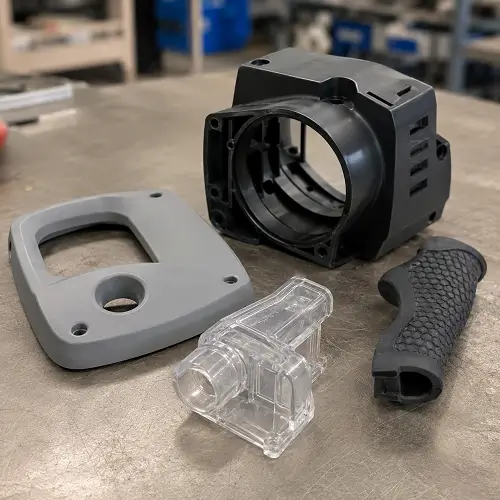
Urethane molding is a process for making plastic-like parts from liquid polyurethane resin. A master model is made first, then a silicone mold is built around that master. After the mold cures, liquid urethane resin is poured or cast into the cavity and allowed to cure into the final part.
In normal shop language, urethane molding is often used together with terms like urethane casting, polyurethane casting, vacuum casting, silicone mold casting, and cast urethane parts. The names are not always used perfectly, but most of them point to the same basic idea: a liquid resin is cast into a soft mold to make a low-volume plastic part.
The important detail is that urethane molding does not use melted plastic pellets. A standard injection molded ABS or PP part is made by heating thermoplastic resin and injecting it into a metal mold under pressure. A urethane molded part is made by curing a liquid resin inside a silicone mold. That difference affects cost, lead time, tolerance, material performance, and production repeatability.
Urethane molding can make parts that look close to injection molded plastic. It can also copy texture, color, gloss, transparency, and some rubber-like feel. But “close to molded plastic” is not the same as true production material. An ABS-like urethane part is still not ABS. A PP-like urethane part is still not polypropylene.
That point matters when a part has snap fits, sealing surfaces, threaded bosses, clips, impact loads, heat exposure, or long-term mechanical requirements.
How Urethane Casting Works
The urethane casting process starts with a master pattern. The master can be made by CNC machining, SLA 3D printing, or another accurate prototyping method. The finished urethane part will copy the master very closely, so surface marks, rounded edges, dimensional errors, and poor finish on the master can carry into the silicone mold.
After the master is ready, silicone is poured around the model to create the mold. Once the silicone cures, the mold is cut open along a planned parting line. Gates, vents, and pour paths are added so resin can fill the cavity and air can escape.
The resin is then mixed, poured, and cured. Some projects use vacuum to reduce bubbles and improve filling, especially when the part has thin walls, ribs, clear features, or cosmetic surfaces. After curing, the part is removed from the mold, trimmed, inspected, and finished as needed.
This is why vacuum casting and urethane casting often appear together in search results. Vacuum casting is not a completely separate idea in many prototype projects. It is a controlled way to cast polyurethane resin into a silicone mold with less trapped air.
A simple housing may only need trimming and light finishing. A customer-facing sample may need sanding, painting, polishing, texture matching, or color matching. Those details should be discussed before the mold is made, not after the first parts come out.
The process is slower per part than injection molding. Each part has to be cast, cured, demolded, cleaned, and checked. The advantage is the low tooling burden. For 10–100 parts, urethane molding can be much easier to justify than cutting a production mold.
Urethane Molding vs Injection Molding
Urethane molding is mainly a low-volume and prototype process. Injection molding is mainly a production process. They overlap in some early-stage projects, but they should not be judged only by the mold price.
| Factor | Urethane Molding | Injection Molding |
|---|---|---|
| Mold type | Silicone mold | Aluminum or steel mold |
| Material form | Liquid polyurethane resin | Thermoplastic pellets |
| Forming method | Casting and curing | Melting and injecting |
| Best use | Prototypes, samples, low-volume runs | Production plastic parts |
| Tooling cost | Lower | Higher |
| Lead time | Usually shorter | Usually longer |
| Mold life | Limited | Much longer |
| Material match | Simulated plastic behavior | Actual production resin |
| Repeatability | Good enough for many prototypes | Better for production |
| Unit cost at scale | Can become high | Usually lower at volume |
A urethane molded enclosure can be excellent for a trade show sample or pilot build. The customer can check shape, color, surface finish, and general assembly feel without paying for a production mold. That is a practical use of the process.
A production enclosure is different. Once the same part needs molded-in clips, consistent wall thickness, stable screw boss strength, repeatable color, and several thousand units, injection molding becomes the better process. The mold costs more, but the project gets real thermoplastic material and more controlled production.
Quantity matters, but quantity is not the only rule. A simple cosmetic cover at 100 pieces may still work well in urethane casting. A small mechanical clip at 50 pieces may need injection molding if clip force, material memory, and dimensional repeatability are critical.
That is the part many buyers miss. Low volume does not always mean urethane molding. A low-volume part can still be function-critical.
When Urethane Molding Makes Sense
Urethane molding makes sense when a project needs physical plastic-like parts quickly, but the design or order volume is not ready for full injection tooling.
A common case is an early product housing. The team has CAD data and wants 20 or 30 parts for assembly, customer review, investor samples, or packaging tests. 3D printing may show the shape, but the printed surface may not look like a molded product. Urethane molding can give the team a smoother, more finished part with better cosmetic value.
Another good case is pilot production. A company may need 30–200 parts to test market response before committing to tooling. These parts may go to sales teams, distributors, early users, or internal validation. The design may still change after feedback, so a production mold would carry too much risk.
Urethane molding also fits projects where color, finish, and feel matter. A painted consumer product sample, soft-touch grip, clear cover, or rubber-like prototype can often be made through polyurethane casting. The finished part may not match the final injection molded material perfectly, but the sample can help people make design and purchasing decisions.
The process also helps when a customer needs several design versions. Instead of cutting a mold too early, the team can cast a small batch, test the part, adjust the CAD file, and then decide whether the next step should be another prototype run or injection molding.
Typical urethane molded parts include product housings, covers, knobs, panels, soft grips, medical device prototypes, automotive interior samples, electronic enclosures, display models, clear parts, and small-batch plastic components.
The best use case is not “cheap plastic parts.” The best use case is pre-production proof.
When Urethane Molding Is Not the Right Choice
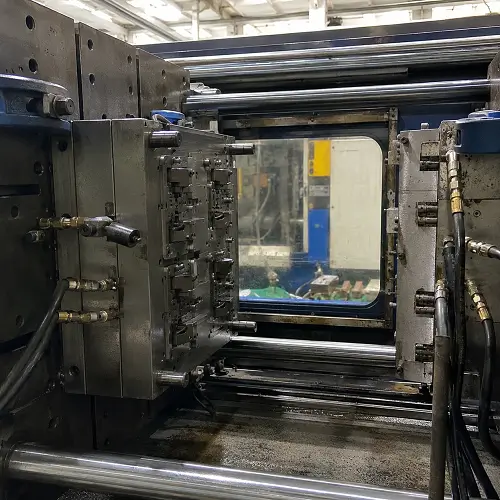
Urethane molding starts to lose its advantage when the part moves from sample to production part. Silicone molds do not behave like steel or aluminum tooling. After repeated casting and demolding, the mold can stretch, tear, lose edge detail, or show wear on cosmetic surfaces.
A simple flat cover may run better than a part with deep ribs, sharp edges, thin walls, or aggressive undercuts. The mold may still work, but the part quality can drift as the silicone wears. That drift matters when the part has assembly features or visible cosmetic surfaces.
Dimensional control also needs realistic expectations. Cast urethane parts can be accurate enough for many prototype builds, but the process is not meant to replace controlled injection molding. Silicone is flexible. Resin cure behavior can shift slightly. Wall thickness and part geometry can affect shrinkage.
If a part has alignment pins, sliding areas, snap fits, sealing lips, or tight hole locations, the tolerance requirement should be reviewed before choosing urethane molding. A prototype that looks good on the table may still fail during assembly.
Material behavior is another limit. Urethane resin can be selected to feel close to ABS, PP, rubber, or clear plastic, but the final performance is still different from real production resin. That matters when the part needs heat resistance, chemical resistance, flame rating, fatigue strength, UV resistance, or long-term mechanical stability.
The cost curve can also change faster than expected. Urethane molding looks attractive at 10 parts or 50 parts because the silicone mold is cheaper. Once the quantity grows, casting labor, trimming, finishing, inspection, and mold replacement can make the total project less attractive than low-volume injection molding.
A cheaper mold does not always mean a cheaper program. It depends on how many usable parts the project actually needs and how much risk the part carries.
Materials and Part Types Used in Urethane Molding
Urethane molding uses polyurethane resin systems. These materials can be selected to simulate different plastic properties. Some grades are rigid and ABS-like. Some are soft and rubber-like. Some are clear. Some are tougher for handling tests or customer samples.
This is useful during product development because the team can test different part feels before final material selection. A rigid enclosure, soft grip, clear window, or flexible bumper can often be made without cutting a metal mold.
| Desired result | Common urethane molding approach |
|---|---|
| ABS-like housing | Rigid polyurethane resin |
| Rubber-like grip | Flexible urethane resin |
| Clear prototype | Clear casting resin |
| Soft-touch surface | Low-durometer urethane |
| Display sample | Color-matched urethane |
| Impact sample | Tough urethane system |
| Low-volume shell | Rigid cast urethane |
The word “simulate” is important. A urethane resin can imitate a plastic family, but the part should not be treated as a certified production material unless the project specifically allows that.
For example, an ABS-like urethane housing may be good enough for appearance review and basic assembly. The same sample may not prove that a final ABS injection molded housing will pass drop testing, heat aging, screw boss strength, or chemical exposure.
A PP-like urethane part may help review shape, but polypropylene has its own hinge behavior, shrinkage, flexibility, and chemical resistance. A rubber-like urethane may feel close to TPU or TPE, but the final molded elastomer can behave differently in compression, friction, aging, and rebound.
For cosmetic samples, this may not be a problem. For functional parts, material selection needs more caution.
Urethane Molding Cost Factors
Urethane molding cost depends on more than part size. A small part with difficult geometry can cost more than a larger part with a clean open shape.
The master pattern is one cost driver. A rough 3D printed master may be acceptable for simple internal testing. A visible customer sample may need a better master, cleaner surface preparation, or CNC machining. If the master needs polishing, painting, or texture work, the cost changes.
The silicone mold also depends on geometry. Deep pockets, thin ribs, undercuts, fragile details, sharp edges, and difficult parting lines make the mold harder to build and use. These features can also increase scrap during casting and demolding.
Material choice matters too. Clear urethane, flexible urethane, heat-resistant urethane, and color-matched resin can cost more than a basic rigid casting system. Clear parts may need extra care because bubbles, haze, and surface defects are easier to see.
Finishing is often underestimated. Trimming flash, removing gate marks, sanding edges, painting surfaces, applying texture, or checking dimensions all take time. A part that looks simple in CAD may still need hand work after casting.
Quantity is the final pressure point. Urethane molding can be practical for low-volume runs, but the economics do not improve like injection molding. Each part still needs labor. Each mold has limited life. If the customer keeps increasing the order, the process should be compared again against prototype injection molding or low-volume injection molding.
This is where an early DFM review saves money. The review may show that urethane molding is fine for the first build, or it may show that a simple aluminum injection mold is a better long-term decision.
Urethane Molding, Vacuum Casting, and Polyurethane Casting
The naming can be confusing, especially for buyers who are comparing suppliers.
Urethane molding usually refers to making polyurethane resin parts in a mold, often a silicone mold.
Urethane casting is the more common technical phrase because the resin is cast rather than injected as melted plastic.
Polyurethane casting describes the material side of the process. The part is made from polyurethane resin.
Vacuum casting usually means the resin is cast into a silicone mold with vacuum assistance to reduce trapped air and improve filling. This is especially helpful for clear parts, thin walls, small details, and cosmetic surfaces.
Cast urethane molding is a service-style phrase. Many suppliers use it because customers search both “urethane casting” and “urethane molding.”
For customers, the name matters less than the process details. The useful questions are:
Can the supplier make the part geometry?
Can the material match the test requirement closely enough?
How many parts can be made before the mold wears?
What surface finish is realistic?
When does the project need to move to injection molding?
Those questions tell more than the process name.
Should You Choose Urethane Molding or Injection Molding?
The process choice usually becomes clear once the quantity, material, and risk level are known.
Choose urethane molding when the project is still in prototype, sample, pilot, or short-run stage. The process is useful when the customer needs parts quickly, wants to avoid production tooling risk, or expects design changes after testing.
Choose injection molding when the part design is stable, production quantity is rising, and the part needs real thermoplastic material. Injection molding is also the safer choice when part-to-part consistency, mechanical strength, tight assembly, or long-term supply matters.
| Project situation | Better process |
|---|---|
| Need 5–20 appearance samples | Urethane molding |
| Need 30–100 pilot parts | Urethane molding or prototype injection molding |
| Need actual production thermoplastic | Injection molding |
| Need tight repeatability | Injection molding |
| Design may still change | Urethane molding |
| Need lower unit cost at scale | Injection molding |
| Need clear display samples | Urethane molding |
| Need glass-filled nylon, PC/ABS, PP, POM, TPU, or PEEK | Injection molding |
| Need long-term production supply | Injection molding |
A simple customer-facing cover may be a good urethane molding project. The same quantity for a snap-fit latch may not be. A clip, hinge, thread, sealing feature, or load-bearing boss can change the process decision.
That is why process selection should not be based only on volume. The real question is part risk.
If the part only needs to show shape and finish, urethane molding may be enough. If the part needs to prove final performance, injection molding is usually the safer route.
Design Considerations for Urethane Molded Parts
Urethane molding is more forgiving than injection molding in some areas, but the part still needs good design judgment.
Wall thickness should be reviewed early. Thick sections can create cure issues, shrinkage variation, or visual distortion. Thin sections may be hard to fill, especially if the resin has to travel through a long path. A more even wall design usually produces better cast parts.
Sharp internal corners are another common issue. Small radii help resin flow, reduce stress concentration, and make demolding easier. A sharp feature may look fine in CAD, but silicone can tear or distort around difficult geometry.
Parting line placement matters for cosmetic parts. A silicone mold still has to open somewhere. If the parting line crosses a visible face, the final part may show a witness line. For housings, covers, and display samples, the parting line should be pushed toward a less visible edge when possible.
Air traps should be considered before mold making. Ribs, bosses, blind pockets, tall walls, and enclosed features can trap bubbles during casting. Vents and vacuum help, but part geometry still controls much of the result.
Surface finish needs to be realistic. Urethane molding can produce good-looking parts, but a painted glossy sample, a clear polished lens, and a textured matte housing are not the same project. Each finish changes the master pattern, mold preparation, casting work, and final inspection.
If the part will later move to injection molding, the design should not ignore injection molding rules. Draft angle, wall thickness, ribs, bosses, gate marks, sink risk, knit lines, ejector marks, and shrinkage still need to be considered. Otherwise, the urethane prototype may look good while the future molded part becomes expensive to fix.
Urethane Molding as a Bridge to Injection Molding
The strongest role for urethane molding is as a bridge before production. It gives the customer real parts for testing, sales, review, and early use without locking the project into steel tooling too soon.
This bridge is common in consumer products, medical devices, automotive interiors, electronics housings, industrial equipment, and hardware startup projects. These teams often need physical parts before the design is completely frozen. Urethane molding gives them something closer to a molded part than 3D printing, while still leaving room for design changes.
The risk comes when customers treat a urethane sample as proof that production will be easy. A urethane part may hide injection molding risks.
A cast urethane housing may not show the same sink marks as molded ABS. A soft cast urethane sample may not behave like TPU. A clear urethane cover may not match polycarbonate impact strength or heat resistance. A snap feature that works in urethane may fail when molded in a stiffer resin.
For that reason, the move from urethane molding to injection molding should include a moldability review. The CAD file should be checked for wall thickness, draft, gate location, shut-off areas, ribs, bosses, ejector access, texture, tolerance stack-up, and resin shrinkage.
JeekMould can review CAD files, drawings, material requirements, expected quantities, and surface finish goals before tooling starts. For parts still in the prototype or low-volume stage, that review helps decide whether the right path is urethane molding, vacuum casting, prototype injection molding, or production injection molding.
The best time to make that decision is before the mold is built.
Common Mistakes When Choosing Urethane Molding
One common mistake is choosing urethane molding only because the mold is cheaper. Lower tooling cost helps, but the total project cost can rise if the mold wears out, the quantity increases, or many parts need manual finishing.
Another mistake is expecting production-grade performance from a simulated material. Urethane casting resins can be useful and convincing, but ABS-like urethane is not ABS. PP-like urethane is not PP. Rubber-like urethane is not automatically TPU or TPE.
Tolerance expectations can also cause trouble. A urethane molded part can look clean and still be wrong for a tight assembly. Holes, slots, mating faces, snap fits, and sealing features should be identified before the quote. If those features are critical, the supplier needs to know.
Some teams also wait too long to think about injection molding. They approve a urethane prototype, then discover that the same geometry is difficult to mold in thermoplastic resin. Draft may be missing. Walls may be too thick. Ribs may cause sink. The gate location may leave a mark on a cosmetic surface.
Urethane molding works best when used with a production plan. The prototype should answer real questions, not create false confidence.
Conclusion
Urethane molding is a strong option when a project needs prototype or low-volume plastic parts before full injection tooling is justified. It is useful for housings, covers, display samples, pilot parts, soft-touch prototypes, clear parts, and early product testing. The process can reduce upfront tooling cost and give the customer physical parts faster than production injection molding.
The limit is that urethane molding is still a casting process. Silicone molds have limited life. Resin properties are simulated. Dimensions can drift as the mold wears. The process can be excellent for early testing, but not every urethane molded part should be treated as a production-ready plastic part.
For a simple appearance model, urethane molding may be the right answer. For a clip, boss, hinge, sealing feature, threaded area, or load-bearing part, the decision needs more care. A low quantity does not automatically make urethane molding the safer choice.
For customers who are not sure which process fits the part, the practical next step is to share the CAD file, drawing, expected quantity, material requirement, and surface finish target before tooling starts. This gives the molding team enough information to compare urethane molding, vacuum casting, prototype injection molding, and production injection molding. JeekMould can review these details and return a practical manufacturing suggestion with a quotation. Upload your CAD file to request a factory quote before committing to the wrong mold.
FAQ About Urethane Molding
Is urethane molding the same as urethane casting?
In most prototype manufacturing discussions, yes. Urethane molding and urethane casting usually refer to making polyurethane resin parts in a silicone mold. Urethane casting is the more accurate phrase because the resin is cast rather than injected as melted thermoplastic.
Is urethane molding the same as injection molding?
No. Urethane molding uses liquid polyurethane resin and usually a silicone mold. Injection molding uses melted thermoplastic pellets and a metal mold. Urethane molding fits prototypes and low-volume parts. Injection molding fits repeatable production parts.
How many parts can a silicone mold make?
The number depends on part geometry, resin type, wall thickness, surface detail, and demolding stress. A simple part may produce more pieces. A complex part with thin walls, deep ribs, sharp edges, or undercuts may wear the mold faster.
Can urethane molded parts replace injection molded parts?
Sometimes for early testing, samples, or low-volume use. For final production, the answer depends on material, tolerance, function, and quantity. Urethane resin can simulate plastic behavior, but it does not always match production thermoplastic performance.
When should a project move from urethane molding to injection molding?
A project should move to injection molding when the design is stable, the quantity increases, the part needs actual production resin, or repeatability becomes critical. Snap fits, threaded bosses, sealing features, and tight assemblies often push the decision toward injection molding earlier.