
Not every injection molded part is designed with a smooth, glossy surface. Many products require a textured finish to improve appearance, reduce visible scratches, increase grip, or create a more consistent cosmetic quality.
This is where the VDI 3400 mold texture standard is commonly used. If you’ve received a mold drawing or product specification marked VDI 12, VDI 24, or another VDI number, those values define the surface texture that will be created on the mold and transferred to the plastic part during injection molding.
Choosing the correct VDI texture is not simply about appearance. Surface finish can also influence mold release, draft angle requirements, part aesthetics, and even manufacturing cost. Selecting a texture that does not match the product application may lead to unnecessary tooling changes or cosmetic issues after production begins.
This guide explains what the VDI 3400 standard is, what common VDI texture grades mean, and how to choose the right mold surface finish for your injection molded parts.
What Is VDI 3400?
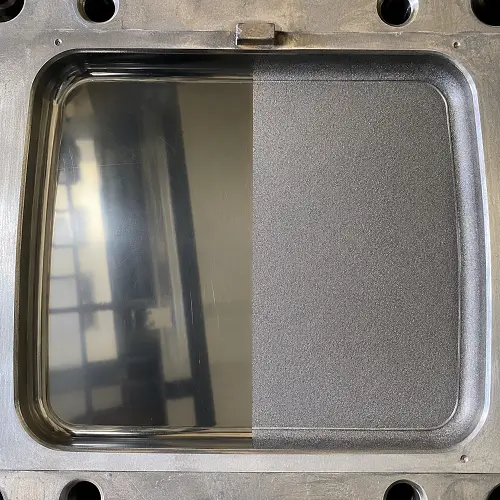
VDI 3400 is an internationally recognized mold texture standard developed by the Association of German Engineers (VDI). Instead of describing surface roughness using Ra values alone, the standard defines a series of textured finishes created by chemical etching on the mold surface.
When molten plastic is injected into the mold cavity, the texture on the steel surface is accurately replicated onto the finished part. This allows manufacturers to produce consistent surface finishes across thousands of molded components.
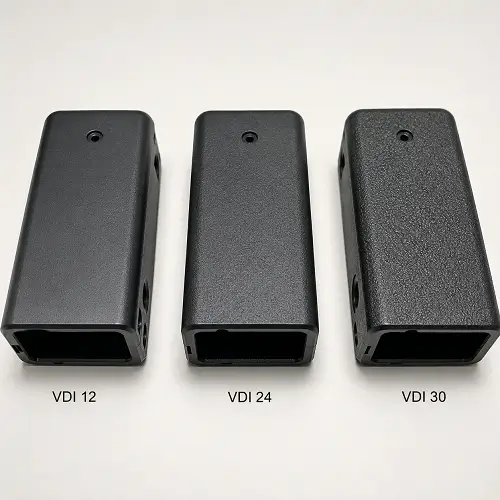
The VDI 3400 standard includes multiple texture grades, ranging from relatively fine finishes such as VDI 12 to much rougher textures like VDI 45. Each grade creates a different appearance and is suitable for different product requirements.
Unlike polished mold finishes, VDI textures are intentionally roughened to achieve a specific visual effect or functional purpose.
Why Do Designers Specify VDI Mold Textures?
Many people assume mold texture is only used to make plastic parts look better. In reality, designers often specify VDI textures for both cosmetic and functional reasons.
Improve Product Appearance
One of the most common reasons for using a textured mold surface is to create a premium-looking finish.
A light texture can reduce reflections, produce a more uniform appearance, and give consumer products a higher-quality feel compared with a completely polished surface.
For products such as electronic housings, automotive interior components, and power tool casings, textured finishes are often preferred over glossy surfaces.
Hide Minor Surface Defects
Small flow marks, weld lines, and light scratches tend to be much less noticeable on textured plastic parts.
While mold texture cannot eliminate molding defects, it can significantly reduce their visual impact, improving the overall appearance of the finished product.
This is one reason why many consumer electronics and automotive parts use VDI textures instead of mirror-polished finishes.
Increase Surface Grip
Some products benefit from a slightly rough surface that is easier to hold during normal use.
Items such as power tools, handheld medical devices, remote controls, and industrial equipment often use medium VDI textures to improve grip without changing the overall product design.
Create Consistent Production Results
A properly specified mold texture helps maintain a consistent appearance across different production batches.
Instead of relying entirely on polishing quality, manufacturers can reproduce the same surface finish every time the mold is serviced or refurbished, making quality control more consistent during long production runs.
Common VDI Texture Grades
The VDI 3400 standard contains multiple texture levels, but only a few are commonly used in injection molding projects.
| VDI Grade | Texture Level | Typical Applications |
|---|---|---|
| VDI 12 | Fine | Consumer electronics, medical housings, cosmetic parts |
| VDI 18 | Fine to Light | Electrical enclosures, appliance covers |
| VDI 24 | Medium | Automotive interior components, industrial products |
| VDI 30 | Medium-Rough | Tool housings, equipment covers |
| VDI 36 | Rough | Heavy-duty industrial plastic parts |
| VDI 42–45 | Very Rough | Decorative textures and specialty applications |
Rather than choosing the lowest or highest number, engineers normally select a texture that matches the product’s appearance requirements, expected handling conditions, and molding process.
What Does VDI 12 Mean?
One of the most frequently specified textures in injection molding is VDI 12. If you’ve received a product drawing or mold specification with this requirement, it simply means the mold surface should have a fine textured finish rather than a polished or mirror-like surface.
VDI 12 produces a subtle matte appearance that reduces glare while maintaining a clean cosmetic finish. Compared with rougher textures, it provides a smoother look and is easier to clean, making it a popular choice for consumer products where appearance is important.
Because the texture is relatively fine, VDI 12 is commonly used for electronic housings, medical devices, cosmetic packaging, and other plastic parts that customers frequently touch or see.
Although VDI 12 improves appearance, it is not always the best choice. Products requiring higher grip or a more pronounced textured finish often benefit from a rougher VDI grade.
How to Choose the Right VDI Texture
There is no universal “best” VDI texture. The right choice depends on how the finished product will be used, how it should look, and how the mold will be manufactured.
Instead of selecting a texture based only on the VDI number, engineers usually evaluate appearance, functionality, and manufacturability together.
Choose Fine Textures for Cosmetic Parts
Fine textures such as VDI 12 or VDI 18 are commonly selected when the product surface needs to look clean and refined.
These finishes are often used on electronic housings, medical equipment, consumer products, and cosmetic packaging because they reduce glare while maintaining a premium appearance.
If surface quality is a high priority, a finer texture is usually the better option.
Medium Textures for Everyday Products
Grades such as VDI 24 provide a more noticeable texture without becoming excessively rough.
They are widely used for automotive interior trim, appliance housings, industrial enclosures, and power tool casings where a balance between appearance and durability is required.
Medium textures also help disguise light scratches that may develop during normal product use.
Rough Textures for Better Grip
Higher VDI grades such as VDI 30 and above are generally chosen when additional surface grip is needed.
Products designed for industrial environments or handheld operation often benefit from rougher textures because they are easier to hold and less likely to slip.
However, rough textures also require more attention during mold design because they increase friction between the plastic part and the mold surface.
Does VDI Texture Affect Mold Release?
Yes. This is one of the most overlooked aspects of mold texture selection.
As the texture becomes rougher, the molded plastic grips the mold surface more tightly during ejection. Without sufficient draft angle, the part may stick to the mold, making ejection more difficult and increasing the risk of cosmetic damage.
For this reason, rougher VDI textures usually require larger draft angles than polished mold surfaces. The deeper the texture, the greater the draft angle needed to release the part smoothly.
If the draft angle is too small, the molded surface may show drag marks, scratches, or incomplete texture replication after repeated production cycles.
When planning a textured mold, it is always important to evaluate the surface finish together with the part geometry. You can learn more about this in our guide to Draft Angle in Injection Molding, which explains how draft affects part quality and mold release.
Does VDI Texture Increase Mold Cost?
In most projects, yes—but not as much as many people expect.
Creating a VDI texture requires an additional chemical etching process after the mold cavity has been machined and polished. This extra manufacturing step increases tooling cost compared with a standard polished finish.
However, the additional cost is often justified because textured surfaces reduce the visibility of minor cosmetic imperfections, improve product appearance, and eliminate the need for extremely high polishing standards.
For many consumer products, automotive components, and industrial housings, choosing an appropriate VDI texture can actually lower the overall production cost by reducing cosmetic rejection rates.
Instead of asking whether a VDI texture is more expensive, it is usually better to ask whether the improved appearance and production consistency are worth the additional tooling investment.
VDI Surface Finish vs SPI Finish
Both VDI 3400 and SPI are widely used mold surface finish standards, but they serve different purposes.
SPI focuses primarily on polished finishes, ranging from mirror polishing to stone and paper finishes. VDI, on the other hand, is specifically designed for textured surfaces created by chemical etching.
Neither standard is better than the other. The choice depends on the appearance, functionality, and product requirements.
For a detailed comparison between these two mold finish standards, see our VDI vs SPI Surface Finish Guide.
Common Applications of VDI Mold Texture
Different products require different surface textures. Instead of selecting a VDI grade based only on appearance, manufacturers usually consider how the product will be used throughout its service life.
Below are some common applications where VDI textures are frequently specified.
Consumer Electronics
Products such as speakers, routers, remote controls, and electronic housings often use VDI 12 or VDI 18 to create a clean matte appearance.
These finer textures reduce fingerprints and reflections while maintaining a premium cosmetic finish that customers expect from consumer electronics.
Automotive Interior Components
Dashboard panels, door trim, center consoles, and switch bezels commonly use VDI 24 or similar medium textures.
These finishes help hide minor scratches caused by daily use while creating a consistent appearance across large plastic assemblies.
Medical Devices
Many handheld medical products require surfaces that are easy to clean while avoiding excessive gloss.
Fine VDI textures provide a professional appearance without creating deep surface grooves that may trap dirt or become difficult to maintain.
Industrial Equipment
Power tools, machine covers, and industrial control housings often benefit from rougher VDI textures.
The additional surface texture improves grip and helps conceal wear that naturally occurs during long-term operation.
Common Mistakes When Choosing a VDI Texture
Selecting a mold texture is not simply choosing a number from the VDI chart. Several common mistakes can affect both appearance and manufacturing performance.
Choosing Texture Based Only on Appearance
Many designers select a VDI grade because they like the way it looks.
However, appearance is only one part of the decision. Product function, draft angle, material shrinkage, and expected wear should also be considered before finalizing the mold texture.
Ignoring Draft Angle Requirements
One of the most common mistakes is applying a rough texture without increasing the draft angle.
As surface texture becomes deeper, friction between the molded part and the mold also increases. Without sufficient draft, parts may stick during ejection, resulting in drag marks or damaged textures.
This is why mold texture and Draft Angle in Injection Molding should always be evaluated together during mold design.
Using Rough Textures on Small Cosmetic Features
Very rough textures may look attractive on large panels, but they can reduce detail quality on small logos, symbols, or decorative features.
For precision cosmetic parts, a finer VDI texture often produces cleaner and more consistent results.
Not Discussing Texture Before Tooling
Changing the mold texture after the tool has been completed usually increases both cost and lead time.
Whenever possible, surface finish requirements should be confirmed during the mold design stage rather than after sampling begins.
Design Checklist Before Selecting a VDI Texture
Before releasing a mold for manufacturing, reviewing the following questions can help avoid unnecessary tooling modifications.
✔ Does the product require a glossy or textured appearance?
✔ Will the part be touched frequently, requiring better scratch resistance or improved grip?
✔ Is the selected VDI grade suitable for the plastic material being molded?
✔ Does the mold design provide enough draft angle for the chosen texture?
✔ Has the surface finish been confirmed before mold manufacturing begins?
Answering these questions early makes it much easier to achieve the desired appearance while avoiding costly mold revisions later.
Conclusion
The VDI 3400 mold texture standard provides a reliable way to specify consistent surface finishes for injection molded plastic parts. From fine textures like VDI 12 to rougher finishes used on industrial products, each grade is designed for different appearance and functional requirements.
Choosing the right VDI texture involves more than selecting a number from a chart. Product appearance, mold release, draft angle, material selection, and manufacturing cost should all be evaluated together before tooling begins.
If you’re unsure which VDI texture is suitable for your product, our engineering team can review your drawings, recommend an appropriate mold surface finish, and provide DFM feedback before mold manufacturing starts.