
The time required for an injection molding project depends on much more than the molding process itself. Before a plastic part can enter mass production, several important steps must be completed, including design review, mold development, trial production, quality approval, and final manufacturing.
For simple plastic parts, the entire process may take only a few weeks. However, more complex components with tight tolerances, textured surfaces, multiple cavities, or special materials often require a longer development period.
Many customers ask, “How long does injection molding take?” The answer depends on the part design, mold complexity, material selection, surface requirements, and production expectations.
A typical injection molding project includes both mold development time and plastic part production time. Understanding each stage helps you create a more realistic product launch schedule and avoid unexpected delays.
This guide explains the complete injection molding timeline, from initial design review and mold making to final plastic part production.
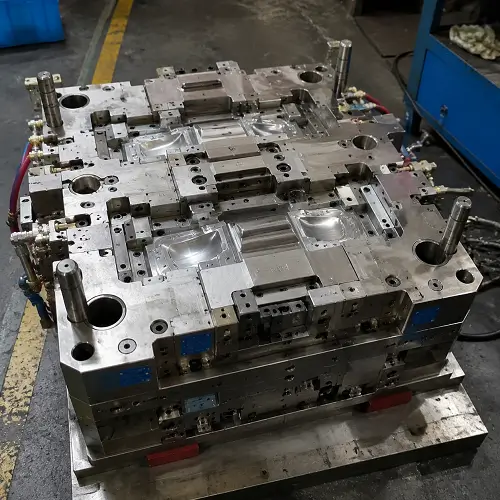
How Long Does Injection Molding Take From Design to Production?
The complete timeline for an injection molding project can range from several weeks to several months, depending on the complexity of the part and the requirements of the project.
A simple plastic component with a straightforward mold structure may move into production relatively quickly. However, parts with complex geometries, undercuts, cosmetic surfaces, or strict dimensional requirements require additional engineering and manufacturing time.
In most cases, the timeline includes five major stages:
| Stage | Typical Time |
|---|---|
| Design Review and DFM Analysis | Several days |
| Mold Design and Manufacturing | 3–8 weeks |
| Mold Trial and Sample Approval | Several days to weeks |
| Production Preparation | Several days |
| Mass Production | Depends on Order Quantity |
These stages are connected. A delay in design confirmation, material selection, or sample approval can affect the entire project schedule.
For this reason, experienced injection molding suppliers focus not only on manufacturing speed but also on reducing unnecessary revisions before production begins.
What Is Included in the Injection Molding Timeline?
Many customers assume the timeline starts when the mold is being machined. In reality, successful injection molding projects begin much earlier.
The complete process usually includes:
- Product design review
- DFM analysis
- Mold design
- Mold manufacturing
- Mold testing
- Sample inspection
- Customer approval
- Plastic part production
Each step plays an important role in ensuring the final parts meet appearance, dimensional, and performance requirements.
Skipping early engineering reviews may appear faster at the beginning, but it often creates problems later, such as mold modifications, production delays, or inconsistent part quality.
DFM Review and Design Confirmation
Before starting mold production, the first step is usually a design review.
A professional injection molding supplier will evaluate the CAD model and check whether the part is suitable for manufacturing. This process is often called Design for Manufacturability (DFM).
During DFM review, engineers typically evaluate:
- Wall thickness consistency
- Draft angles
- Rib and boss design
- Undercut features
- Parting line location
- Gate position
- Material selection
These factors directly affect mold complexity, production stability, and final part quality.
For example, a plastic part with insufficient draft angle may create ejection problems. A part with uneven wall thickness may develop sink marks or warpage after cooling.
Early design improvements can reduce future tooling modifications and help keep the project timeline predictable.
You can learn more about structural considerations in our guides on Plastic Rib Design for Injection Molded Parts and Plastic Boss Design for Injection Molded Parts.
Why Design Review Matters Before Tooling
One of the biggest reasons injection molding projects become delayed is changing the design after mold manufacturing has already started.
Once steel has been machined, even small design changes may require additional work, including:
- Modifying mold components
- Re-machining inserts
- Adjusting the mold structure
- Repeating mold trials
Reviewing the design before tooling begins helps identify potential issues early, when changes are faster and less expensive.
For customers developing a new product, this stage is not an unnecessary delay. It is an important step that improves the chances of achieving stable production with fewer corrections later.
Why Does Mold Manufacturing Take Several Weeks?
Many customers are surprised when they receive a quotation showing a mold lead time of four to eight weeks. Since the finished plastic part may only take seconds to mold, it is natural to wonder why mold development requires so much longer.
The answer is that an injection mold is a precision manufacturing tool rather than a simple metal component. Every cavity, core, cooling channel, and moving mechanism must be accurately machined, assembled, inspected, and tested before it is ready for production.
For a simple housing with a straightforward structure, mold manufacturing can often be completed relatively quickly. However, products with complex geometry, multiple sliders, cosmetic surfaces, or tight tolerances require considerably more engineering work before the first molded part can be produced.
What Happens During Mold Manufacturing?
Once the product design has been confirmed, mold production begins.
The process usually includes mold design, steel preparation, CNC machining, EDM machining, polishing or texturing, mold assembly, and dimensional inspection.
Although these steps follow a logical sequence, they are not simply performed one after another. Experienced mold manufacturers often overlap certain operations to improve efficiency while maintaining accuracy.
The goal is not to finish the mold as quickly as possible, but to produce a tool capable of manufacturing stable, repeatable plastic parts throughout its production life.
Why Surface Finish Can Affect Lead Time
Surface finish is often overlooked when customers estimate project schedules.
A plastic part with a standard molded finish may move directly from machining to mold assembly. However, products requiring high-gloss polishing or textured surfaces need additional finishing processes before the mold is ready for sampling.
For example, consumer electronics often require polished cosmetic surfaces, while automotive interiors frequently specify textured finishes such as VDI 12 or VDI 24 to reduce glare and improve appearance.
Although these finishing operations add several days to the tooling schedule, they help achieve better cosmetic quality and more consistent production results.
If your project requires a textured mold surface, our VDI 3400 Mold Texture Standard guide explains how different texture grades influence both appearance and manufacturability.
Why Is the First Mold Trial So Important?
One of the biggest misconceptions in injection molding is that production can begin immediately after the mold has been assembled.
In reality, the first mold trial—commonly called the T1 sample—is one of the most important stages of the entire project.
During this trial, engineers verify whether the molded parts meet the original design requirements. Dimensions, appearance, filling balance, warpage, flash, shrinkage, and other quality characteristics are carefully evaluated before customer samples are released.
It is completely normal for minor adjustments to be made after the first trial. These improvements help optimize the mold and reduce the risk of production problems later.
For products with high cosmetic requirements or complex structures, several rounds of sampling may be necessary before mass production begins. Rather than indicating a problem, this is simply part of developing a reliable manufacturing process.
Why Similar Plastic Parts Can Have Very Different Lead Times
Two plastic housings may appear almost identical, yet one project reaches production weeks earlier than the other.
The difference usually comes from the engineering requirements behind the design rather than the visible shape of the part.
For example, a housing with uniform wall thickness and no side actions is generally faster to manufacture than one requiring sliders, textured cosmetic surfaces, threaded inserts, or tight dimensional tolerances.
Material selection can also influence the schedule. Engineering plastics, transparent materials, and glass-filled resins often require additional process validation before production starts.
This is why experienced suppliers estimate lead time based on the complete project rather than the size of the plastic part alone.
What Can Delay an Injection Molding Project?
Most project delays are not caused by machining itself. They usually occur when important decisions are made after mold manufacturing has already started.
Common causes include:
- Design changes after tooling begins
- Material changes during development
- Surface finish revisions
- Additional sample approval cycles
- New functional requirements after T1 sampling
Confirming these details early helps reduce unnecessary mold modifications and keeps the project moving toward production more efficiently.
Can Injection Molding Lead Time Be Reduced?
In many cases, yes. While certain manufacturing steps cannot be skipped, a well-prepared project can move from design to production much more efficiently.
The key is not rushing the mold manufacturing process, but reducing unnecessary revisions before production begins.
Customers who provide complete design information and confirm engineering details early often experience shorter overall project timelines than those making frequent changes during mold development.
Finalize the Product Design Early
One of the most effective ways to shorten project lead time is to finalize the product design before mold manufacturing begins.
Even small changes after steel has been machined may require mold modifications, additional sampling, and new inspections. These revisions increase both lead time and tooling cost.
Reviewing the design carefully at the beginning is usually much faster than correcting problems after the mold has already been built.
Define Material and Surface Requirements in Advance
Material selection and surface finish should be confirmed before tooling starts whenever possible.
Changing from ABS to PC, adding glass fiber, or switching from a standard molded finish to a textured cosmetic surface may require process adjustments or mold modifications.
Providing these requirements early helps engineers design the mold correctly from the beginning and reduces unnecessary project delays.
Respond Quickly During Sample Approval
After the first molded samples are delivered, customer feedback becomes one of the biggest factors affecting the remaining schedule.
If design revisions, dimensional comments, or appearance approvals are delayed, production cannot move forward.
Fast communication between the customer and the manufacturing team helps keep the project progressing smoothly toward mass production.
How to Plan an Injection Molding Project More Efficiently
Although every project is different, successful injection molding programs usually follow the same principle: identify potential problems before production begins instead of correcting them after tooling has started.
Before requesting a quotation, it is helpful to prepare the following information:
- 3D CAD files or detailed drawings
- Plastic material requirements
- Estimated production quantity
- Surface finish expectations
- Tolerance requirements
- Assembly or functional requirements
Providing complete project information allows the engineering team to evaluate manufacturability more accurately and estimate a realistic production schedule.
Common Questions About Injection Molding Lead Time
Is mold manufacturing the longest part of the project?
In most cases, yes. Mold development usually requires the greatest amount of time because it involves engineering design, precision machining, assembly, inspection, and trial production before plastic parts can be manufactured consistently.
Can production start immediately after the mold is finished?
Not usually.
The mold normally goes through at least one trial run before mass production begins. Samples are inspected to verify dimensions, appearance, and functionality before customer approval is received.
Does a larger plastic part always require a longer lead time?
Not necessarily.
Part complexity generally has a much greater impact than overall size. A small part with multiple sliders and tight cosmetic requirements may take longer to develop than a much larger but simpler component.
Can lead time be guaranteed?
Every project is different, so lead times are normally estimated based on the product design, mold structure, material selection, and production requirements.
An experienced supplier can provide a realistic schedule after reviewing the project details and identifying potential manufacturing challenges.
Conclusion
Injection molding lead time is influenced by much more than mold manufacturing alone. From design review and engineering analysis to mold development, sample validation, and final production, every stage contributes to the overall project schedule.
Understanding where time is spent allows product developers to plan more effectively and reduce unnecessary delays. Early design confirmation, clear material specifications, and timely communication during sampling all help keep projects on schedule.
At JeekMould, we support customers throughout the entire process—from DFM review and mold development to injection molding and final plastic part production. Whether you’re developing a prototype or preparing for mass production, our engineering team can help estimate realistic lead times based on your product requirements.