
Nylon injection molding is widely used for producing functional plastic parts that must withstand mechanical load, repeated stress, and long service life. Compared with many general-purpose plastics, nylon is commonly considered once durability and structural reliability become real concerns rather than theoretical requirements.
In injection molding applications, nylon occupies a practical middle ground among engineering materials. It is frequently used for medium- to high-volume production where mechanical reliability, processing stability, and cost must remain balanced. In many real projects, nylon enters the discussion only after simpler plastics start showing their limits.
Understanding how nylon behaves during injection molding helps clarify where it performs well—and where its limitations begin to matter.
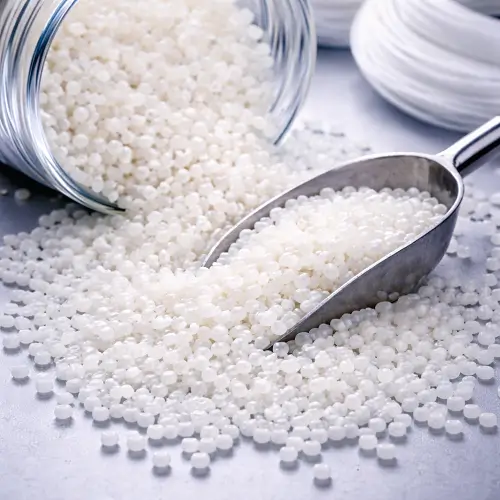
What Is Nylon as an Injection Molding Plastic?
Nylon is a family of engineering thermoplastic materials widely used in injection molding. From a material classification perspective, nylon is a plastic, specifically a polyamide (PA), processed by melting and solidifying without permanent chemical change.
This thermoplastic behavior allows nylon to be injection molded repeatedly while maintaining consistent material characteristics, making it suitable for industrial production across a wide range of applications.
Common Nylon Types Used in Injection Molding
Nylon injection molding involves a range of polyamide materials rather than a single grade. Different nylon types are selected based on processing requirements, environmental exposure, and part design considerations.
While PA6 and PA66 are the most frequently referenced materials, they represent only part of the nylon family used in injection molding. In practice, these grades are usually treated as starting points rather than final material decisions.
PA6 (Nylon 6)
PA6 is widely used in nylon injection molding due to its stable processing behavior and broad availability. It is commonly applied in general-purpose injection molded nylon parts across multiple industries.
PA66 (Nylon 66)
PA66 is another commonly used material in nylon injection molding and is often evaluated alongside PA6 during material selection. Injection molded nylon parts made from PA66 are widely used in industrial and commercial products.
PA12 (Nylon 12)
PA12 is used in nylon injection molding applications where environmental exposure or dimensional requirements differ from standard conditions. Injection molded nylon parts made from PA12 are commonly found in automotive, fluid-handling, medical, and electrical products.
Glass Fiber Reinforced Nylon
Glass fiber reinforced nylon is widely used in injection molding for structural plastic components. These materials are commonly specified for automotive systems, electrical enclosures, and industrial equipment.
Modified and Specialty Nylon Grades
Beyond standard grades, nylon injection molding also includes flame-retardant nylons, impact-modified nylons, and formulations developed for specific regulatory or environmental conditions. These materials are typically selected when standard nylon grades no longer meet application requirements.
Advantages and Limitations of Nylon Injection Molding
Like any engineering material, nylon injection molding offers clear advantages but also introduces trade-offs that must be considered during design and production.
Advantages of Nylon Injection Molding
Nylon injection molding provides a practical balance between strength and durability for functional plastic parts. Unfilled injection molded nylon commonly achieves tensile strength suitable for structural applications without becoming brittle.
Nylon also shows good resistance to oils, fuels, and many industrial chemicals, which explains its frequent use in automotive and industrial environments. Its friction behavior allows nylon to be used in moving or sliding components where surface wear must be controlled.
From a production standpoint, nylon injection molding supports repeatable manufacturing. Once drying conditions and processing parameters are stabilized, consistent part quality becomes achievable across large production runs.

Limitations of Nylon Injection Molding
Moisture absorption is one of the most important limitations of nylon injection molding. This is often where expectations and real-world behavior begin to diverge.
Moisture uptake can influence both processing behavior and final part dimensions, which is why drying and conditioning are typically addressed early in nylon-based projects. Unmodified nylon also shows limited resistance to long-term UV exposure unless stabilized, and chemical resistance to strong acids and oxidizing agents must be considered in certain environments.
From a processing perspective, nylon injection molding requires tighter control of melt temperature, drying conditions, and cooling than many general-purpose plastics. Ignoring these factors usually leads to variability rather than immediate failure.
Typical Mechanical Properties of Injection Molded Nylon
Injection molded nylon offers mechanical performance suitable for a wide range of engineering applications. Unfilled nylon grades typically provide moderate tensile strength combined with good elongation, allowing parts to tolerate mechanical stress without cracking.
Glass fiber reinforced nylons shift performance toward higher stiffness and load-bearing capability. As fiber content increases, strength improves, while flexibility decreases, a trade-off that becomes more apparent once parts enter service.
Because mechanical properties are influenced by moisture condition, fiber orientation, and molding parameters, nylon injection molding performance is best evaluated using engineering ranges rather than single nominal values.
Process Capability and Tolerances in Nylon Injection Molding
Nylon injection molding is capable of producing parts with reliable dimensional control when mold design and processing conditions are properly managed.
For general-purpose injection molded nylon parts, dimensional tolerances typically fall within ±0.1–0.3 mm, depending on part geometry and wall thickness. Tighter tolerances may be achievable on stable, uniform designs, while complex geometries require more conservative expectations. At this stage, design intent matters more than nominal tolerance numbers.
Moisture conditioning after molding can influence final dimensions, which is why tolerance planning for nylon injection molding often considers both as-molded and conditioned states.
Typical Parameters for Nylon Injection Molding (Reference)
The values below represent typical engineering reference ranges. Actual performance varies by nylon grade, formulation, and processing conditions.
| Parameter | Typical Range |
|---|---|
| Tensile strength (unfilled nylon) | ~50–80 MPa |
| Tensile strength (glass-filled nylon) | ~120–200 MPa |
| Elongation at break (unfilled) | ~20–60% |
| Mold shrinkage | ~0.5–2.0% |
| Dimensional tolerance (general) | ±0.1–0.3 mm |
| Continuous service temperature | ~80–120 °C |
| Short-term heat resistance | up to ~160–180 °C |
| Moisture absorption (24 h) | ~1–3% |
| Recommended drying temperature | ~80–90 °C |
| Typical drying time | ~4–8 hours |
These ranges are intended for early-stage design reference rather than final specification.
Industries That Use Nylon Injection Molding
In many of these industries, nylon is selected not because it is ideal, but because it remains predictable under real production conditions.
Automotive Industry
Nylon injection molding is widely applied in automotive components such as brackets, housings, fasteners, and functional plastic parts used in vehicle systems.
Industrial Equipment and Machinery
In industrial equipment and machinery, nylon injection molding is used for structural and functional components produced in medium to high volumes.
Electrical and Electronics
Nylon injection molding is frequently applied in electrical and electronic products, including enclosures, connectors, and internal plastic components.
Consumer Products
Many consumer products rely on nylon injection molding for internal components, clips, and structural plastic parts.
Power Tools and Mechanical Devices
Nylon injection molding is widely used in power tools and mechanical devices for housings, supports, and internal structural components.
Industrial and Commercial Hardware
Nylon injection molding is also applied in industrial and commercial hardware, including mounting components, covers, and mechanical interfaces.
Nylon Injection Molding Compared with Other Materials
Compared with POM, nylon injection molding is often selected for applications where toughness and impact resistance are prioritized. Compared with ABS, nylon offers higher mechanical strength but requires stricter moisture and process control.
In some motion-related assemblies, nylon injection molding may also be considered for non-precision plastic gears, particularly where toughness matters more than low friction.
Why Choose Jeek for Nylon Injection Molding
Nylon injection molding performance depends on more than material selection alone. Mold design, processing parameters, and application understanding all influence final part quality.
At Jeek, nylon injection molding projects are evaluated based on part function, production requirements, and service environment before tooling decisions are finalized. This is usually where early material assumptions are either confirmed—or quietly corrected.
If nylon injection molding is under consideration for a specific application, Jeek can review part design and production requirements and provide practical guidance before manufacturing begins.
FAQs
Is nylon suitable for injection molding?
Yes. Nylon is a thermoplastic material commonly used in injection molding for functional and structural parts across many industries.
What nylon grades are commonly used in injection molding?
PA6 and PA66 are the most common, but nylon injection molding also includes PA12, glass fiber reinforced nylon, and modified grades.
What tolerances can be achieved with nylon injection molding?
Typical tolerances fall within ±0.1–0.3 mm, depending on part geometry, mold design, and process control.
Does nylon injection molding require material drying?
Yes. Nylon absorbs moisture, so proper drying before molding is essential for stable processing and dimensional consistency.
How does nylon compare with POM in injection molding?
Nylon is often chosen for toughness and impact resistance, while POM is preferred where dimensional stability and low friction are critical.