
Polyphenylene sulfide (PPS) is not a material engineers choose casually. In most projects, PPS only enters the discussion after conventional engineering plastics begin to show clear limitations—thermal deformation, chemical attack, or long-term dimensional drift. Injection molding PPS parts is entirely feasible, but it demands tighter process discipline and more thoughtful mold design than materials such as nylon or PBT.
When PPS injection molding is done correctly, the result is a component with exceptional dimensional stability and long-term reliability. When processing or tooling falls short, defects tend to appear early and repeat consistently.
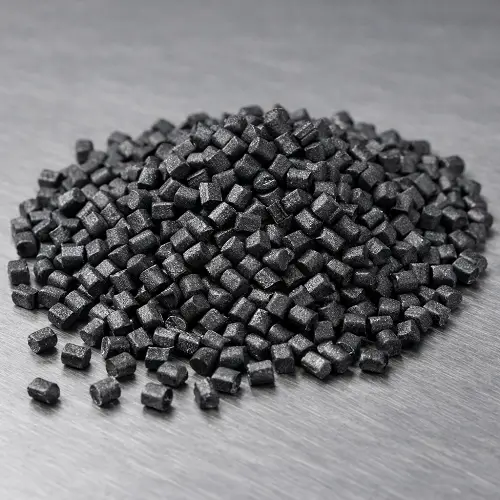
What Is PPS in Injection Molding?
PPS is a high-performance, semi-crystalline thermoplastic widely used in injection molding for parts exposed to heat, chemicals, and demanding service conditions. Most injection molded PPS components use glass-fiber-reinforced grades, although unfilled PPS is also common in electrical and chemical-handling applications.
From a manufacturing standpoint, PPS sits between standard engineering plastics and ultra-high-performance polymers such as PEEK. It offers excellent thermal and chemical resistance without reaching the extreme material cost and processing complexity associated with top-tier polymers. This balance explains why PPS appears frequently in automotive, electrical, and industrial injection molding programs.
Key Properties of PPS That Affect Injection Molding
PPS maintains mechanical integrity at elevated temperatures where many engineering plastics soften or creep. Continuous exposure to heat has minimal impact on dimensional stability, which makes PPS suitable for under-hood automotive components and electrical assemblies.
Chemical resistance is another defining property. PPS resists fuels, oils, acids, and cleaning agents that quickly degrade materials like PA or PC. In injection molding applications, this stability translates to predictable long-term performance rather than short-term cosmetic success.
Moisture absorption in PPS is extremely low. Unlike nylon, PPS does not rely on strict drying control to prevent hydrolytic degradation. However, low moisture absorption does not make PPS forgiving. High stiffness and fast crystallization introduce their own processing challenges.
Glass-fiber-reinforced PPS grades provide high strength and rigidity but are sensitive to fiber orientation. Directional shrinkage, warpage, and anisotropic mechanical behavior must be addressed during part and mold design rather than corrected during molding.
Advantages and Limitations of PPS Injection Molding
PPS injection molding offers clear benefits, but those benefits come with trade-offs that must be understood early in material selection.
Advantages
PPS delivers excellent dimensional stability across a wide temperature range. Injection molded parts maintain shape and tolerances even after repeated thermal cycling. Chemical resistance allows PPS components to survive harsh environments with minimal property change. Long-term reliability is a major advantage for electrical, automotive, and industrial applications.
Limitations
PPS is relatively brittle compared with nylon or PBT, particularly in glass-filled grades. Impact resistance is limited, and weld lines can become structural weak points if processing conditions are not optimized. PPS requires high mold temperatures, increasing tooling complexity and energy consumption. Material and tooling costs are also higher than those of general engineering plastics, making PPS an inefficient choice for non-critical parts.
Recommended Processing Parameters for PPS Injection Molding
| Parameter | Typical Range | Engineering Insight |
|---|---|---|
| Melt temperature | 300–330 °C | PPS viscosity remains high even at elevated temperatures. Lower melt temperatures increase short-shot risk and weld-line weakness, especially in glass-filled grades. |
| Mold temperature | 120–160 °C | Mold temperature strongly affects crystallization and weld-line strength. Cold molds often produce brittle parts with poor surface integrity. |
| Injection speed | Medium to high | Higher speed helps maintain flow-front temperature. Excessive speed increases shear and may damage glass fibers. |
| Packing pressure | Moderate and stable | Packing stabilizes dimensions but cannot compensate for insufficient mold temperature or poor gate design. Over-packing increases internal stress. |
| Cooling strategy | Uniform, not aggressive | Uneven cooling amplifies fiber-orientation-driven warpage. PPS benefits more from thermal balance than rapid heat extraction. |
| Drying requirement | Typically not required | PPS has very low moisture absorption. Drying is only necessary if material storage conditions are questionable. |
In PPS injection molding, mold temperature and flow control usually matter more than packing pressure. Many defects attributed to material quality are ultimately thermal-management issues.
Common Processing Challenges in PPS Injection Molding
Short shots are common when melt or mold temperature is too low for PPS viscosity, particularly in glass-filled grades. The material may begin filling normally but freezes prematurely in thin or distant sections.
Warpage is typically driven by fiber orientation combined with uneven cooling. PPS shrinks anisotropically, and unbalanced flow paths or asymmetric cooling intensify deformation after ejection.
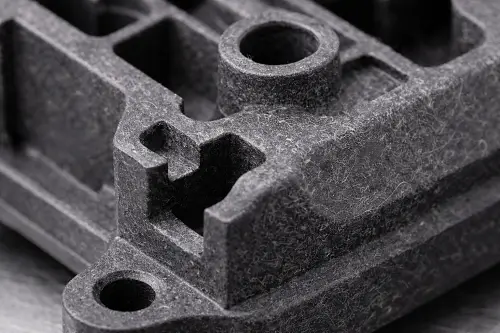
Brittle fracture after molding is usually process-related rather than a material flaw. Excessive shear, weak weld lines, or improper crystallization conditions significantly reduce impact resistance.
Weld-line weakness appears when temperature or pressure at the flow front is insufficient. Cold steel, low injection speed, or poor venting frequently lead to visible and structural weld-line defects.
Mold Design Considerations for PPS Parts
Gate type and location strongly influence PPS molding success. Gate designs that reduce shear concentration and improve flow balance help minimize fiber-orientation issues. Venting is critical, as PPS does not tolerate trapped gas well.
Cooling design should prioritize uniform temperature distribution rather than aggressive heat removal. Uneven cooling magnifies warpage risk and dimensional variation. In practice, many PPS molding problems are blamed on the material, while the root cause lies in gate orientation, cavity balance, or insufficient mold temperature control.
Typical Applications of PPS Injection Molded Parts
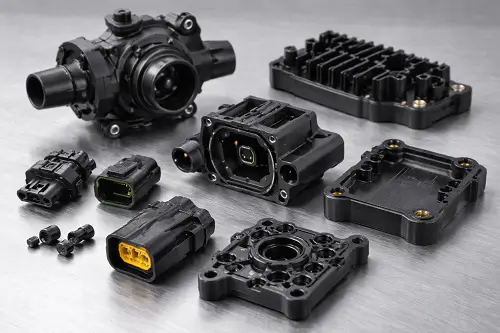
PPS injection molded components are widely used where heat resistance, chemical stability, and dimensional control are required. Common examples include automotive connectors, sensor housings, electrical terminal blocks, pump components, and industrial electronics parts. These applications emphasize functional reliability over cosmetic appearance.
The significance of PPS injection molding
PPS injection molding is well-suited for parts exposed to sustained heat, chemicals, or long service cycles where dimensional drift cannot be tolerated. It is often selected for safety-critical or reliability-driven applications.
However, PPS is unnecessary for moderate-temperature environments where nylon or PBT can meet performance requirements at lower cost. Thin-wall, high-flow geometries may be better served by LCP, while extreme temperature or mechanical demands may justify PEEK. Material selection should balance performance needs against processing risk and tooling investment.
Why Choose Jeek for PPS Injection Molding
PPS injection molding leaves little margin for error. Stable results depend on correct material selection, gate orientation, mold temperature control, and balanced flow behavior. When any one of these factors is overlooked, defects such as warpage, brittleness, or weak weld lines tend to appear early and repeat consistently.
At Jeek, PPS injection molding projects are reviewed from a manufacturing standpoint before tooling begins. Part geometry, gate strategy, fiber orientation risk, and thermal balance are evaluated during DFM to reduce trial-and-error during sampling. This approach helps identify potential molding risks early rather than correcting them after tooling investment.
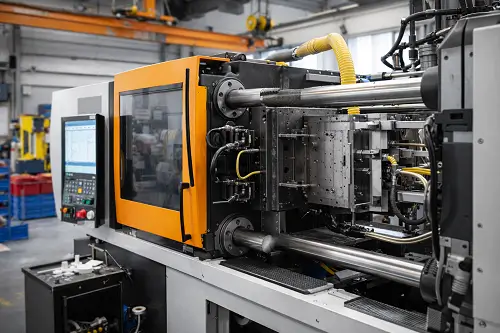
For PPS injection molding projects that require stable dimensions and reliable long-term performance, you can submit drawings to request a PPS injection molding quote from Jeek. Processing feasibility and tooling considerations can be reviewed before production decisions are finalized.
FAQs
Is PPS injection molding suitable for high-temperature applications?
Yes. PPS injection molding is widely used for parts exposed to continuous heat, where standard engineering plastics lose dimensional stability or mechanical strength.
Does PPS injection molding require material drying before processing?
In most cases, no. PPS injection molding does not require drying because PPS has extremely low moisture absorption, unless storage conditions are poor.
Why do defects occur in PPS injection molding, such as brittleness or cracking?
Defects in PPS injection molding are usually caused by excessive shear, low mold temperature, or weak weld-line formation rather than the PPS material itself.
What mold temperature is recommended for PPS injection molding?
PPS injection molding typically requires mold temperatures between 120–160 °C to achieve proper crystallization and weld-line strength.
Can PPS replace nylon in injection molded parts?
Only when higher heat resistance, chemical stability, or long-term dimensional control is required. For general applications, nylon remains the more cost-effective choice.