
Many plastic products are assembled without screws. Open a battery cover, remove the back shell of a remote control, or take apart a small electronic device, and there is a good chance you will find snap fits holding the parts together.
Snap fits are popular because they simplify assembly. Instead of adding screws, inserts, or extra hardware, the plastic parts lock together using features molded directly into the product. This can reduce assembly time, lower manufacturing costs, and create a cleaner appearance.
A snap fit that works well can save money in production. A poor snap fit can create the opposite result. It may crack during assembly, become loose after repeated use, turn white around the stressed area, or require mold changes after the first trial.
For customers developing injection molded parts, snap fit design should be reviewed before tooling begins. Once the mold is built, changing snap features can be more expensive than adjusting the CAD model early.
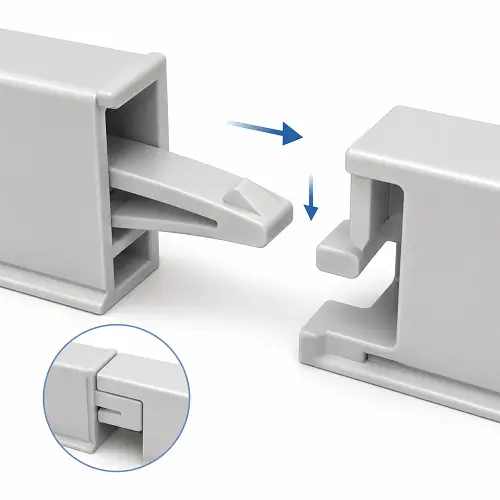
What Is a Plastic Snap Fit?
plastic snap fit is a molded feature that allows two parts to lock together by flexing during assembly and returning to position after engagement. The feature is usually molded directly into the plastic part, so it can replace screws, clips, metal inserts, or other fastening hardware in many products.
Snap fits are often used in electronic housings, battery covers, plastic enclosures, medical devices, automotive interior parts, and consumer products. Some snap fits are only assembled once. Others need to open and close many times over the life of the product. That difference matters because a one-time assembly feature does not need the same durability as a part that will be opened repeatedly.
The idea is simple, but the performance depends on material, geometry, assembly force, and mold design. A snap fit that looks fine on a screen may still fail when real molded parts are assembled.
Why Snap Fits Are Used Instead of Screws
Many products use snap fits because they reduce assembly work. A worker can often press two plastic parts together in seconds, while screw assembly requires extra hardware, tools, and labor. For high-volume production, removing even one screw or one assembly step can create real savings over time.
Snap fits also help improve product appearance. Many consumer electronics, handheld devices, smart home products, and plastic housings are designed without visible screws because customers prefer a clean outer surface. A well-designed snap fit can hold the parts together while keeping the product simple from the outside.
Cost is another reason. Screws, inserts, washers, and extra assembly steps may look small on one product, but they become meaningful when production reaches thousands or hundreds of thousands of units. For larger production runs, a molded snap fit can often reduce both part count and assembly cost.
Why Snap Fits Fail
Many snap fit problems begin when the design focuses only on locking two parts together. A snap fit may look correct in CAD, but once the parts are molded and assembled, issues such as excessive stress, poor material selection, sharp corners, or insufficient flexibility can lead to cracking, whitening, looseness, or long-term durability problems.
The part may fail because the snap feature is too stiff. It may also fail because the selected plastic cannot flex enough during assembly. In other cases, the material is suitable, but the geometry forces the snap fit to bend too far before it locks into place.
Sharp internal corners are another common problem. These areas concentrate stress during bending and often become the starting point for cracks. A small radius change can sometimes make the feature more durable without changing the product appearance.
Successful plastic snap fit design usually comes from the right balance between holding strength and flexibility. If the snap fit is too weak, the product feels loose. If it is too strong, assembly becomes difficult and the feature may break.
Why Snap Fits Crack During Assembly
A snap fit usually cracks because the material is forced to bend more than it can safely handle during assembly. This often happens when the feature is too stiff, the engagement distance is too large, or the selected material does not provide enough flexibility for the application.
Material changes can create unexpected failures. A snap fit that works well in polypropylene may crack when the same design is molded in ABS or polycarbonate. PP can flex more easily, while harder materials may need a different geometry to survive assembly.
Assembly method also matters. If operators need to force the parts together, or if the snap fit only engages when pushed at an awkward angle, the stress may become too high. This is why real assembly testing is important before production approval.
Not every cracked snap fit needs a stronger material. In many cases, the better solution is to reduce assembly force, add more flexibility, improve the radius at the base, or adjust the locking feature so the part does not bend beyond its safe range.
Why Plastic Parts Turn White Around Snap Fits
White marks around snap fits usually come from stress whitening. This happens when the plastic is stretched or bent too much during assembly, creating a visible white area near the stressed section.
Many customers see whitening and think the material is defective. In most cases, the issue is not the resin itself. It usually means the snap fit is under too much stress or the material is being forced beyond a comfortable range.
A small amount of whitening may only be cosmetic, especially on hidden internal features. Heavy whitening is more serious because it may show that the snap fit is close to cracking or may lose reliability after repeated use.
Better material selection, smoother radii, lower assembly force, and more flexible geometry can reduce whitening. If the part has a visible cosmetic surface near the snap feature, this issue should be reviewed before tooling.
Best Materials for Snap Fit Designs
The material used in a snap fit often determines whether it survives repeated use or breaks during assembly. Some plastics can flex many times without damage, while others provide higher strength but less flexibility.
Polypropylene is one of the most forgiving materials for snap fits because it can flex repeatedly without cracking. This makes it common for battery covers, living hinges, packaging parts, and products that need repeated opening and closing.
ABS is widely used in electronic housings and consumer products because it gives a good balance of appearance, strength, and cost. It can work for snap fits, but it usually needs more careful design than PP because it is less flexible.
PC/ABS is often selected when the product needs better impact resistance and stronger housing performance. It is common in industrial equipment, medical device housings, and automotive electronics where toughness matters.
Nylon can be a good choice for functional snap features that need strength and wear resistance. It is often used in automotive, industrial, and mechanical applications, but grade selection and moisture behavior should be considered.
There is no universal best plastic for snap fits. The material should match how often the part is assembled, how much force the snap feature must hold, and whether the feature is cosmetic, functional, or structural.
For many consumer products and plastic housings, ABS remains a practical choice because it balances cost, appearance, and performance. For parts that require frequent flexing, polypropylene is often preferred. Products that need higher toughness may benefit from PC/ABS or nylon depending on the application.
How Much Force Should a Snap Fit Use?
A snap fit should feel secure without requiring excessive force during assembly. If the force is too low, the product may feel loose or separate during use. If the force is too high, assembly becomes difficult and the snap feature may crack, whiten, or deform.
Customers often notice this problem during sample testing. The part may technically assemble, but the user experience feels wrong. A battery cover may be too hard to remove. A plastic housing may require too much pressure to close. A service cover may break after being opened several times.
The right force depends on the product. A one-time assembly housing can use a stronger lock than a battery cover that customers open regularly. A part used in a medical device, electronics enclosure, or consumer product may also need a smoother assembly feel than an internal industrial clip.
Snap fit force should be reviewed together with material choice and part geometry. A small design adjustment can often make assembly smoother without losing holding strength.
Snap Fits in Plastic Housings
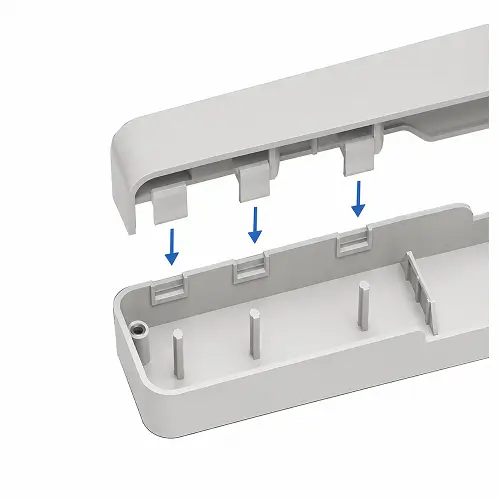
Plastic housings often use snap fits to reduce screws and simplify assembly. Electronic housings, control boxes, sensor covers, and handheld devices may all use snap features to hold the top and bottom shells together.
For simple housings, snap fits can create a cleaner appearance and reduce assembly cost. They are especially useful when the product does not need frequent servicing and the outer surface should stay free of visible fasteners.
For products that need regular maintenance, screws may still be safer. A housing that must be opened many times may wear out or lose retention if the snap features are too aggressive or too small.
Snap fits can work very well in custom plastic housings, but the design should be reviewed with the material, assembly method, and production volume in mind. A housing designed for ABS may need different snap geometry than one designed for PP or PC/ABS.
Snap Fit Design and Mold Cost
Snap fits can reduce assembly cost, but they can also affect mold cost. A simple snap feature that can be molded directly into the part may add little or no extra tooling cost. A complex snap fit with an undercut may require sliders, lifters, or more complicated tooling.
This is where customers sometimes get surprised. A small feature on the CAD model may look simple, but if it blocks the mold from opening straight, the mold design becomes more complex.
In many projects, a simple snap fit has little effect on tooling cost. A complex snap fit with side actions can increase mold cost by hundreds or even thousands of dollars depending on part size, mold structure, and production requirements.
For medium and high-volume production, the added mold cost may still be worth it if the snap fit removes screws, inserts, or extra assembly steps. For low-volume projects, the cost difference should be reviewed carefully before committing to the design.
The best approach is to review snap fit geometry before tooling. A small design change may avoid a slider, simplify the mold, and reduce both tooling risk and cost.
Common Snap Fit Design Mistakes
Most snap fit issues come from practical design problems rather than complicated engineering theory. The feature may be too stiff, too short, too sharp at the base, or too difficult to assemble at the correct angle.
A common mistake is using the same snap fit design for different materials. A design that works in PP may not work in ABS, PC, or nylon without changes. Each material flexes differently and responds to stress in a different way.
Another mistake is ignoring how the part will be used after assembly. If the product is opened once at the factory, the snap fit requirement is different from a consumer product that is opened every week.
Some designs also ignore molding limits. A snap feature with a hidden undercut may require side action in the mold. If that is not reviewed early, the tooling cost can increase after the design is already approved.
A good snap fit should be easy enough to assemble, strong enough to hold, and realistic enough to mold without unnecessary tooling complexity.
When Snap Fits Are Not the Best Choice
Snap fits are useful, but they are not always the best fastening method. Some products need screws, inserts, hinges, or other assembly methods because the working conditions are too demanding for a simple snap feature.
If a product must be opened and closed many times for service, screws may provide better long-term reliability. If the housing must carry heavy loads, resist vibration, or stay closed in a safety-related application, snap fits may need to be combined with other fastening methods.
High-temperature environments can also create risk. Some plastics lose stiffness or strength when exposed to heat, which can reduce the holding force of the snap fit over time.
Chemical exposure is another factor. Cleaning agents, oils, solvents, or outdoor conditions may affect the plastic and reduce durability.
A snap fit can save cost, but it should not be used only to remove screws. It should be chosen because it fits the product function, expected use, and manufacturing plan.
Snap Fits vs Screws
Snap fits are usually better when the product needs fast assembly, fewer parts, lower labor cost, and a clean appearance. They work well for many consumer products, electronic housings, covers, and light-duty enclosures.
Screws are usually better when the product needs higher holding force, repeated service access, stronger compression, or easier repair. They also allow parts to be opened and reassembled with less risk of damaging the plastic.
Many products use both. A housing may use snap fits for alignment and screws for final strength. This approach can improve assembly while still giving the product reliable fastening.
The choice should depend on the product, not only cost. Snap fits can reduce assembly time, but screws may be the safer option when durability, serviceability, or load-bearing strength matters more.
How JeekMould Reviews Snap Fit Designs Before Tooling
Snap fit problems are much easier to fix before the mold is built. Once steel has been cut, changes to snap features, undercuts, or assembly areas can become expensive and time-consuming.
JeekMould can review CAD files before tooling to check whether the snap fit design matches the selected material, assembly method, and expected production volume. The review may look at snap flexibility, wall thickness, sharp corners, undercuts, mold release, and possible assembly risks.
For parts such as plastic housings, battery covers, clips, and consumer product shells, this early review can help prevent cracking, stress whitening, loose fit, or unnecessary mold complexity.
A practical DFM review does not need to make the design complicated. It should help the customer keep the snap fit simple, moldable, and reliable for production.
Request a Factory Quote
A snap fit can reduce screws, shorten assembly time, and lower production cost when the design is suitable for injection molding. It can also create problems if the material, geometry, or mold structure is not reviewed early.
JeekMould can review your CAD file, snap fit design, material requirements, and production quantity before tooling begins. The team can help identify assembly risks, molding concerns, and possible cost-saving design changes.
Request a factory quote for injection molded plastic parts with snap fit features.