
Polycarbonate (PC) is widely used in molded housings, optical components, and impact-resistant covers because it holds strength, clarity, and dimensional stability better than most commodity plastics. Anyone who has spent time molding PC knows the material has a very consistent personality—it performs beautifully once the process window is dialed in, yet it exposes mistakes faster than almost any other engineering resin. Drying, shear, and mold temperature leave visible marks on the surface, so the material rarely hides what went wrong. The following sections reflect how PC actually behaves inside a mold and why certain defects tend to repeat themselves if the process is not aligned.
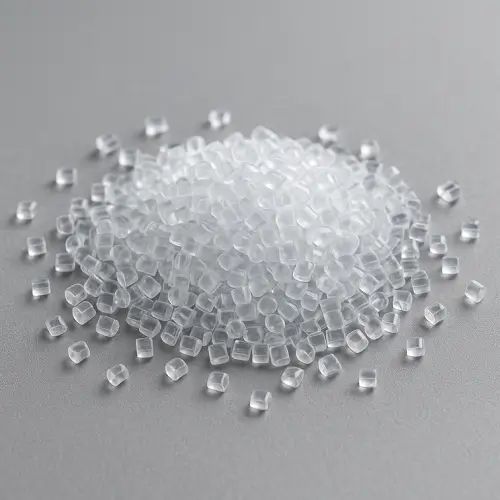
What Is Polycarbonate (PC) Injection Molding
Polycarbonate injection molding is the process of melting PC resin, driving it into a closed steel cavity, and allowing the part to cool under controlled conditions. If you’ve ever compared PC to ABS during sampling, you may have noticed how much more temperature-dependent PC flow is. Once the melt temperature, mold temperature, and gate capacity line up, PC fills smoothly and cools with minimal stress. When any one of those factors drifts, the surface will immediately show hesitation marks, whitening, or early freeze-off.
How Polycarbonate Behaves During Injection Molding
Inside the cavity, PC behaves as an amorphous polymer with predictable flow but very little tolerance for temperature imbalance. Many engineers notice the same pattern during early shots: the melt front advances with a defined “wave,” and if the mold is even slightly cold, that wave freezes before the pressure can build. Thin walls and long flow paths exaggerate this effect. When the balance is right, PC forms a clean flow front with strong surface finish; when it is not, the part tells you in the first few cycles.
Polycarbonate Material Properties That Influence Molding
PC’s strength and clarity make it attractive, but its molding behavior is shaped far more by moisture control and thermal stability. Anyone who has worked with PC knows that the mechanical data sheet rarely predicts how the material will behave during processing.
Melt Viscosity and Flow Characteristics in PC Molding
PC carries high melt viscosity even at 290–310 °C. This is why processors often see hesitation at thickness transitions or narrow gates. The flow front loses heat quickly when contacting cold steel, and once that outer layer freezes, pressure has difficulty pushing the melt farther. If you’ve ever tried to fill a thin-wall PC part with a marginal gate, the dull surface and partial-fill pattern probably looked familiar.
Moisture Sensitivity and Drying Requirements for PC
Moisture is the single most common cause of PC defects. Even engineers with years of molding experience occasionally underestimate how quickly PC absorbs moisture in a humid shop. Once hydrolysis begins, the material reveals itself through splay, brittle weld lines, or a hazy surface. Many teams first catch the problem not in the dryer but on the part itself. Drying at 120–125 °C for several hours is more than a guideline—it is what keeps PC from degrading before it reaches the nozzle.
Shear Sensitivity and Thermal Stability of PC
While PC tolerates high melt temperatures, it does not respond well to localized shear peaks. A gate that is too small or a transition that forces the melt through a sharp restriction often produces the same pattern: slight yellowing, micro-burning, or small dark specks along the surface. If you’ve ever stopped a machine and pulled the sprue to inspect gate shear, PC often provides instant feedback when the balance is off.
Recommended Processing Parameters for PC Injection Molding
Processing PC requires a tight window, but once established it is remarkably stable. The trick is getting melt temperature, mold temperature, and injection staging to work together rather than independently.
| Category | Recommended Range | Notes |
|---|---|---|
| Melt Temperature | 280–310 °C | Higher temperature improves flow for thin-wall PC; avoid >320 °C to prevent yellowing. |
| Mold Temperature | 90–120 °C | Below 90 °C causes haze, weak weld lines, and early freeze-off. |
| Injection Speed | Medium to High (staged) | Too fast at the start can cause jetting; staged speed improves wetting. |
| Injection Pressure | 80–140 MPa | Depends on wall thickness and flow length. |
| Packing Pressure | 60–90% of fill pressure | Required to maintain density as the gate freezes; low packing causes sinks and stress. |
| Packing Time | 8–20 sec | Adjust based on gate freeze time. |
| Back Pressure | 3–10 MPa | Ensures uniform melt and reduces air entrapment; too high increases shear. |
| Screw Speed | 30–80 rpm | Lower rpm reduces shear heat and improves melt stability. |
| Drying Temperature | 120–125 °C | PC must be dried thoroughly before molding. |
| Drying Time | 3–4 hours | Target moisture content <0.02% for stable molding. |
| Cooling Time | Moderate to Long | PC holds heat; uneven cooling causes warpage and whitening. |
Melt Temperature and Mold Temperature Range for PC
Most PC grades fill cleanly between 280–310 °C. Engineers who switch between ABS and PC often notice how much more mold temperature influences PC appearance. A mold running at 60–70 °C may be acceptable for ABS, but PC at that same condition will show weak weld lines, haze, or grainy textures. Raising mold temperature to 90–120 °C usually transforms the surface almost immediately.
Injection Speed, Packing, and Cooling Considerations
PC responds well to mid-to-high injection speed, though the initial stage must be controlled to avoid jetting. You may have seen this during early cycles—one aggressive first-stage setting produces a rope-like line before the melt anchors to the steel. Packing pressure for PC must stay high enough to maintain density as the gate begins to freeze. If the packing window is cut short, stress concentrates around ribs and bosses. Uniform cooling matters more with PC than with most materials; uneven cooling almost always shows up as warpage or whitening during assembly.
Gate and Runner Design Guidelines for PC Parts
PC benefits from gates that are larger than what would be used for ABS or PP. The purpose is not speed—it is shear control. Engineers often catch gate problems when they see yellow tint close to the gate or early jetting in the cavity. Gates that aim directly into open volume tend to create jetting before the melt wets the steel. A proper cold-slug well is also critical because PC behaves poorly when cold material enters the cavity.
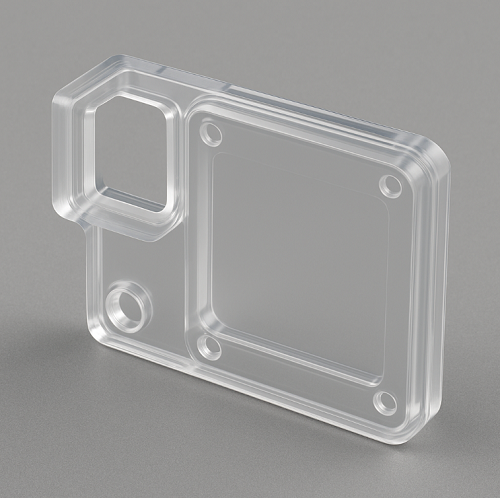
Common Polycarbonate Injection Molding Defects and Their Engineering Causes
PC molding defects carry very distinct patterns. If you’ve molded PC for a while, you probably recognize most of them the moment a part comes off the press.
Splay and Silver Streaks in PC Molding
Splay shows up when moisture, degraded regrind, or excessive shear reduces PC molecular weight. Transparent grades amplify the defect, making even minor drying errors visible. When processors see splay even after proper drying, the next suspect is usually gate shear.
Yellowing and Thermal Degradation in PC
Localized yellowing tends to appear in areas that carry more shear or where the melt sits too long in the barrel. Instead of the uniform amber tone that comes from long-term aging, this yellowing is patchy and tied to specific flow restrictions. Engineers often check gate size, barrel residence time, and venting before adjusting temperatures.
Jetting Issues in Polycarbonate Parts
Jetting in PC looks almost identical from project to project—a thin, rope-like strand that refuses to blend into the surface. Once you’ve seen it, you can spot it from several feet away. It happens when the melt exits the gate too quickly, loses heat in mid-air, and lands on the steel before forming a uniform layer.
Weld Line Weakness and Stress Concentrations in PC
PC weld lines are inherently weaker, especially at lower mold temperatures. Engineers often notice whitening along the weld line during assembly pressure tests. When the cavity temperature is raised and the flow front meets at a higher entanglement temperature, weld strength stabilizes quickly.
Polycarbonate Shrinkage, Warpage, and Dimensional Behavior
PC shrinks less than semi-crystalline plastics, but when cooling is not uniform, it stores internal stress that reveals itself later during assembly or testing.
Typical Shrinkage Rates for PC and PC-GF Grades
Unfilled PC usually sits between 0.5–0.7% shrinkage. Glass-fiber-reinforced PC reduces shrinkage but increases directional warp. Engineers who design enclosures for PC-GF quickly learn that rib orientation has a direct relationship to the final shape.
Cooling Uniformity and Internal Stress Management
Internal stress becomes apparent when parts whiten around snap-fits or crack during torque testing. Engineers often describe this as “the part feeling harder than it should,” which is usually PC telling you that cooling was uneven or packing ended too early. Higher mold temperature and balanced cooling lines reduce these issues significantly.
Applications That Commonly Use PC Injection Molding
PC parts show up in industries where clarity, strength, and dimensional repeatability matter more than resin cost.
Optical Parts and Transparent Components Made from PC
Transparent PC is commonly used in machine guards, covers, sensor windows, and lighting components. Anyone who has molded optical PC knows that mold temperature and cooling uniformity determine 80% of the outcome.
Structural and Mechanical Housings Using PC Resin
PC housings perform well in handheld tools, electronics, and mechanical covers. Designers rely on PC because its impact strength prevents brittle failures common with commodity plastics.
Automotive, Medical, and Electronics Uses of PC Molding
Automotive lighting components, medical covers, and rugged electronics housings frequently specify PC. These environments reward materials that can handle heat soak, vibration, and impact without drifting out of tolerance.
PC Injection Molding vs. ABS Injection Molding
PC and ABS often compete during material selection, but their molding behavior is rarely interchangeable.
Mechanical Differences in Processing Behavior
ABS flows easily and handles colder molds; PC does not. Weld lines in ABS are usually acceptable at lower temperatures, while PC weld lines become weak and visible unless the mold runs hot. Many teams learn this when ABS and PC parts are sampled on the same tool without adjusting mold temperature.
When Engineers Choose PC Instead of ABS
PC becomes the better choice when the part must survive repeated impact, elevated temperature, or high mechanical loading. Transparent components almost always default to PC because ABS simply cannot deliver optical clarity.
When PC Is the Right Material for Your Part
PC shows its value when a part needs clarity, impact strength, or long-term stability under thermal cycling. Once the process window is established, PC behaves predictably across large production volumes. Many engineers choose PC not because it is easy to mold, but because it delivers consistent performance once the correct conditions are in place.
Request a Quote for Polycarbonate Injection Molding
If your project involves transparent covers, impact-resistant housings, or components that must maintain shape under heat or mechanical stress, PC is a material worth evaluating.
Click to request a quote — we’ll reply within 24 hours.
FAQs
Why does PC show splay even when it’s dried?
Usually because moisture re-entered during handling or gate shear is too high.
What mold temperature works best for optical-grade PC?
110–120 °C; anything lower tends to create haze or flow marks.
Why do PC weld lines turn white during assembly?
Low mold temperature or early freeze-off makes the weld weak and prone to whitening.
What causes jetting in PC?
A fast, stiff melt stream leaving a small or mis-angled gate into open volume.
Does glass-filled PC warp more than unfilled PC?
Less shrinkage overall but more directional warpage due to fiber orientation.
When should PC be chosen instead of ABS?
When clarity, impact resistance, heat stability, or long-term structural loading matters.