
The main difference between polymer and plastic is their scope. A polymer is a broad class of substances made from very large molecules, while plastic is a polymer-based material formulated and processed into usable products.
All plastics contain polymers, but not all polymers are plastics. Cellulose, proteins, DNA, and natural rubber are polymers, yet they are not normally described as conventional plastics. Commercial plastics usually combine a base polymer with additives that adjust color, strength, flexibility, heat resistance, processing behavior, or cost.
Understanding polymer vs plastic helps explain how chemical materials become bottles, films, pipes, equipment housings, automotive parts, medical components, gears, electrical connectors, and injection molded products.
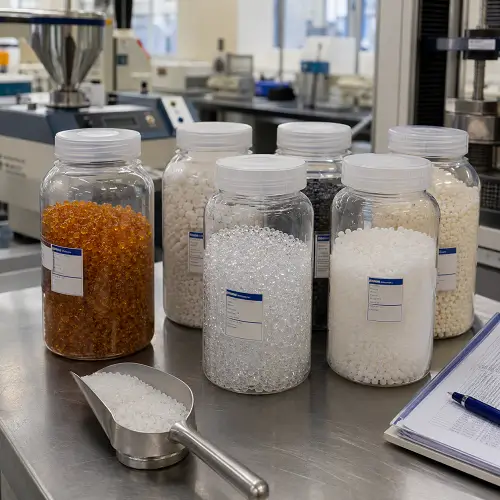
Polymer vs Plastic: Key Differences
A polymer is a substance composed of macromolecules. These large molecules may form long chains, branched structures, or crosslinked networks. Polymers can be natural, chemically modified, or synthetic, and the category includes cellulose, proteins, natural rubber, polyethylene, polypropylene, nylon, and many other materials. IUPAC defines a polymer as a substance composed of macromolecules.
A plastic is a narrower material category. It is a polymeric material that may contain fillers, colorants, plasticizers, stabilizers, flame retardants, reinforcements, or other substances. These additions help the material meet manufacturing and product-performance requirements. IUPAC similarly describes plastic as a polymeric material that may include other substances to improve performance or reduce cost.
The difference is therefore not that polymers and plastics are two competing materials. Polymer is the broader chemical and material category, while plastic is one type of polymer-based material.
A polymer may be used as a natural fiber, rubber, coating, adhesive, resin system, biological material, or plastic. Plastics are commonly processed into products through injection molding, extrusion, blow molding, thermoforming, compression molding, and other manufacturing methods.
What Is a Polymer?
A polymer is a substance made from large molecules called macromolecules. These molecules contain many connected structural units and can form linear chains, branched chains, or three-dimensional networks.
The word polymer describes molecular structure rather than one particular product. Polyethylene, polypropylene, nylon, cellulose, natural rubber, and proteins are all polymers, even though their properties and applications are very different.
Many polymers contain structural units that repeat along the molecular chain. However, polymer structures are not always perfectly regular. Copolymers may contain more than one type of structural unit, while crosslinked polymers form networks rather than separate linear chains.
Polymer properties depend on chemical composition, molecular weight, branching, crosslinking, crystallinity, additives, reinforcement, and processing history. These factors affect stiffness, flexibility, transparency, strength, heat resistance, chemical resistance, and manufacturing performance.
Two grades from the same polymer family can therefore behave differently. A high-flow polypropylene grade used for thin-wall packaging does not have the same molding behavior or mechanical performance as glass-filled polypropylene used for a structural automotive component.
What Is Plastic?
Plastic is a polymeric material formulated so that it can be processed into useful products.
The base polymer provides the main material structure, but commercial plastic often contains other substances. Colorants provide the required appearance, stabilizers improve heat or UV resistance, and fillers or fibers can increase stiffness. Plasticizers may increase flexibility, while impact modifiers and flame retardants can change product performance.
Plastic products include packaging, films, pipes, appliance housings, automotive trim, medical equipment covers, electrical connectors, gears, lenses, clips, brackets, and consumer products.
A plastic does not have to remain soft after manufacturing. The word refers to the material category and its ability to be processed into a shape, not to whether the finished part feels flexible.
A rigid polycarbonate cover, a glass-filled nylon bracket, a POM gear, a polypropylene hinge, and flexible PVC tubing can all be plastics despite having very different mechanical properties.
Is Plastic a Polymer?
Yes. Plastic is a polymer-based material.
The base polymer may be polyethylene, polypropylene, ABS, polycarbonate, nylon, POM, PVC, PBT, PPS, PEEK, or another polymer family. The material can then be compounded with additives or reinforcement to provide the required color, strength, flexibility, flame rating, processing behavior, or environmental resistance.
The reverse statement is not correct. Not every polymer is a plastic.
Cellulose and proteins are polymers but are not normally called plastics. Natural rubber is generally classified as an elastomer. Other polymers may be used as adhesives, fibers, coatings, sealants, or thermoset resin systems rather than conventional plastic products.
The relationship can be summarized directly:
Plastic is a polymeric material, but polymer is a broader category than plastic.
Are All Polymers Plastics?
No. Polymers include natural and synthetic substances with many different structures and functions.
Cellulose provides structural material in plants. Proteins are biological polymers formed from amino acids, while DNA is a polymer associated with genetic information. Natural rubber is an elastomeric polymer obtained from biological sources. Natural polymer groups also include materials such as cellulose, starches, proteins, and chitin.
Synthetic polymers include polyethylene, polypropylene, PVC, polystyrene, ABS, nylon, polycarbonate, silicone, epoxy, and many other material families.
Some synthetic polymers are formulated and manufactured as plastics. Others are primarily used as fibers, rubbers, coatings, adhesives, sealants, or composite matrices.
Calling every polymer plastic would therefore ignore important differences in molecular structure, formulation, manufacturing process, and final application.
How Are Polymers Made from Monomers?
Many polymers are produced through polymerization, a chemical process that joins smaller molecules called monomers into much larger macromolecules.
Ethylene can be polymerized to produce polyethylene, while propylene is used to produce polypropylene. Styrene is used in polystyrene, and combinations of different monomers are used to produce copolymers such as ABS and many thermoplastic elastomers.
The structure of the monomer and the polymerization method affect the resulting polymer. Chain-growth polymerization, step-growth polymerization, ring-opening reactions, and crosslinking can produce materials with different molecular structures and properties.
Not every polymer can be explained as a perfectly simple chain of identical repeating units. Copolymers may contain several structural units, and thermoset systems can form complex three-dimensional networks.
Natural Polymers vs Synthetic Polymers
Natural polymers are produced by living organisms or found in naturally occurring materials. Cellulose, starch, proteins, DNA, chitin, and natural rubber are common examples.
Synthetic polymers are manufactured through controlled chemical reactions. Polyethylene, polypropylene, PVC, polystyrene, ABS, nylon, polycarbonate, POM, PPS, and PEEK are synthetic polymer families.
The distinction between natural and synthetic polymers describes their origin, not their overall quality, safety, or environmental impact.
A natural polymer is not automatically biodegradable under every condition, and a synthetic polymer is not automatically impossible to recycle. Degradation and recycling depend on chemical structure, material formulation, contamination, product design, and available processing systems.
Chemically modified natural polymers also exist. Cellulose-based materials, for example, can be modified to produce fibers, films, coatings, and moldable compounds.
How Does a Polymer Become Plastic?
A base polymer becomes a commercial plastic through formulation, compounding, and preparation for manufacturing.
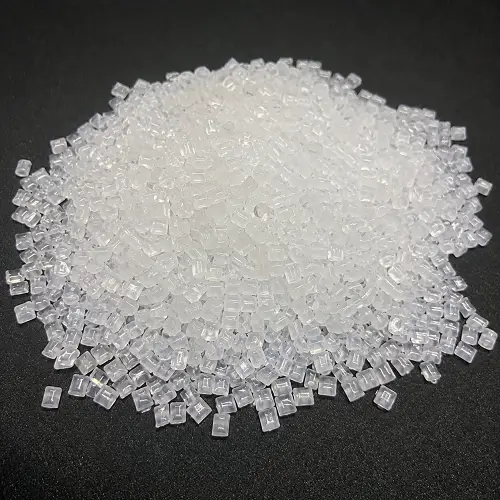
The polymer may initially be produced as powder, flakes, granules, liquid material, or another intermediate form. Material manufacturers can then mix it with additives and reinforcement according to the required product performance.
Colorants change appearance, while UV stabilizers help reduce degradation during outdoor exposure. Flame retardants may help materials meet electrical or transportation requirements. Plasticizers increase flexibility, and glass fiber or mineral fillers can increase stiffness and alter shrinkage.
Impact modifiers, antioxidants, lubricants, heat stabilizers, and processing aids may also be added. The finished compound is commonly supplied as plastic pellets or powder for injection molding, extrusion, blow molding, or another manufacturing process.
The plastic compound is therefore not always identical to the base polymer alone. Two materials carrying the same polymer name can contain different fillers, colors, stabilizers, flame retardants, and reinforcement levels.
This distinction is important during mold design. Glass-filled nylon has different flow, shrinkage, warpage, and surface characteristics from unfilled nylon. Flame-retardant ABS may process differently from ABS developed for painting, plating, or high-gloss housings.
Polymer vs Resin vs Plastic
Polymer, resin, and plastic are related terms, but they do not always mean exactly the same thing.
A polymer is the broad chemical or material family composed of macromolecules. Polyethylene, polypropylene, nylon, polycarbonate, cellulose, and natural rubber are polymers, although they are not used in identical forms.
A plastic is a polymer-based material formulated and processed into products. It may contain additives, fillers, modifiers, and reinforcement in addition to the base polymer.
The word resin depends more heavily on context. In technical terminology, resin can refer to a soft solid or highly viscous material containing reactive prepolymers, particularly in thermoset systems used for coatings, adhesives, composites, or molded products.
In plastics manufacturing, resin is also used more broadly to describe the raw material supplied before molding. A supplier may refer to PP pellets, ABS compounds, polycarbonate pellets, or glass-filled nylon as plastic resin.
The phrase plastic resin therefore commonly means the pellet, powder, liquid compound, or other production material used to manufacture plastic products. Polymer, resin, and plastic may be used loosely in everyday industry communication, so the intended meaning should be understood from the material form and manufacturing process.
Thermoplastic Polymers vs Thermoset Polymers
Thermoplastic and thermoset polymers behave differently during processing and reheating.
Thermoplastic Polymers
Thermoplastic polymers soften or melt when heated and harden again when cooled. This behavior allows them to be processed through injection molding, extrusion, thermoforming, and blow molding.
Common thermoplastic polymers include PP, PE, ABS, PC, PA, POM, PMMA, PBT, PPS, and PEEK.
A thermoplastic can often be reheated and reshaped, although repeated processing may cause contamination, molecular degradation, color changes, moisture damage, or loss of mechanical properties.
Thermoplastics are widely used in injection molding because the melted material can flow into a mold cavity and solidify through cooling.
Thermoset Polymers
Thermoset materials undergo a curing reaction that forms a crosslinked network. After curing, they do not return to an ordinary melt state through reheating.
Epoxy, phenolic resin, melamine, unsaturated polyester, and some polyurethane and silicone systems are common thermoset materials.
Thermosets are used for electrical insulation, adhesives, coatings, composite structures, heat-resistant handles, and components requiring dimensional stability after curing.
Their processing requires control of curing time, reaction temperature, material storage, mold temperature, and possible post-curing rather than only melt flow and cooling.
Examples of Polymers and Plastics
Cellulose, proteins, and natural rubber are examples of polymers that are not normally described as conventional plastics. Cellulose is associated with plant structure and paper products, while natural rubber is generally classified as an elastomer.
Polyethylene and polypropylene are synthetic polymers that are widely formulated as plastics. PE is used for films, bottles, caps, and containers, while PP is used for housings, living hinges, automotive parts, and medical products.
ABS, nylon, and polycarbonate are also synthetic polymers commonly used as plastic materials. ABS is widely selected for housings and consumer products, nylon for gears and mechanical components, and polycarbonate for transparent or impact-resistant parts.
Epoxy is a polymer system commonly described as a resin before curing. After curing, it forms a crosslinked thermoset used in adhesives, coatings, electrical products, and composite structures.
Silicone elastomers are synthetic polymers, but they are generally called silicone rubber rather than conventional plastic.
These examples show why polymer and plastic cannot be treated as exact synonyms. Plastic belongs to the polymer family, but polymers also include biological materials, rubbers, fibers, adhesives, coatings, and thermoset networks.
Is Polymer Stronger Than Plastic?
A polymer is not automatically stronger or weaker than plastic because the terms do not describe two equivalent material choices.
A polymer may be flexible natural rubber, rigid PEEK, soft polyethylene, brittle polystyrene, or a high-strength fiber material. A plastic may be unfilled polypropylene, impact-modified ABS, glass-filled nylon, or mineral-filled PPS.
Strength depends on the exact polymer, material grade, molecular structure, fillers, reinforcement, temperature, moisture, load direction, test method, and manufacturing quality.
Glass-filled nylon can be much stiffer than unfilled nylon. Polycarbonate generally provides different impact behavior from general-purpose polystyrene. POM may be selected for low friction and wear, while ABS may provide a better cosmetic housing surface.
A useful material comparison must therefore name the specific polymers and the required property, such as tensile strength, stiffness, impact resistance, fatigue, wear, or heat resistance.
Which Plastic Polymers Are Used for Injection Molding?
Most conventional injection molded parts are made from thermoplastic polymers.
| Plastic Polymer | Common Injection Molded Products |
|---|---|
| PP | Caps, living hinges, containers, automotive trim |
| ABS | Electronic housings, appliance parts, consumer products |
| PC | Transparent covers and impact-resistant housings |
| PC/ABS | Automotive interiors and equipment enclosures |
| PA | Gears, clips, brackets, and mechanical components |
| POM | Bushings, latches, gears, and low-friction parts |
| PE | Caps, containers, and household products |
| PMMA | Light covers, lenses, and transparent cosmetic parts |
| PBT | Electrical connectors and sensor housings |
| PPS | Heat-resistant electrical and industrial components |
| PEEK | Medical, semiconductor, aerospace, and demanding mechanical parts |
The polymer family is only the first part of injection molding material selection. The exact grade determines melt flow, drying requirements, processing temperature, shrinkage, reinforcement, flame rating, surface appearance, and mechanical performance.
A high-flow ABS grade may suit a thin electronic housing, while another ABS grade may be developed for painting or plating. Unfilled nylon and glass-filled nylon require different mold-shrinkage allowances and produce different surface and warpage behavior.
Injection molding projects should therefore specify the exact supplier grade whenever possible rather than relying only on a general name such as nylon, polypropylene, or polycarbonate.
How to Choose a Plastic Polymer for Injection Molding
The right plastic polymer depends on the product environment, part design, manufacturing process, and expected production quantity.
Mechanical requirements should be reviewed first. A component may need stiffness, impact resistance, repeated flexing, screw retention, wear resistance, low friction, or resistance to long-term creep. Each requirement can lead to a different polymer or compound.
Operating temperature and chemical exposure are also important. Oils, cleaning agents, fuels, moisture, outdoor UV, sterilization, and continuous heat can change plastic performance over time.
Appearance requirements may determine whether the material must be transparent, easily textured, paintable, naturally colored, or compatible with plating. Reinforced polymers can improve stiffness but may produce visible fiber patterns and a less uniform cosmetic surface.
Dimensional requirements depend on shrinkage, moisture absorption, crystallinity, reinforcement orientation, wall thickness, gate location, and cooling balance. A polymer with strong laboratory properties may still produce an unstable molded part when the geometry or mold design is unsuitable.
Production cost should include more than resin price. Drying, mold temperature, injection pressure, cooling time, machine size, scrap, mold wear, and inspection requirements can all affect the final price of a plastic part.
Material selection should therefore use the actual CAD geometry, tolerances, appearance requirements, operating environment, regulatory needs, and annual production quantity.
Conclusion
The difference between polymer and plastic is mainly one of scope. A polymer is a broad category of substances composed of macromolecules, while plastic is a polymeric material formulated and processed into usable products.
All plastics contain polymers, but not all polymers are plastics. Natural substances such as cellulose and proteins are polymers, while rubbers, fibers, coatings, adhesives, and cured resin systems may also fall outside the conventional plastic category.
Commercial plastics often combine a base polymer with colorants, fillers, stabilizers, reinforcements, or other modifiers. These formulations allow PP, ABS, PC, PA, POM, PBT, PPS, PEEK, and other plastic polymers to meet different mechanical, thermal, chemical, appearance, and manufacturing requirements.
JeekMould supports plastic material selection, injection molding DFM, mold manufacturing, trial molding, and plastic part production. Upload your 3D CAD model and material requirements to receive an injection molding review and quotation.