
TPU injection molding usually enters the discussion when rigid plastics start showing their limits. Cracks, fatigue, noise, or loss of grip push engineers toward a flexible material—but TPU does not behave like a “softer ABS.” Once it enters the mold, elasticity, recovery, and surface sensitivity become part of the process whether they are planned for or not.
If TPU is new to a project, first trials often look acceptable and still feel frustrating. That reaction is common, and it usually means the material behavior has not been fully accounted for yet.
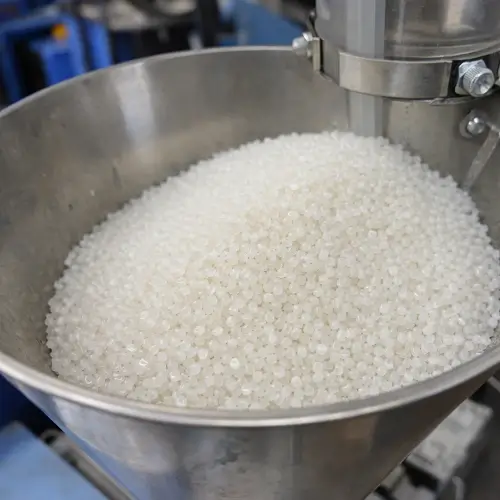
What Is TPU Injection Molding?
TPU injection molding refers to forming thermoplastic polyurethane into finished parts using standard injection molding equipment. Unlike rubber or silicone, TPU is a thermoplastic material. It can be melted, molded, and reprocessed without curing cycles.
In practical applications, TPU is rarely chosen just for softness. It is selected when flexibility must coexist with mechanical strength, wear resistance, and repeated loading. That combination is what makes TPU valuable—and what makes it less forgiving in molding.

Key Material Characteristics of TPU in Injection Molding
TPU’s defining feature is elastic recovery. That behavior does not stop once the cavity is filled. It continues through cooling, ejection, and even after the part leaves the press.
The melt reacts strongly to shear and temperature changes. Small variations in injection speed or local mold temperature tend to show up directly on the surface. TPU does not hide process variation the way many rigid plastics do.
Another point that often gets underestimated is post-ejection relaxation. TPU parts can continue to change slightly after demolding. When dimensional control matters, inspection timing becomes part of the process rather than an afterthought.
Typical Processing Reference for TPU Injection Molding
The following ranges are not setup instructions, but common engineering references used when evaluating feasibility and risk.
| Parameter | Common Engineering Reference |
|---|---|
| Barrel temperature | ~180–220 °C (grade dependent) |
| Mold temperature | ~30–60 °C |
| Recommended wall thickness | ~1.5–3.0 mm |
| Draft angle | ≥ 1.5° (often more for soft grades) |
| Drying condition | ~80–100 °C for 2–4 hours |
| Shrinkage behavior | Elastic recovery after ejection |
These values give context for process expectations rather than absolute limits.
Critical Points to Watch in TPU Injection Molding
Moisture control
TPU is not tolerant of moisture, and this sensitivity is often underestimated. Unlike nylon, moisture in TPU does not always appear as obvious splay or bubbles. More commonly, it shows up as surface haze, dull areas, or unstable gloss. These issues may not be noticeable during short sampling runs, but they tend to appear once production time extends.
In real production, when part quality fluctuates under the same tooling and settings, material condition is often a more reliable first check than machine parameters. Open hoppers, humid shop environments, and long idle times allow TPU pellets to absorb moisture continuously.
A practical rule engineers often use is this:
when surface defects appear irregularly rather than consistently, drying and material handling should be verified before adjusting the molding process.
Temperature and residence time
TPU does not tolerate long exposure to heat, but the issue is rarely peak temperature alone. More often, problems come from how long the material remains hot inside the barrel. Even when melt temperature is within a recommended range, excessive residence time gradually degrades melt stability.
This behavior becomes more noticeable during long production runs or when cycle times are extended. As TPU experiences repeated thermal exposure, symptoms such as increased stringing, dull surface finish, and inconsistent release often develop over time rather than appearing on the first shots.
If defects start after extended runtime rather than at the beginning of sampling, residence time and temperature distribution inside the barrel are usually more relevant than mold geometry or injection speed.

Ejection and release behavior
Soft materials stretch during ejection, and TPU makes this behavior obvious. Ejection issues are rarely about whether the part comes out of the mold—they are about whether the material experiences irreversible elongation during release. Concentrated release force quickly results in visible marks or localized deformation.
Unlike rigid plastics, ejector marks on TPU are not only cosmetic. They often indicate localized stress concentration, which can later contribute to part distortion during assembly or use.
When stringing, sticking, or ejector marks appear early in trials, draft angle, ejection method, and mold surface condition are usually more effective adjustment points than injection speed.
If you have already seen these issues at the press, it does not mean the project is failing—only that TPU behavior is asserting itself.
Advantages of TPU Injection Molding
Flexibility with elastic recovery
TPU parts can flex repeatedly and return to shape. This makes them suitable for sealing, buffering, and protective features that would fatigue rigid plastics over time.
Higher mechanical strength than most soft materials
Compared with many TPEs, TPU offers more consistent tensile and tear strength. This becomes important once durability is a functional requirement rather than a nice-to-have.

Excellent wear and abrasion resistance
For parts that slide, rub, or experience repeated contact, TPU often outlasts softer alternatives. In many designs, this matters more than how soft the material feels.
Compatibility with standard injection molding
TPU can be processed on conventional injection molding equipment and scaled for production, avoiding curing cycles required by rubber or silicone.
Limitations and Drawbacks of TPU Injection Molding
Dimensional stability influenced by elasticity
TPU parts can change slightly after ejection as internal stress relaxes. Assemblies with tight tolerances need to account for this behavior early.
Higher demands on ejection and mold design
Draft, pin layout, and surface finish matter more with TPU. Designs that release easily in rigid plastics may struggle here.
Surface appearance is less forgiving
Flow lines, ejector marks, and gloss variation are more visible on TPU surfaces, raising both tooling and process requirements.
Narrower processing window
Temperature, timing, and cooling balance offer less margin. Shops used to wide process windows often notice this immediately.
When TPU Injection Molding Is Not the Right Choice
TPU is not a universal solution. In some projects, it introduces more risk than benefit.
Parts requiring tight cosmetic Class-A surfaces often expose flow marks and ejector contact more clearly when molded in TPU.
Projects with extremely tight dimensional tolerances measured immediately after molding may struggle due to elastic recovery.
For very thin walls below roughly 1.0 mm, flow stability and surface consistency become difficult to control, especially on softer Shore grades.
Applications with poor moisture control or inconsistent processing discipline tend to see recurring quality issues even when tooling is correct.
If several of these conditions define the project, TPU should be evaluated cautiously—or ruled out early.
Common Defects in TPU Injection Molding
Stringing during mold opening
Stringing usually indicates the melt remains too soft as the mold opens. High melt temperature, warm mold surfaces, or slow separation timing all contribute.
If stringing appears, melt temperature and separation timing are usually better first checks than injection speed.
Flow lines and uneven surface gloss
TPU reflects flow behavior directly. Minor changes in fill speed or local temperature imbalance often show up on the surface.
If flow lines appear on one side only, local mold temperature imbalance is often the cause.
Ejector marks on soft surfaces
Ejector marks are rarely invisible on TPU. The real question is whether they are distributed or concentrated.
If marks persist despite adequate draft, pin contact area and force distribution usually need attention.
Post-ejection deformation and recovery
Parts may pass inspection at the press and drift later.
If dimensions move after 12–24 hours, cooling balance and residual stress typically matter more than cavity accuracy.
Moisture does not always cause dramatic splay. On TPU, it often appears as haze or dull patches.
If defects appear inconsistently, material condition is often the correct starting point.
Mold Design Considerations for TPU Injection Molding
Draft angle requirements
Draft that is barely acceptable for rigid plastics often fails with TPU. Insufficient draft shows up immediately as drag or surface damage.
Ejection strategy
Concentrated ejection is risky. Distributed ejection reduces localized stress and improves surface consistency.
Mold surface finish
Rough surfaces increase friction and release force. Highly polished surfaces reduce sticking but can amplify flow marks. The finish must match the part’s function.
Venting
Poor venting may not burn TPU, but it often appears as surface defects or hesitation during fill. This is frequently overlooked during troubleshooting.
Gate location
Gate position influences flow path, packing behavior, and surface appearance. Cosmetic parts often require gate strategy iteration.
TPU Injection Molding Compared with Other Flexible Materials
TPU vs. TPE
TPU and TPE often overlap in flexible part applications, but their behavior in injection molding differs in ways that affect production decisions. TPU typically provides better abrasion resistance and higher mechanical strength, especially in parts exposed to repeated contact, bending, or localized stress.
The trade-off is processing sensitivity. TPU requires tighter control over moisture, temperature, and release conditions, while many TPE grades are more forgiving when cosmetic consistency and shift-to-shift stability are priorities.
In practical terms, TPU is often evaluated after TPE parts show early wear, tearing, or fatigue in service. When surface appearance stability and process tolerance outweigh long-term durability, TPE is often the safer choice.
TPU vs. silicone (LSR)
TPU and liquid silicone rubber address different engineering needs. TPU does not require a curing cycle and can be processed on standard injection molding equipment, which makes it suitable for complex geometry, insert molding, and integrated features.
Silicone performs better in extreme temperature environments and offers superior long-term stability under heat, UV exposure, and chemical exposure. These advantages come with higher tooling complexity and more demanding process control.
In practice, TPU is commonly selected for flexible components that carry some structural function, while silicone is chosen for sealing, biocompatibility, or thermal endurance.
Injection molded TPU vs. extruded TPU
Extrusion is well suited for TPU parts with constant cross-sections, such as tubes, sleeves, or simple profiles. Tooling cost is low, and production efficiency is high.
Once a part requires variable wall thickness, snap features, ribs, or multi-directional geometry, extrusion becomes limiting. Injection molding offers greater design freedom and functional integration, even though initial tooling investment is higher.
The deciding factor is typically geometry complexity rather than material preference.
When TPU should not be selected
If cosmetic perfection, ultra-tight tolerances, or minimal process control define the project, TPU may introduce unnecessary complexity.
Typical Applications of TPU Injection Molded Parts
Consumer electronics
Protective elements, buffers, and grip features benefit from TPU’s flexibility and wear resistance.
Automotive components
TPU is commonly used for sealing, damping, and wear-related roles where durability outweighs appearance.
Industrial equipment
In industrial settings, TPU parts often address abrasion or impact rather than aesthetics.
Sports and wearable products
Elastic recovery and fatigue resistance stand out here, though surface feel often requires iteration.
Medical and health devices
In certain applications, TPU is selected for flexible yet durable components, with careful material qualification.
Is TPU Injection Molding Right for Your Project?
If a part needs to flex, absorb impact, or survive repeated contact, TPU is usually worth evaluating. If the design demands rigid dimensional control and flawless cosmetic surfaces, TPU can introduce more complexity than benefit.
In flexible housing projects, it is common to see first-shot dimensions pass inspection and then shift during assembly or after resting. In most cases, the issue is not tooling accuracy—it is stress release combined with elastic recovery.
When results feel “almost stable,” refining cooling balance and ejection strategy often delivers more improvement than aggressive process tuning.
At this stage, the key question is not whether TPU can be molded, but whether the material behavior, mold design, and process window are aligned for the specific functional requirements.
What to Prepare Before Requesting a TPU Injection Molding Quote
A TPU quote is most effective when the functional intent is clear, not just the geometry.
Before requesting a TPU injection molding quote, it helps to define:
-
CAD model and critical dimensions
-
Target Shore hardness range
-
Functional requirements (wear resistance, sealing, impact absorption)
-
Expected production volume and part lifecycle
Providing this information upfront allows the DFM review to focus on material suitability, mold release strategy, and dimensional stability, rather than basic feasibility.
For TPU projects at this stage, Jeek reviews material selection, mold design risk, and processing window together as part of the quotation process.
Submitting drawings for a TPU injection molding quote allows these factors to be evaluated before tooling decisions are finalized.
FAQs
Does TPU always require drying?
In practice, yes. Skipping drying often leads to surface and consistency issues.
Is TPU harder to eject than rigid plastics?
Usually. Draft angle, surface finish, and ejection design matter more.
Do TPU parts change size over time?
Some relaxation is normal. Inspection timing should reflect that behavior.
Can TPU achieve high-gloss surfaces?
It can, but cosmetic control is more demanding than with rigid materials.