
Most teams move to glass-filled plastics after unfilled materials stop holding up in real use. Parts flex too much, creep under load, or slowly lose dimensional control once temperature and stress come into play, even though early samples looked acceptable.
Adding glass fiber often seems like a simple upgrade, but in practice it changes how material flows, cools, and releases stress inside the mold. Designs that ran smoothly with unfilled resin can become difficult to stabilize once fiber is introduced, and those issues rarely trace back to the press or the operator.
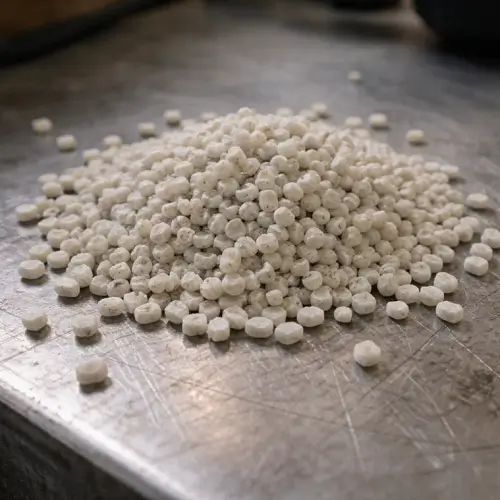
What Are Glass-Filled Plastics in Injection Molding?
Glass-filled plastics are standard thermoplastic resins reinforced with chopped glass fiber, most commonly nylon, polypropylene, and PBT. Once fiber is added, the material no longer behaves like the original resin, and assumptions based on unfilled grades stop working.
Flow direction becomes critical, shrinkage turns directional, and cooling differences that were once harmless begin to lock internal stress into the part. These effects are not defects by themselves, but they must be understood early if the part is expected to remain stable after molding.
Common Glass-Filled Materials Used in Injection Molding
Although glass fiber provides reinforcement, the base resin still defines how the part behaves during molding and in service. Glass-filled materials are not interchangeable, and each system brings its own limits and advantages.
Glass-Filled Nylon Injection Molding
Why Nylon Responds Well to Glass Fiber Reinforcement
Nylon already offers a strong balance of toughness and heat resistance, so adding glass fiber significantly increases stiffness without fully sacrificing durability. This is why glass-filled nylon is widely used in structural injection molded parts that must carry load over time.
The trade-off is reduced tolerance during cooling and ejection, especially when geometry or flow paths are not well controlled.
Fiber Orientation and Shrinkage Anisotropy
In glass-filled nylon, fibers align with melt flow, creating different shrinkage rates along and across the flow direction. Flat parts that appear uniform on the drawing often warp because the material no longer shrinks evenly.
Once fiber orientation is set by gate location and flow path, it cannot be corrected through processing adjustments alone.
Moisture Sensitivity and Dimensional Stability
Glass fiber does not eliminate nylon’s sensitivity to moisture. Parts can still absorb humidity after molding, which may affect dimensions and stiffness over time.
For tight-tolerance components, this behavior needs to be evaluated beyond initial sampling, especially when the part will see real-world environmental exposure.
Glass-Filled Polypropylene Injection Molding
Glass-filled polypropylene is commonly chosen for weight-sensitive parts where additional stiffness is needed without a major cost increase. Compared with glass-filled nylon, PP generally flows more easily and offers a wider processing window.
The limitation appears in dimensional control, as fiber orientation combined with PP’s crystallization behavior makes flatness and hole position harder to hold. Designs that rely on PP-GF need stronger discipline in geometry and gating to remain stable in production.
Glass-Filled PBT Injection Molding
Glass-filled PBT is widely used in electrical and automotive components where long-term dimensional stability matters. Compared with nylon, PBT is less affected by humidity, which makes its mechanical performance more predictable over time.
From a molding perspective, glass-filled PBT is sensitive to mold temperature control, and uneven thermal conditions often lead to internal stress that becomes visible only after ejection or post-cooling.
Advantages and Limitations of Glass-Filled Plastics
Glass-filled plastics earn their place when stiffness truly matters. A part that flexed too much with an unfilled resin suddenly holds its shape, and a housing that crept under load begins to behave as intended.
The trade-off is a narrower margin for variation. As stiffness increases, internal stress becomes harder to relieve, and parts that look fine at ejection may reveal fit issues later during assembly.
Tooling and Mold Design Considerations
Gate Location and Fiber Orientation
Gate location defines fiber orientation, and once that orientation is set, it cannot be changed later in the process. If fibers align against the functional direction of the part, warpage and dimensional instability are almost guaranteed.
Many issues blamed on packing or cooling adjustments trace back to gate decisions made early in tooling design.
Cooling Balance and Thermal Control
Glass-filled materials are far less tolerant of temperature imbalance than unfilled resins. Small differences in cooling efficiency across the cavity can lock uneven shrinkage into the part.
A cooling layout that worked for standard plastics often needs refinement once glass fiber is introduced.
Mold Wear and Long-Term Dimensional Drift
Glass fiber is abrasive by nature, and gates, runners, and shut-off areas experience gradual wear over the mold’s production life. The mold continues to run, but dimensions slowly drift.
This effect is easy to miss during early sampling and often becomes obvious only after production volume increases.
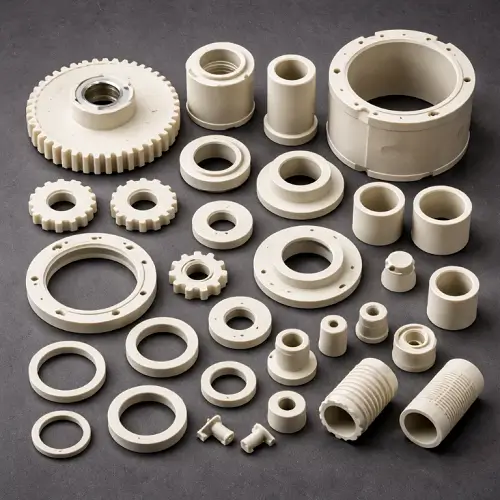
Typical Applications of Glass-Filled Injection Molded Parts
Structural and Load-Bearing Components
Glass-filled plastics are most often used in structural parts where stiffness and long-term shape retention matter more than surface appearance. Brackets, frames, and load-bearing housings that flex or creep with unfilled materials typically become much more stable once glass fiber is added.
In these applications, minor surface texture is acceptable, while maintaining geometry under continuous load is critical.
Electrical and Electronic Components
In electrical and electronic components, dimensional consistency is usually more important than cosmetic finish. Glass-filled PBT and nylon are commonly used in connectors, terminal blocks, and enclosures that must maintain alignment through temperature cycles and long service life.
The main challenge in these parts is not filling the mold, but controlling shrinkage and internal stress so mating features remain predictable.
Automotive Interior and Under-the-Hood Parts
Automotive components balance weight reduction, mechanical strength, and cost under demanding conditions. Glass-filled polypropylene is frequently used in interior and semi-structural parts, while glass-filled nylon and PBT are more common closer to heat sources.
These materials perform well when fiber orientation and cooling balance are respected, but they leave little margin for shortcuts in tooling or process setup.
Industrial and Mechanical Housings
Industrial housings and functional covers benefit from the added stiffness and creep resistance of glass-filled plastics, especially in applications exposed to continuous load or vibration. Compared with unfilled resins, glass-filled materials help maintain flatness and dimensional stability over long operating periods.
In these designs, material choice is usually driven by reliability rather than appearance.
When Glass-Filled Plastics Are Not the Right Choice
Glass-filled plastics are rarely suitable for parts that depend on flexibility, smooth cosmetic surfaces, or very thin walls. Fiber read-through, brittleness, and warpage often outweigh the benefits, even when processing is well controlled.
In such cases, unfilled or alternative materials usually lead to a more stable and economical solution.
Conclusion
Glass-filled plastics, especially glass-filled nylon, introduce a different set of trade-offs compared with unfilled materials. Directional shrinkage makes warpage more likely, moisture absorption can affect long-term dimensions, and semi-crystalline behavior leaves less room for correction once stress is locked into the part.
Material selection and mold design decisions therefore matter more than process tuning alone. In projects where glass-filled materials are involved, early evaluation of geometry, gating, and environmental exposure often determines whether the part remains stable after production ramps up.
At JeekMould, glass-filled injection molding projects are reviewed from this engineering perspective before tooling begins, with attention given to fiber orientation, cooling balance, and long-term dimensional behavior rather than short-term sampling results.
If glass-filled injection molding is being considered for a specific part, an early drawing review often helps clarify material behavior, tooling risks, and dimensional expectations before decisions are locked in. You can learn more about JeekMould’s approach to injection molding services here.