
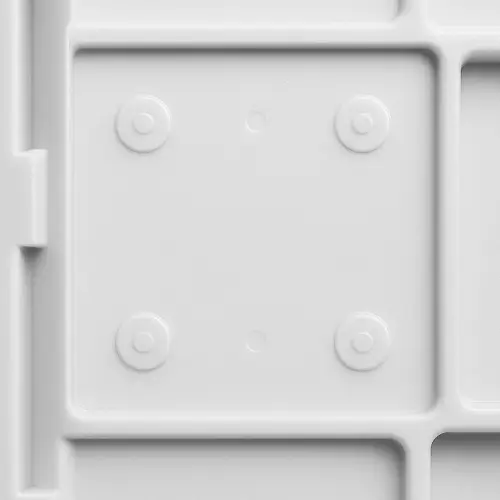
Anyone who works around injection molding equipment has seen those faint circular impressions or shiny spots that appear right where the ejector pins make contact. These are ejector marks, and in injection molding they are classified as a pressure-related surface defect—not as obvious as flash or burn marks, but often just as persistent. When ejector marks injection molding issues begin appearing cycle after cycle in the same cavity, it usually means the mold is revealing something important about cooling balance, packing behavior, or steel support behind the pin locations.
What Are Ejector Marks in Injection Molding?
How Ejector Marks Form
An ejector mark forms when an ejector pin transfers more localized force into the plastic than the surrounding steel can support. When the part is still warm and not fully rigid, the ejector system becomes a pressure point, leaving behind a shallow depression, a glossy circular mark, or a slight read-through on the opposite side. Materials like ABS, PC/ABS, or nylon show these impressions more clearly, especially when the part is ejected a little sooner than it should be. Anyone who has handled a warm molding during startup has probably noticed how easily ejector pin marks in injection molding appear before the mold reaches thermal stability.
Types of Visible Ejector Pin Marks
Ejector-related surface traces vary depending on part design and material behavior. Some show up as minor shine, others as mechanical impressions, and thin-wall parts can reveal ejector pin marks injection molding defects that look like circular shadows on the opposite side of the wall. Cosmetic housings and transparent PC parts highlight these marks more than standard engineering components.
Common Causes of Ejector Marks in Injection Molding
Early Ejection and Excessive Ejector Force
Ejecting the part before it has fully solidified is the most common cause. If the part is still soft, pins push into the surface instead of releasing it cleanly. When this happens repeatedly, the defect becomes consistent and predictable—classic injection molding ejector pin marks.
Cooling Imbalance or Insufficient Cooling
When one area of the part remains warmer than the rest, the ejector pins leave clearer impressions. Waterlines that are too shallow, blocked cooling channels, or uneven mold temperatures all contribute to ejector marks. In many cases, parts that appear dimensionally fine will still show injection mold ejector pin marks because of localized temperature differences at the end of the fill.
Overpacking and High Holding Pressure
If packing pressure is too high, the polymer compresses tightly against the ejector surfaces. As the part shrinks and the ejectors begin pushing, the interface becomes extremely sensitive to surface variations. Overpacked parts grip the ejector pins harder and reveal their shape more easily. If reducing packing pressure slightly improves the surface, that’s a strong indication that pressure—not the pins—is the root cause.
Pin Wear, Polishing Differences, and Fit Issues
Pins with mismatched surface finish, slight wear bands, or improper fit tend to leave witness marks. Poor pin fit can cause resin to seep around the pin during filling, creating faint halos or localized shine that exaggerates the ejector mark.
Insufficient Steel Support Behind the Ejector Pads
If the ejector pin sits behind a thin steel section or an unsupported pocket, it will flex slightly during ejection, printing its shape onto the part. This is especially common in large tools with long ejection strokes or uneven pin layouts.
How Ejector Marks Affect Part Quality
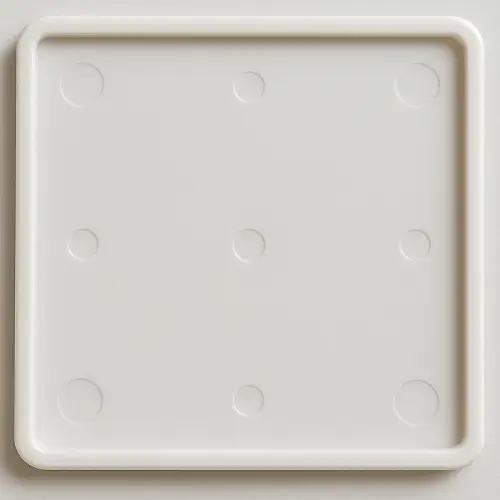
On most structural components, ejector marks are cosmetic. But on parts with tight appearance requirements—consumer electronics housings, PC light guides, polished ABS faces—small marks become highly visible under inspection lighting. The risk increases when ejector marks appear together with other pressure-driven defects such as sink marks or flow-front read-through, because these combined patterns often point toward broader packing or cooling inconsistencies.
Transparent or thin-wall parts amplify the defect. A pin mark beneath a 1.0–1.2 mm PC wall can create a visible distortion across the entire surface, even when the mark is shallow.
How to Reduce or Prevent Ejector Marks
Allow Proper Cooling Before Ejection
If marks disappear when cycle time is increased slightly, the root cause is insufficient cooling. Ejecting too early causes the part to deform around the ejector pins, no matter how smooth or polished the pins are.
Optimize Holding Pressure and Holding Time
Reducing holding pressure or adjusting the holding profile often prevents the polymer from gripping the ejector pins too tightly. Even a small change can make ejector-related defects disappear without affecting dimensional accuracy.
Balance Mold Cooling to Stabilize Surface Rigidity
If ejector marks occur consistently in one region, uneven mold temperature is likely the cause. Balancing water flow, cleaning blocked channels, or adjusting individual mold-temperature controllers often stabilizes the part before ejection.
Improve Ejector Pin Condition and Fit
Worn pins or unevenly polished pins can create visible defects even under ideal processing. Replacing worn pins or matching their polish level to the surrounding cavity steel improves surface consistency.
When pin fit is loose, resin leakage around the pin makes the ejector mark more obvious because the surrounding plastic becomes thinner at the interface.
Reinforce Steel Support Behind Pin Locations
Adding support behind ejector pads prevents the steel from flexing under load. Parts that require large pin arrays or long ejection strokes benefit significantly from improved support and more even ejection distribution.
Understanding Ejector Pin Marks Across Different Molding Scenarios
In many shops, people use different names for the same defect—“ejector marks injection molding,” “ejector pin marks in injection molding,” “ejector pin marks injection molding,” or “injection molding ejector pin marks.” Regardless of terminology, all describe the same behavior: the molded surface records the mechanical or thermal conditions that existed when the part left the cavity.
In large flat parts, ejector pins tend to leave circular witness marks that are easier to see in glossy materials. On thin-wall housings, injection mold ejector pin marks can appear as read-through, where the opposite side of the part shows the outline of the pin. Understanding how different materials respond—PC, ABS, nylon, filled materials—helps predict where ejector marks are likely to appear long before the mold is sampled.
These marks fall under the broader family of injection molding defects, and they often appear in applications struggling with cooling imbalance, uneven packing, or over-aggressive ejection. Seeing ejector marks is often a sign to inspect not only the ejector system, but also upstream variables such as pressure profile, cooling strategy, and steel support.
Conclusion
Ejector marks are a small but highly informative defect. They reveal whether the part was ejected too warm, overpacked, unevenly cooled, or supported insufficiently during the final stage of the cycle. Once the root cause is clear, preventing the marks becomes straightforward: stabilize temperature, balance pressure, and ensure the ejection system is clean, aligned, and properly supported. Consistent molding conditions eliminate most ejector-related issues without increasing cycle time or changing material.
Ready to Improve Ejection Quality and Eliminate Surface Defects?
If ejector marks continue appearing at the same pin locations or if cooling and pressure adjustments haven’t resolved the issue consistently, our engineering team can review the mold, the ejection pattern, and the pressure profile behind the defect. Stable cooling, controlled ejection force, and proper pin maintenance make a measurable difference in cosmetic and structural performance.