
Gears place very specific demands on plastic materials. Strength alone is never enough. Injection molded gears must maintain tooth geometry, backlash, and surface contact behavior over long service cycles, often with minimal lubrication and tight dimensional constraints. If you’ve worked with plastic gears before, you’ve probably seen how small material changes can quickly turn into noise, uneven wear, or unexpected backlash issues.
This is where POM injection molding has proven its value in gear applications.
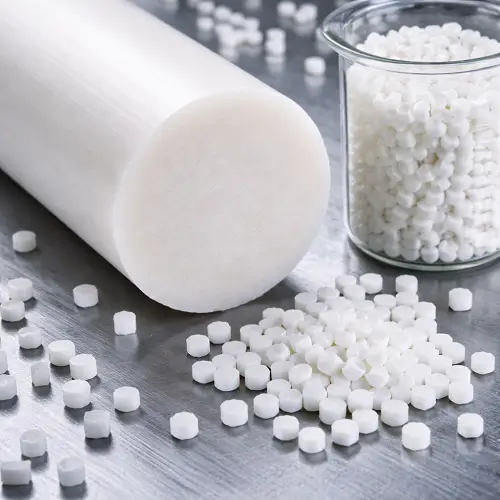
What is POM injection molding?
POM (polyoxymethylene), also known as acetal, combines high stiffness, low friction, and extremely low moisture absorption. For injection molded gears, these characteristics matter more than peak tensile strength. Gears depend on repeatable geometry and predictable wear, and POM offers a level of dimensional stability that many other engineering plastics struggle to maintain once they leave controlled lab conditions.
For that reason, POM injection molding has become a common solution for plastic gears used in consumer devices, automotive mechanisms, office equipment, and industrial motion systems—especially where precision and consistency matter more than brute load capacity.
Why Gears Benefit Specifically from POM Injection Molding
Injection molded gears behave very differently from structural plastic parts. Their performance is governed less by bulk strength and more by how accurately each tooth is formed and how that shape survives over time.
POM supports this in several practical ways.
First, POM provides a naturally low-friction surface at the tooth contact zone. This reduces heat generation during meshing and limits adhesive wear, particularly in unlubricated or lightly lubricated systems. In small gear trains, that reduction in friction often translates directly into longer service life.
Second, POM’s stiffness helps gear teeth resist elastic deformation under moderate load. Excessive tooth flex changes contact patterns and increases noise. Compared with more flexible plastics, injection molded POM gears maintain more consistent meshing behavior across repeated cycles.
Third—and often underestimated—POM absorbs very little moisture. Unlike nylon, POM does not swell significantly in humid environments. That stability helps molded gears maintain center distance and tooth engagement over time, especially in enclosed housings where temperature and humidity fluctuate. If tight backlash control matters, this difference becomes obvious very quickly.
Injection Molded POM Gears in Real Applications
In production environments, POM gear injection molding is commonly used for:
-
Fine-pitch gears in compact drive systems
-
Motion transfer gears in appliances and office equipment
-
Automotive interior mechanisms and actuators
-
Timing and positioning gears in consumer electronics
-
Low-noise gear trains where lubrication is limited
These applications share a common requirement: predictable motion with minimal variation.
Injection molding allows POM gears to be produced with consistent tooth profiles and surface finishes when the mold is properly designed. That repeatability is critical in assemblies where multiple gears must mesh smoothly without individual tuning or post-assembly adjustment.
Mold Design Factors That Matter for POM Gears
Although POM injection molding performs well for gears, results depend heavily on mold design.
Gate location and flow balance are especially critical. If the melt front enters the cavity unevenly, internal stress can develop around the gear hub and tooth base. These stresses may not be visible at ejection but often reveal themselves later as warpage, runout, or uneven wear during operation.

Uniform wall thickness around the hub and web helps minimize stress concentration. Thin hubs combined with thick rims are a common source of distortion in molded gears. Symmetry matters—both in part geometry and in cooling layout.
Cooling consistency is equally important. Uneven cooling leads to differential shrinkage, which directly affects tooth alignment. For precision gears, slightly longer and more stable molding cycles often deliver better long-term dimensional results than aggressively short cycle times.
Load, Speed, and the Practical Limits of POM Injection Molded Gears
POM injection molding works best for gears operating under moderate load and moderate speed.
As load increases, localized tooth contact pressure rises, generating frictional heat. POM softens relatively quickly once surface temperatures climb, which can lead to gradual tooth deformation rather than sudden fracture. This failure mode is subtle and easy to miss during early testing.
High-speed applications introduce similar challenges. Increased sliding velocity raises surface temperature, accelerating wear and reducing dimensional accuracy over time.
In these situations, engineers often consider reinforced plastics, alternative polymers such as PBT, or machined acetal components where internal stress can be better controlled. POM injection molding remains effective—but only when operating conditions stay within its thermal and mechanical comfort zone.
POM Gears Compared with Other Injection Molded Plastic Gears
Compared with nylon gears, injection molded POM gears offer superior dimensional stability in dry or variable environments. Nylon’s moisture absorption can shift gear geometry enough to affect backlash and noise, particularly in fine-pitch designs.
Compared with ABS or other general-purpose plastics, POM provides significantly better wear resistance and stiffness, making it far more suitable for functional gear applications.
These differences explain why plastic gears injection molding often defaults to POM when precision, repeatability, and long-term performance are required.
When POM Injection Molding Is the Right Choice for Gears
POM injection molding works especially well when:
-
Gear geometry is fine-pitch or tolerance-sensitive
-
Lubrication is limited or intermittent
-
Dimensional stability must be maintained over time
-
Noise and smooth motion are key performance factors
-
Production volumes justify tooling investment
When these conditions are met, POM delivers a balance of performance and manufacturability that is difficult to replace.
Why Choose Jeek for POM Injection Molding
Selecting POM for injection molded gears is rarely a purely material decision. In real projects, long-term performance depends just as much on mold design, flow balance, cooling strategy, and process control as it does on the material itself.
At Jeek, POM injection molding projects are evaluated from a functional perspective. Gear geometry, load conditions, operating speed, and service environment are reviewed early to avoid common issues such as residual stress, uneven shrinkage, and dimensional drift that often appear after parts go into use.
If you are deciding whether POM injection molding is the right choice for your gear application, Jeek can review your design and operating requirements and help determine whether POM is the best fit—or if another material or process would deliver better long-term results. You are welcome to reach out for a practical evaluation or a quotation before committing to tooling.
FAQs
Is POM good for injection molded gears?
Yes. POM injection molding is well suited for gears that require low friction, stable geometry, and predictable wear under moderate load and speed.
Why is POM often chosen over nylon for plastic gears?
POM absorbs far less moisture than nylon, which helps injection molded gears maintain backlash and tooth alignment in changing environments.
Can POM injection molded gears handle high loads?
POM gears perform best under moderate loads. For high-torque or continuous heavy-load applications, reinforced plastics or machined materials may be more appropriate.
Does POM injection molding work for unlubricated gears?
In many cases, yes. POM’s low friction and wear behavior make it suitable for lightly lubricated or unlubricated gear systems, provided heat buildup is controlled.