
Polypropylene injection molding is widely used for functional plastic components where cost control, chemical resistance, and long service life matter more than cosmetic perfection. In many production programs, materials such as ABS or nylon are initially evaluated, but once real operating conditions are considered—humidity, repeated loading, cleaning agents, and production volume—polypropylene often becomes the practical choice.
If polypropylene has ever been selected because it “looks easy to mold,” production experience usually adds a few caveats later. Polypropylene injection molding is sensitive to cooling balance, shrink behavior, and realistic tolerance planning. Most quality issues attributed to PP originate from design and process decisions rather than from the resin itself.

What Is Polypropylene Injection Molding
Polypropylene injection molding refers to the production of plastic parts using molten polypropylene that is shaped under pressure and stabilized through controlled cooling. Unlike many amorphous plastics, polypropylene does not simply solidify as temperature drops. Its internal structure continues to form as the part cools, which directly affects shrinkage and dimensional stability.
In injection molding polypropylene, material flow is rarely the limiting factor. The real challenge lies in managing crystallization during cooling and packing. If parts appear stable at ejection but begin to move hours later, this behavior is usually linked to thermal imbalance rather than filling speed. Understanding this distinction is central to working with polypropylene injection molding in real production.
Advantages and Limitations of Polypropylene Injection Molding
Advantages
Polypropylene injection molding is widely adopted because it balances performance and manufacturing efficiency.
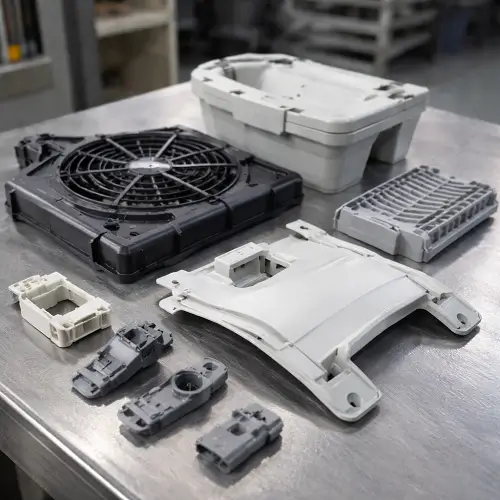
Low material density produces lightweight parts suitable for automotive interiors, consumer products, and high-volume housings.
Excellent chemical resistance allows polypropylene to withstand acids, alkalis, detergents, and many industrial chemicals.
Good fatigue and hinge performance makes polypropylene well suited for living hinge and snap-fit designs.
Cost efficiency in high-volume production is supported by short cycle times and relatively low material cost.
Limitations
Despite its advantages, polypropylene injection molding is not suitable for every application.
Lower stiffness than ABS or nylon limits its use in load-bearing or highly rigid structures without reinforcement.
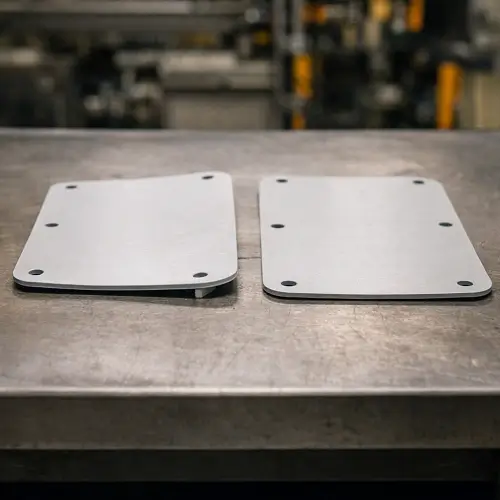
Moderate dimensional stability means tight tolerances are harder to maintain due to crystallization-driven shrinkage.
Surface finish control is more challenging for high-gloss cosmetic requirements.
Sensitivity to cooling imbalance often leads to warpage, especially on large flat parts.
If a design already struggles with stiffness or tight cosmetic expectations on paper, polypropylene usually amplifies those challenges rather than hiding them.
Polypropylene Material Properties
Polypropylene is valued as an injection molding material because of its low moisture absorption and stable chemical behavior. In most cases, PP does not require drying prior to molding and maintains mechanical performance in humid or chemically aggressive environments.
From a mechanical perspective, polypropylene provides good impact resistance at room temperature and excellent fatigue life. Thermal resistance is moderate compared with engineering plastics, which limits PP use in high-temperature structural applications. These characteristics are best evaluated alongside part geometry and service conditions rather than in isolation.
Design and Mold Considerations for Polypropylene Injection Molding
Design discipline plays a decisive role in successful polypropylene injection molding. Because polypropylene is semi-crystalline, geometry consistency and cooling balance influence part stability more than flow behavior alone. Many PP issues become visible only after cycle time is reduced, which is why early design decisions matter.
Wall Thickness
For most polypropylene injection molded parts, a nominal wall thickness between 1.0 and 3.0 mm provides a good balance between fillability, cooling time, and dimensional stability. Local thickness variation should ideally remain within ±20–25%. Larger transitions significantly increase differential shrinkage and warpage risk.
If a part already shows uneven cooling in simulation or early trials, wall thickness transitions are often the first place to look.
Draft
Draft angle is often underestimated in polypropylene molds. Smooth surfaces typically require a minimum of 1° per side, while textured surfaces usually need 2–3° to ensure clean ejection. Glass-filled polypropylene often requires larger draft angles, sometimes up to 5°, due to increased stiffness and fiber interaction with the mold surface.
When ejection marks appear early, insufficient draft is frequently the underlying cause rather than surface finish alone.
Ribs and Bosses
Ribs and bosses must be designed conservatively in polypropylene parts. Rib thickness is commonly limited to 50–60% of the nominal wall thickness to reduce sink marks and internal stress. Tall or isolated bosses should be supported with gussets or tied into surrounding walls.
Adding material rarely improves strength in PP. More often, it shifts shrinkage and creates cosmetic or dimensional problems elsewhere.
Living Hinges
Polypropylene is well suited for living hinge designs due to its fatigue resistance. Typical hinge thickness ranges from 0.25 to 0.5 mm, with smooth radii on both sides to avoid stress concentration.
When hinge life falls short of expectations, thickness transitions are usually a more common issue than material choice.
Gate and Cooling
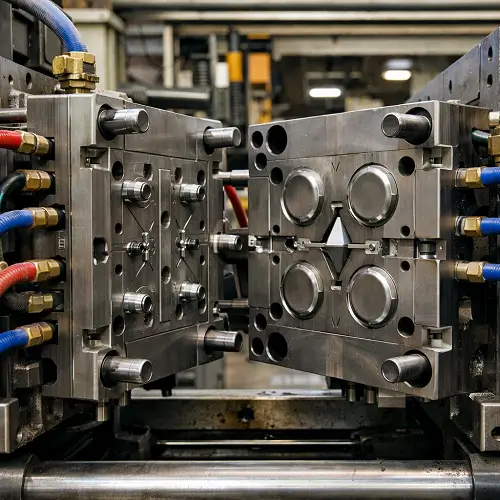
From a tooling perspective, gate location determines primary shrink direction, while cooling channel balance controls crystallization uniformity. Many polypropylene molds appear acceptable during early trials but reveal warpage or dimensional drift once cycle time is optimized and thermal imbalance accumulates during production.
If a mold behaves well at slow cycles but becomes unstable as output increases, cooling balance is often the limiting factor.
Polypropylene Material Processing
Typical Processing Parameters for Polypropylene Injection Molding
| Parameter | Typical Range | Engineering Notes |
|---|---|---|
| Melt Temperature | 220–280 °C | Exceeding 280 °C increases degradation risk |
| Mold Temperature | ≤ 80 °C | Higher mold temperature increases crystallinity and shrink |
| Injection Pressure | 5.5–10 MPa | Excessive pressure accelerates mold wear |
| Back Pressure | 0.34–0.7 MPa | High back pressure generally unnecessary |
| Ejection Temperature | ~54 °C | Early ejection increases warpage risk |
| Drying Requirement | Usually not required | Confirm for filled or modified grades |
Stable thermal control and repeatable packing profiles matter more than aggressive cycle-time reduction in polypropylene injection molding.
Tolerance and Dimensional Stability in Polypropylene Injection Molding
Injection molding tolerance capability for polypropylene is moderate compared with amorphous plastics such as ABS or PC. While PP fills molds easily, crystallization-driven shrink introduces higher dimensional variability.
Typical Tolerance Ranges
| Nominal Dimension | Typical Tolerance |
|---|---|
| ≤ 20 mm | ±0.13 mm |
| 20–100 mm | ±0.2–0.3 mm |
| > 100 mm | Case-specific |
Shrinkage and Stability Data
| Property | Typical Value |
|---|---|
| Linear Shrinkage | 1.0–3.0 % |
| Filled PP Shrinkage | Lower, grade dependent |
| Post-mold Dimensional Drift | Possible within 24–48 hours |
Applications of Polypropylene Injection Molding
Consumer Products and Packaging
Used for containers, closures, and household products due to low weight and chemical resistance.
Automotive Interior and Under-the-Hood Components
Applied in trim, clips, ducts, and housings where moisture resistance and fatigue performance are required.
Medical and Laboratory Equipment
Selected for trays, containers, and housings that must withstand repeated cleaning and chemical exposure.
Industrial and Chemical Handling Parts
Used in fluid-handling components and protective housings exposed to corrosive environments.
Across these applications, polypropylene is typically chosen once long-term stability and production efficiency outweigh cosmetic priorities.
Conclusion
Polypropylene injection molding delivers reliable performance when material behavior, mold design, and process control are aligned. Most production issues associated with PP—such as warpage, sink marks, or dimensional drift—originate from geometry imbalance, cooling inconsistency, or unrealistic tolerance expectations rather than from the resin itself.
At Jeek, we don’t just review designs; we optimize them for high-performance manufacturing. If you are developing a project that requires the specific durability and chemical resistance of polypropylene, our engineering team is ready to provide a manufacturability assessment alongside a competitive production quote. Contact us today to start your PP injection molding project.
FAQs
Is polypropylene waterproof in injection molded parts?
Polypropylene itself does not absorb water, but water resistance depends more on part design and mold quality than on the material alone.
Does polypropylene require drying before injection molding?
In most applications, polypropylene does not require drying due to very low moisture absorption.
Why do polypropylene parts warp during production?
Warpage typically results from uneven cooling or wall-thickness imbalance rather than from the material itself.
What tolerance level is realistic for polypropylene injection molded parts?
Polypropylene supports moderate tolerances. Large flat parts and long flow paths require more conservative expectations.