
Acrylic injection molding is used to produce clear plastic parts from PMMA resin. The process is common for transparent covers, display windows, light guides, lighting lenses, cosmetic parts, medical device covers, and other molded components where clarity and surface appearance matter.
PMMA, also called acrylic or polymethyl methacrylate, is often selected when a part needs a glass-like look, high gloss, and stable transparency. In some markets, customers may also use names such as Plexiglass or Lucite when referring to acrylic materials.
The main challenge is that acrylic does not hide molding problems well. A small bubble, silver streak, flow mark, weld line, gate mark, or scratch may be hard to notice on a black plastic part, but the same defect can stand out immediately on a clear PMMA part.
For customers looking for acrylic injection molded parts, the key question is not only whether PMMA can be molded. The better question is whether the part design, visible surface, wall thickness, assembly method, and material requirement are suitable for PMMA before tooling begins.
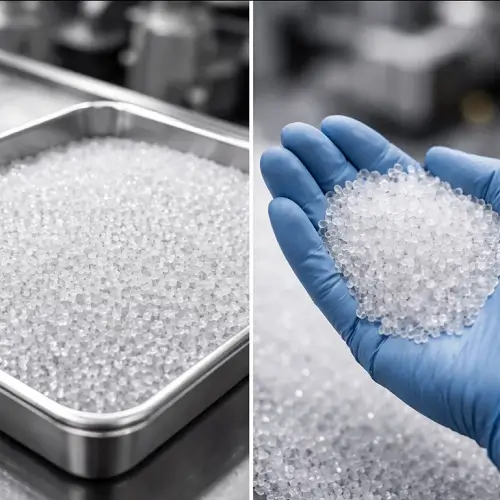
What Is Acrylic Injection Molding?
Acrylic injection molding refers to the process of melting PMMA resin and injecting the molten plastic into a metal mold cavity. After cooling, the mold opens and the finished acrylic part is ejected.
Unlike CNC-machined acrylic sheets or extruded acrylic products, injection molded acrylic parts are formed directly inside the mold. This allows production of repeatable shapes, molded features, curved surfaces, logos, windows, covers, and other details that would be slower or more expensive to machine one by one.
The process is often used for clear injection molded plastics where appearance is a major requirement. A well-molded acrylic part can have good light transmission, a polished surface, and a clean transparent look. Acrylic can reach about 91–93% light transmission in many applications, which is one reason PMMA is widely used for visual and lighting components.
The difficult part is not understanding the molding process. The difficult part is controlling the clear appearance. PMMA is sensitive to moisture, overheating, internal stress, rough mold surfaces, poor venting, uneven cooling, and gate placement. A simple-looking transparent cover may still require careful mold and process review if the customer expects a clean finish.
This is why acrylic plastic molding should be treated as both a molding project and a cosmetic project. The mold has to make the shape, but the mold also has to protect the visible surface.
Why Customers Choose PMMA for Clear Molded Parts
PMMA is usually chosen because of appearance. A good acrylic molded part can look close to glass, but with lower weight and more freedom in shape. For covers, windows, lenses, light guides, and display parts, that visual quality is often the main reason for choosing PMMA.
Acrylic also gives a high-gloss surface when the mold cavity is polished well. This makes PMMA useful for cosmetic packaging, lighting covers, product windows, transparent panels, and decorative parts where the surface finish affects how the product feels to the customer.
Weather resistance is another reason PMMA is used. Acrylic has good resistance to sunlight compared with many general-purpose transparent plastics. For outdoor covers, lighting components, and display windows, this can be valuable when the part needs to keep its clarity over time.
PMMA also has good rigidity. That stiffness helps clear covers and panels hold their shape. The surface hardness is generally better than polycarbonate, so acrylic can resist light surface scratching better in some applications.
The trade-off is impact strength. Acrylic looks clean and polished, but it is more brittle than polycarbonate. PMMA is usually selected when clarity and surface appearance matter more than heavy impact resistance.
Where Acrylic Injection Molding Becomes Difficult
Acrylic injection molding becomes difficult when the part has high cosmetic requirements, thick sections, sharp corners, or stressed assembly features. Clear plastic parts expose defects that opaque plastics can often hide.
Moisture is one common issue. PMMA must be dried before molding. If moisture remains in the resin, the molded part can show bubbles, haze, silver streaks, or poor clarity. The customer may not see the drying step, but the finished part will show the result.
Wall thickness is another common problem. Thick acrylic sections can create sink marks, bubbles, optical distortion, or internal stress. A thick transparent part may look simple in CAD, but the molded result can be difficult to control. More uniform wall thickness usually produces better parts.
Sharp corners and tight assembly areas also need attention. PMMA does not tolerate stress concentration well. Screw bosses, press-fit areas, snap features, and sharp internal corners can increase the risk of cracking, especially during assembly or after the part is exposed to cleaners or chemicals.
The visible surface must be planned early. Gate marks, ejector marks, parting lines, and flow marks should not be placed randomly on a clear front face. For acrylic molded parts, the mold design should start by identifying the surface the customer will see first.
Acrylic vs Polycarbonate for Injection Molding
Many customers compare acrylic and polycarbonate when choosing a clear plastic for injection molding. Both materials can be transparent, but they are used for different reasons.
| Requirement | Acrylic / PMMA | Polycarbonate / PC |
|---|---|---|
| Optical clarity | Excellent | Good |
| Glass-like appearance | Strong choice | Good, but less glass-like |
| Surface gloss | Very good | Good |
| Impact strength | Lower | Much higher |
| Surface hardness | Better | Softer surface |
| Outdoor clear parts | Often good | Depends on grade and coating |
| Safety or impact parts | Not the safest option | Usually better |
| Cosmetic transparent covers | Strong choice | Also possible |
| Functional transparent housings | Needs review | Often safer |
The simple answer is: PMMA for clarity, PC for impact strength.
Acrylic is usually better when the customer wants a clean transparent look, high gloss, and a glass-like surface. Polycarbonate is usually better when the part needs toughness, drop resistance, or stronger mechanical performance.
A display cover, cosmetic window, lighting lens, or decorative transparent panel may be a good PMMA application. A transparent machine guard, impact cover, protective housing, or stressed assembly part may be safer in PC.
The choice should not be based only on transparency. The part function, wall thickness, assembly method, outdoor exposure, and impact risk all matter.
Design Tips for Acrylic Injection Molded Parts
Acrylic injection molded parts should be designed with appearance and stress control in mind. The goal is not only to fill the mold. The goal is to make a clear part that looks clean and survives assembly.
Wall thickness should stay as even as possible. Sudden thick-to-thin changes can create flow marks, sink, internal stress, or optical distortion. If the part needs a thick appearance, the design may need a hollowed structure, ribs, or a different shape instead of one large solid acrylic section.
Corners should not be too sharp. Small radii help reduce stress and allow smoother plastic flow. This matters around windows, screw holes, bosses, ribs, and internal corners.
Gate location should be reviewed before tooling. A gate on a hidden edge may be acceptable. A gate mark on a clear front face may ruin the appearance. Flow direction also matters because acrylic can show flow lines and weld lines more clearly than opaque materials.
Ejector pin locations need the same care. Ejector marks on a hidden surface may be fine. Ejector marks on a clear display face are usually not acceptable. The drawing or RFQ should clearly show which side is cosmetic.
Screw bosses, clips, and press-fit areas need careful design. PMMA can crack if the part is forced during assembly. If the part needs screws, snap fits, or tight inserts, the supplier should review the geometry before mold making. Sometimes PC, a modified acrylic grade, or a design change may be safer.
Mold Requirements for Clear Acrylic Parts
Acrylic molds need good surface preparation when the finished part must be clear and glossy. The mold surface transfers directly to the plastic part. If the cavity has machining marks, scratches, or uneven polish, the molded acrylic part can show those defects.
For clear acrylic parts, mold polishing is often more important than it is for ordinary opaque plastic parts. A black plastic cover may hide a small tooling mark. A transparent PMMA cover may expose it immediately.
Venting is also important. Trapped gas can cause burn marks, haze, or poor surface quality. Good venting helps the plastic fill the cavity cleanly and reduces visible defects.
Cooling should be balanced as much as possible. Uneven cooling can lead to stress, warpage, and optical distortion. This is especially important for flat covers, display windows, and clear panels where even small distortion may be visible.
The mold design also needs to protect the cosmetic surface. Gate marks, parting lines, ejector marks, and shut-off areas should be placed where they will not damage the main appearance area.
Acrylic molds are not just about making the shape. They are about making the shape look right.
Common Problems in Acrylic Injection Molding
Most acrylic injection molding defects are related to three things: moisture, air, and stress. Clear PMMA shows these problems quickly because the part is transparent.
Bubbles and haze often come from moisture or trapped gas. PMMA does not need much moisture to create visible problems. If the resin is not dried properly, moisture can turn into vapor during molding and leave small bubbles or cloudy areas inside the part.
Flow marks and weld lines are also common on clear acrylic parts. These marks may come from unstable melt flow, poor gate location, cold material entering the cavity, or two flow fronts meeting in a visible area. On a black part, a minor flow line may not matter. On a clear display window, the same mark can cause rejection.
Sink marks and local distortion usually come from wall thickness variation and uneven cooling. Packing harder may hide some sink, but too much pressure can also increase internal stress. For acrylic parts, better design is often more reliable than forcing the process to fix a bad geometry.
Stress cracking is one of the biggest risks with PMMA. A part can look fine after molding and still crack later during assembly, handling, or cleaning. Sharp corners, tight screw areas, press-fit features, uneven cooling, and high internal stress can all contribute to cracking.
Burn marks and discoloration may appear when air is trapped or the material overheats. If the same burn appears in the same location every cycle, the cause is often venting, shear, or local overheating rather than the resin itself.
The practical point for customers is simple: transparent acrylic parts need more control than ordinary plastic parts. Material drying, mold polish, venting, wall thickness, gate location, and cooling all affect the final result.
Typical Applications of Acrylic Injection Molding
Acrylic injection molding is not a general-purpose answer for every transparent part. It works best when appearance, clarity, and surface quality matter more than impact resistance.
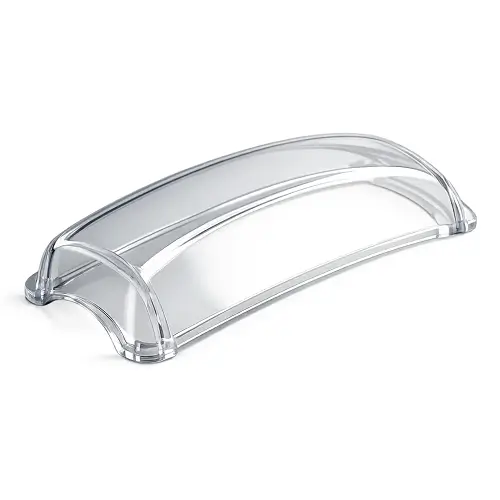
Common applications include transparent covers, display windows, lighting lenses, light guides, instrument panels, cosmetic packaging, medical device covers, protective viewing windows, decorative clear parts, and visual indicator components.
Lighting components are one of the strongest uses for PMMA. Acrylic offers good light transmission and surface appearance, which makes it useful for lenses, diffusers, and light-guiding parts.
Display and visual components also fit acrylic well. A clear window or cover needs to stay clean, bright, and visually stable. PMMA can work well when the part is not exposed to heavy impact or high assembly stress.
In automotive or industrial products, acrylic is used more selectively. It may be suitable for interior lighting components, decorative trim, display covers, and clear visual areas. It is less suitable for impact guards, high-stress clips, or parts that must handle repeated mechanical abuse.
Cost Factors in Acrylic Injection Molding
Acrylic injection molding cost is not based only on part size or material weight. Clear parts usually require more attention than ordinary opaque plastic parts, and that can affect tooling and production cost.
Mold polishing is one cost factor. If the part needs a high-gloss transparent surface, the cavity may require better polishing than a standard textured plastic part. The more visible the surface, the more careful the tool preparation needs to be.
Gate and ejector design can also affect cost. If the part has a large clear face, the mold design may need more planning to hide gate marks and ejector marks. A simple-looking transparent part may still require a careful mold layout.
Cosmetic requirements influence trial and adjustment time. A part that only needs to fit is one type of job. A part that must be clear, glossy, free from visible flow marks, and suitable for display is a different job.
Packaging and handling can also matter. Clear acrylic parts can be scratched during handling, shipping, or assembly. Protective packaging may be needed if the surface finish is important.
The best way to quote an acrylic molded part is to review the CAD file, visible surfaces, quantity, material choice, surface finish, and assembly requirements together. Without those details, the quote may miss the real difficulty of the project.
What to Send for an Acrylic Injection Molding Quote
A useful acrylic injection molding quote needs more than a part name. “Clear cover” or “acrylic part” is not enough to judge the mold, material, appearance, and cost.
For a more accurate review, send:
- CAD file
- 2D drawing if available
- expected quantity
- PMMA or PC preference
- clear, frosted, tinted, or colored requirement
- visible cosmetic surfaces
- surface finish requirement
- critical dimensions
- screw, clip, or assembly method
- outdoor use requirement
- chemical contact or cleaning requirement
- packaging requirement if scratches are a concern
The visible surface is especially important. If one side must stay clean and glossy, the supplier needs to know before gate location, parting line, and ejector layout are decided.
If the part is still in the early design stage, sending the CAD file early can prevent expensive changes later. A short review can show whether PMMA is suitable, whether PC may be safer, or whether the design needs changes before tooling.
Conclusion
Acrylic injection molding is a strong choice when a clear plastic part needs transparency, gloss, and a glass-like surface. PMMA works well for display windows, transparent covers, light guides, lighting components, cosmetic parts, panels, and other clear molded parts where appearance is the main requirement.
The material also has limits. Acrylic is more brittle than polycarbonate, and clear PMMA parts can show bubbles, silver streaks, flow marks, weld lines, scratches, internal stress, and gate marks more easily than opaque plastic parts. Good acrylic molding depends on proper drying, mold polishing, wall thickness, gate location, venting, cooling, and ejection design.
For customers who already know they need a clear molded part, the key decision is often PMMA or PC, appearance or impact strength, standard surface or high-gloss finish. The right answer depends on the part function, visible surfaces, quantity, and assembly method.
JeekMould can review CAD files, drawings, material requirements, visible surfaces, and expected quantities for acrylic injection molded parts. If PMMA is the right material, the mold and process can be planned around clarity and surface quality. If the part needs stronger impact performance, JeekMould can also help compare acrylic with polycarbonate or other clear plastic options.
Upload your CAD file to request a factory quote for acrylic injection molded parts before committing to tooling.