
Plastic threads are found in thousands of everyday products, from battery covers and electronic enclosures to medical devices, automotive components, filters, and consumer products. They provide a simple way to assemble plastic parts without adding extra hardware, helping manufacturers reduce both production cost and assembly time.
However, designing plastic threads is very different from designing metal threads. A thread that works well in metal may crack, strip, or wear quickly when molded in plastic. The material, wall thickness, assembly force, and expected service life all influence whether a molded plastic thread will perform reliably.
For some products, a molded plastic thread is the most economical solution. For others, adding a brass insert or metal fastener provides better durability. Understanding these differences before tooling helps avoid costly mold modifications and product failures later.
This guide explains how plastic threads work, when they are the right choice, how to design them for injection molding, and how to select the best material based on your product requirements.
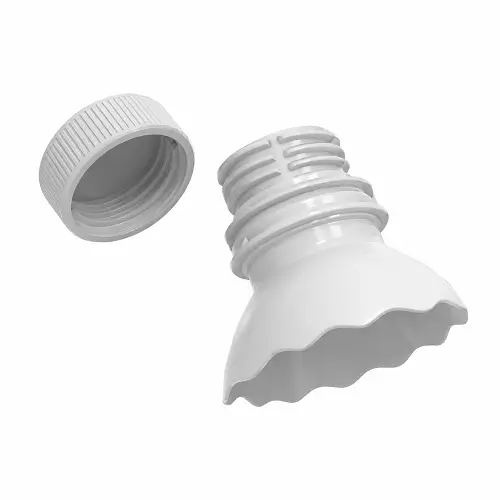
What Is a Plastic Thread?
A plastic thread is a helical feature molded directly into a plastic part that allows it to be assembled with another threaded component. Depending on the product design, the thread may be internal, external, or combined with a metal insert for additional strength.
Unlike machined metal threads, plastic threads are formed during the injection molding process, allowing the thread to become part of the finished component without additional machining. This makes them ideal for high-volume production because every molded part is produced with the same thread geometry, reducing manufacturing time and cost.
Plastic threads are commonly used in products that are assembled only a few times or require lightweight construction. Typical examples include battery compartments, cosmetic containers, water filters, plastic bottles, electrical connectors, and many types of plastic housings.
The biggest advantage of molded threads is that they eliminate secondary machining and reduce assembly costs. However, because plastic behaves differently from metal, thread geometry and material selection become much more important during product development.
When Are Plastic Threads a Better Choice?
One of the most common questions during product development is whether a molded plastic thread is strong enough or if a metal insert should be used instead. The answer depends less on the thread itself and more on how the finished product will be used.
If the part is assembled only once or only occasionally, molded plastic threads are often the better option. They reduce manufacturing cost, simplify production, and eliminate the need for additional insert installation. Products such as battery covers, bottle caps, electrical enclosures, and consumer electronics commonly use molded threads because they provide sufficient strength while keeping production efficient.
If the thread will be tightened and loosened repeatedly, the situation changes. Repeated assembly gradually wears the plastic thread, especially when high tightening force is applied. In these applications, brass threaded inserts usually provide a longer service life and more reliable fastening.
The working environment also matters. Products exposed to vibration, continuous mechanical loads, or higher temperatures generally benefit from stronger engineering plastics or metal inserts. On the other hand, lightweight consumer products with moderate loads can often use molded plastic threads without any issues.
Rather than asking whether plastic threads are “good” or “bad,” it is more useful to ask how many assembly cycles the product will experience, how much force the thread must withstand, and whether reducing cost or maximizing durability is the higher priority.
Common Types of Plastic Threads
Not every plastic thread is designed for the same purpose. Choosing the right thread type early in the design stage helps improve product reliability while avoiding unnecessary manufacturing costs.
Internal Threads
Internal threads are molded inside a hole and are commonly used to receive screws, threaded caps, or mating components. They are frequently found in electronic housings, medical products, lighting equipment, and industrial plastic assemblies.
Because the core of the mold forms the thread, proper draft, material shrinkage, and mold release must all be considered during tool design. Poorly designed internal threads can become difficult to demold or may lose dimensional accuracy after cooling.
External Threads
External threads are molded on the outside diameter of a part and are commonly used for bottle closures, filter housings, pipe fittings, and protective caps.
Compared with internal threads, external threads are often easier to inspect and can sometimes simplify mold construction. However, they still require proper wall thickness and sufficient support to prevent deformation during molding.
Threaded Inserts
When higher strength or repeated assembly is required, threaded inserts are often a better solution than molded plastic threads alone.
Heat-set inserts are installed after molding using controlled heat, creating a strong mechanical bond with the surrounding plastic. Ultrasonic inserts achieve a similar result by using ultrasonic vibration to embed the insert into the molded part. Molded-in inserts are placed inside the mold before injection and become permanently encapsulated during molding.
Each method has advantages depending on production volume, assembly requirements, and product design. For products expected to be assembled hundreds or thousands of times, threaded inserts usually provide much greater durability than molded plastic threads.
For products that only require occasional assembly, however, molded plastic threads remain the simpler and more economical choice.
Design Tips for Plastic Threads
A well-designed plastic thread does much more than simply hold two parts together. It must be strong enough for assembly, durable enough for repeated use, and easy to manufacture without creating molding defects.
Many thread failures are not caused by poor molding quality. Instead, they begin during the design stage when the thread geometry, wall thickness, or material selection does not match the product’s actual working conditions.
Below are several design principles that help improve both product reliability and moldability.
Avoid Sharp Thread Roots
One of the most common mistakes is designing threads with sharp corners at the root.
Sharp corners create stress concentrations during assembly. When tightening force is applied, these areas become the first place where cracks begin to form. Even if the thread survives initial assembly, repeated use can gradually weaken the plastic and shorten the service life.
Adding a small radius at the thread root helps distribute stress more evenly and improves durability without changing how the thread functions.
Choose the Right Thread Engagement Length
A longer thread does not always create a stronger connection.
Once enough threads are engaged to support the required load, making the threaded section even longer provides very little additional strength. Instead, it increases molding complexity, cooling time, and material usage.
The ideal engagement length depends on the material, expected tightening force, and assembly frequency rather than simply making the thread as long as possible.
Maintain Uniform Wall Thickness
Wall thickness has a significant effect on both molding quality and thread strength.
If the area around the thread is much thicker than the surrounding part, it may cool unevenly and create sink marks or internal stress. If it is too thin, the thread may deform or crack during tightening.
Maintaining a consistent wall thickness helps improve dimensional stability while reducing molding defects. This design principle is also discussed in our guide to Plastic Rib Design for Injection Molded Parts, where structural support and wall thickness work together to improve part strength.
Consider Draft and Mold Release
Unlike machined threads, molded threads must be removed from the mold after cooling.
If draft angles and mold release are ignored during the design stage, production becomes more difficult and thread quality may suffer. In some cases, complex thread geometry may require unscrewing mechanisms or collapsible cores, increasing tooling cost and mold complexity.
Considering mold release early helps avoid expensive design changes after the mold has already been manufactured.
Design Threads for the Expected Assembly Cycles
Not every product is assembled the same number of times.
A disposable container may only be opened once, while a battery compartment or maintenance cover could be removed hundreds of times throughout the product’s life.
Products that require frequent assembly should focus on wear resistance, thread durability, and suitable material selection. In many of these applications, combining plastic parts with threaded inserts provides a much longer service life than molded threads alone.
Best Materials for Plastic Threads
Choosing the right material is just as important as designing the thread itself. Even a well-designed thread can fail if the material does not match the working environment or assembly requirements.
Instead of asking which material is “the strongest,” it is more useful to consider how the product will be used. Will the thread be tightened only once, or opened regularly? Will it carry heavy loads, or simply hold a lightweight cover in place? Answering these questions usually makes material selection much easier.
ABS
ABS is widely used for electronic housings, appliance covers, and consumer products where assembly loads are relatively low.
It is easy to mold, offers good impact resistance, and provides a clean surface finish. For products that are assembled only occasionally, ABS threads generally provide reliable performance while keeping manufacturing costs low.
However, ABS is not the best choice for applications involving repeated tightening or high mechanical loads, as the threads may gradually wear over time.
PC
Polycarbonate is often selected when the product needs greater toughness than ABS.
It performs well in products that may experience accidental impacts or require higher structural strength, making it common in electrical enclosures, industrial equipment, and protective housings.
Although PC offers better durability, repeated assembly under high torque can still damage molded threads if the design is not optimized.
Nylon (PA6 / PA66)
Nylon is a good option when the thread needs to withstand higher tightening forces or continuous mechanical loading.
Its combination of strength and wear resistance makes it suitable for automotive components, industrial equipment, and mechanical assemblies that require better durability than standard plastics.
One characteristic to consider is moisture absorption. Over time, Nylon can absorb water from the surrounding environment, causing slight dimensional changes. For products requiring very high precision, this should be taken into account during the design stage.
POM
When plastic threads need to be assembled and disassembled many times, POM is often one of the best material choices.
Its naturally low friction helps reduce wear between mating threads, allowing smoother assembly while extending product life. POM also maintains good dimensional stability, making it suitable for precision components that require consistent thread engagement.
Battery compartments, adjustment mechanisms, and precision housings commonly use POM because of its combination of durability and smooth operation.
PEEK
PEEK is designed for applications where ordinary engineering plastics cannot provide sufficient performance.
It maintains excellent strength under high temperatures, chemical exposure, and continuous mechanical loads. These characteristics make it suitable for aerospace, medical devices, and demanding industrial applications.
Because PEEK is significantly more expensive than most engineering plastics, it is generally selected only when its performance advantages justify the additional cost.
Plastic Threads vs Brass Threaded Inserts
Sometimes the best solution is not choosing between plastic or metal—it is deciding which one better matches the product’s expected use.
| Feature | Molded Plastic Threads | Brass Threaded Inserts |
|---|---|---|
| Manufacturing Cost | Lower | Higher |
| Assembly Strength | Moderate | Excellent |
| Repeated Assembly | Limited | Excellent |
| Product Weight | Lighter | Slightly Higher |
| Production Efficiency | Faster | Additional Installation Required |
| Best For | Consumer Products, Covers, Housings | Industrial Equipment, Automotive, Medical Devices |
For products that are assembled only a few times, molded plastic threads usually provide the most economical solution. If the product will be serviced frequently or must withstand higher tightening torque, brass inserts often provide a better long-term investment.
Before deciding between the two, it is worth evaluating the product’s expected service life, assembly frequency, and mechanical loading. Choosing the right fastening method early can reduce tooling changes, improve reliability, and lower overall manufacturing costs.
Common Problems with Plastic Threads
Even a well-designed plastic thread can fail if the material, geometry, or assembly method is not suitable for the application. Most thread failures are not caused by the injection molding process itself, but by design decisions made before production begins.
Understanding these common problems early can help improve product reliability while reducing expensive tooling modifications.
Thread Stripping
Thread stripping is one of the most common problems in plastic parts. It usually happens when excessive tightening force damages the thread profile, preventing the mating component from holding securely.
This problem is often seen in products that are assembled repeatedly or where the material does not have enough strength for the required load.
Using a stronger engineering plastic or switching to a threaded insert can significantly improve thread life in these situations.
Cracking Around the Thread
Cracks often appear around the first few thread turns because these areas experience the highest stress during assembly.
Sharp thread roots, thin surrounding walls, or excessive tightening torque can all increase the risk of cracking. Improving the thread geometry and maintaining proper wall thickness usually provides a much more reliable solution than simply increasing the overall size of the part.
Loose Thread Engagement
If the thread feels loose after assembly, the problem is not always caused by poor molding accuracy.
Material shrinkage, insufficient engagement length, or incorrect tolerance selection may all contribute to poor thread fit. Reviewing these factors during product development helps avoid expensive mold corrections later.
Wear After Repeated Assembly
Plastic threads naturally wear faster than metal threads when they are assembled and disassembled many times.
For products such as battery compartments, maintenance covers, or service panels, selecting a wear-resistant material like POM or using brass threaded inserts often provides a much longer service life.
The expected number of assembly cycles should always be considered before choosing the final fastening solution.
Plastic Thread Design Checklist Before Tooling
Before starting mold manufacturing, reviewing a few key design points can prevent many common production problems.
✔ Is a molded plastic thread strong enough for the product, or would a threaded insert provide better durability?
✔ Has the thread material been selected according to the required load and expected service life?
✔ Is the wall thickness around the thread uniform enough to reduce sink marks and internal stress?
✔ Has sufficient thread engagement been provided without making the part unnecessarily thick?
✔ Has mold release been considered to avoid unnecessary tooling complexity?
Answering these questions before tooling begins is often much less expensive than modifying the mold after production has started.
Conclusion
Plastic threads offer an efficient and cost-effective fastening solution for many injection molded parts. When properly designed, they reduce assembly steps, eliminate unnecessary hardware, and support high-volume production while maintaining reliable performance.
The key to successful plastic thread design is balancing material selection, thread geometry, and expected product use. A thread designed for a disposable consumer product will have very different requirements from one used in industrial equipment or a medical device. Considering these factors early helps reduce manufacturing risks and improve long-term product reliability.
If you are developing a plastic part with threaded features, our engineering team can review your CAD files, recommend suitable materials, and evaluate whether molded threads or threaded inserts are the better choice for your application.