
Plastic parts are often assembled using screws, but molded plastic threads are not always the best long-term solution. When a product needs to be opened repeatedly or tightened with higher torque, plastic threads may gradually wear out, strip, or crack.
This is why many injection molded parts use heat set inserts instead of relying on plastic threads alone. By embedding a brass threaded insert into the molded part after production, manufacturers can significantly improve thread strength, extend service life, and make repeated assembly much more reliable.
Heat set inserts are widely used in consumer electronics, automotive components, medical devices, industrial equipment, and many other products that require secure threaded connections.
In this guide, you’ll learn what heat set inserts are, when they should be used, how they compare with molded plastic threads, and what design considerations help achieve the best results.
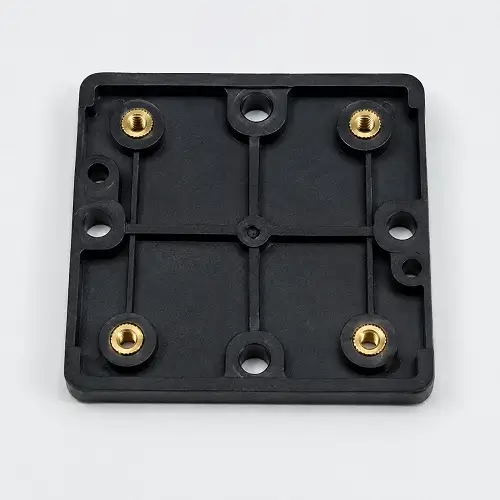
What Are Heat Set Inserts?
A heat set insert is a threaded metal insert, usually made from brass, that is installed into an injection molded plastic part using controlled heat. During installation, the surrounding plastic softens slightly, allowing the knurled surface of the insert to bond tightly with the material. Once the plastic cools, the insert becomes securely locked in place and provides a durable metal thread.
Unlike molded plastic threads, heat set inserts are designed to withstand repeated screw installation and removal without damaging the surrounding plastic. This makes them a common choice for products that require maintenance, battery replacement, or frequent assembly.
Although brass is the most common material, heat set inserts are available in different sizes, thread specifications, and surface patterns to match various engineering plastics and product requirements.
When Should You Use Heat Set Inserts?
Not every plastic part requires a heat set insert. For many low-load applications, molded plastic threads are sufficient and help reduce manufacturing costs.
However, there are situations where adding a threaded insert provides a much more reliable fastening solution.
Products That Require Repeated Assembly
In many electronic enclosures and battery compartments, we recommend heat set inserts because molded plastic threads gradually wear after repeated assembly.
Higher Tightening Torque
Some products require screws to be tightened with greater force to ensure structural stability.
In these cases, plastic threads alone may deform or strip under load. Heat set inserts distribute the tightening force more effectively and reduce the risk of thread failure.
Heavy or Structural Components
Industrial equipment, automotive parts, and larger plastic assemblies often experience vibration or continuous mechanical loading during operation.
A metal insert provides better long-term reliability than molded plastic threads in these demanding environments.
Premium Consumer Products
Many laptops, smart home devices, power tools, and medical products use brass inserts because they provide a stronger fastening solution while allowing the product to be serviced multiple times throughout its life.
Although inserts add an extra manufacturing step, they often reduce warranty issues caused by damaged plastic threads.
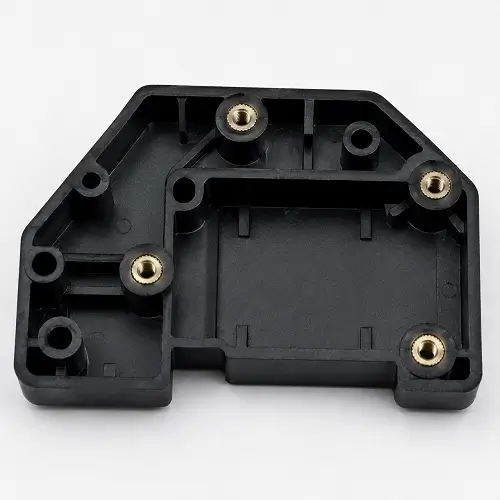
Benefits of Heat Set Inserts
Choosing heat set inserts is not simply about increasing thread strength. They also improve product durability, assembly reliability, and long-term performance.
Longer Thread Life
Plastic threads naturally wear as screws are tightened and removed repeatedly. Heat set inserts provide a metal thread that resists wear far better, making them ideal for products that require regular maintenance.
Higher Pull-Out and Torque Resistance
Because the knurled surface mechanically locks into the surrounding plastic, heat set inserts offer much better resistance to pull-out and screw loosening than molded plastic threads.
This allows designers to use higher tightening torque with greater confidence, particularly in structural applications.
Improved Product Reliability
Loose screws are often caused by damaged plastic threads rather than poor assembly.
By replacing the plastic thread with a brass insert, manufacturers can significantly improve fastening consistency and reduce the risk of field failures.
Better for Long-Term Service
Products designed to remain in service for many years benefit greatly from threaded inserts.
Whether replacing batteries, servicing internal electronics, or repairing industrial equipment, metal threads maintain reliable performance long after molded plastic threads begin to wear.
Compatible with Many Engineering Plastics
Heat set inserts can be used with many common injection molding materials, including ABS, PC, PA (Nylon), PBT, and PEEK.
Selecting the correct insert design and installation temperature helps achieve strong retention while protecting the surrounding plastic.
Heat Set Inserts vs Molded Plastic Threads
One of the biggest questions during product development is whether a molded plastic thread is strong enough or if a heat set insert is worth the additional manufacturing step.
The answer depends on how the product will be used rather than simply choosing the strongest option.
If the screw is only installed once or removed occasionally, molded plastic threads are usually sufficient. They eliminate secondary assembly operations, reduce manufacturing costs, and work well for lightweight products with moderate loads.
However, if the product will be opened frequently for maintenance, battery replacement, or servicing, molded plastic threads gradually wear over time. In these situations, heat set inserts provide a much more durable fastening solution.
The table below compares the two options.
| Feature | Molded Plastic Threads | Heat Set Inserts |
|---|---|---|
| Manufacturing Cost | Lower | Higher |
| Repeated Assembly | Limited | Excellent |
| Thread Strength | Moderate | High |
| Pull-Out Resistance | Moderate | Excellent |
| High Tightening Torque | Limited | Excellent |
| Best Applications | Covers, Caps, Consumer Products | Electronics, Automotive, Medical Devices |
Neither solution is universally better. For many consumer products, molded threads provide excellent value. For products expected to remain in service for years, heat set inserts usually justify the additional manufacturing cost.
Heat Set Inserts vs Ultrasonic Inserts
Heat set inserts and ultrasonic inserts both create strong metal threads inside plastic parts, but they use different installation methods.
Heat set inserts are installed by heating the insert before pressing it into the plastic. As the surrounding material softens, it flows around the knurled surface and locks the insert securely after cooling.
Ultrasonic inserts use high-frequency vibration to generate localized heat. The insert is installed much faster, making this method suitable for automated, high-volume production.
For low- to medium-volume projects, heat set inserts are often preferred because the equipment is simpler and the process is easier to control.
For large production runs with automated assembly, ultrasonic installation may improve production efficiency.
In both cases, the insert design and surrounding plastic structure have a greater impact on performance than the installation method itself.
Best Plastic Materials for Heat Set Inserts
Not every plastic responds to heat in the same way. Choosing the right material is just as important as selecting the insert itself.
Instead of asking which material is “best,” it is more useful to choose a material based on how the finished product will be assembled and used.
ABS
ABS is one of the most common materials used with heat set inserts in consumer products.
It flows well during installation and provides reliable retention for products such as electronic housings, appliance covers, and plastic enclosures.
If the product is assembled only occasionally, ABS usually offers a good balance between performance and manufacturing cost.
PC
Polycarbonate is often selected when higher toughness is required.
It is commonly used in electrical equipment, industrial housings, and products that may experience accidental impact.
With proper installation temperature, PC provides strong insert retention while maintaining excellent structural strength around the boss.
Nylon (PA6 / PA66)
Nylon is well suited for products that experience higher mechanical loads.
Its strength and wear resistance make it popular in automotive components and industrial equipment.
Because Nylon absorbs moisture over time, designers should consider dimensional changes when specifying hole size and insert tolerances.
PBT
PBT offers very good dimensional stability and low moisture absorption, making it a reliable choice for electrical connectors, automotive electronics, and precision molded parts.
It performs particularly well when consistent insert positioning is required.
PEEK
PEEK is selected for demanding environments involving high temperatures, chemical exposure, or continuous mechanical loading.
Although significantly more expensive than standard engineering plastics, it provides exceptional long-term performance where reliability is critical.
Design Tips for Heat Set Inserts
A high-quality insert installation starts long before production begins. Proper part design helps improve insert retention while reducing the risk of cracking, sink marks, or assembly problems.
Design the Boss for the Insert
The surrounding boss is just as important as the insert itself.
If the boss diameter is too small, the surrounding plastic may crack during installation. If it is too large, unnecessary material can create sink marks and increase cooling time.
A well-designed boss provides enough material to support the insert while maintaining uniform wall thickness.
For more detailed recommendations, see our guide to Plastic Boss Design for Injection Molded Parts.
Keep Wall Thickness Consistent
Large differences in wall thickness around the insert can create uneven cooling and internal stress.
Maintaining a consistent wall thickness helps reduce sink marks and improves dimensional stability after molding.
Structural ribs can also reinforce the boss without significantly increasing material thickness. This approach is explained in our guide to Plastic Rib Design for Injection Molded Parts.
Use the Correct Hole Size
The molded hole should match the insert manufacturer’s recommendation.
If the hole is too small, excessive installation force may crack the surrounding plastic.
If it is too large, the insert may not achieve sufficient retention strength.
Selecting the proper hole diameter is one of the simplest ways to improve assembly quality.
Control Installation Temperature
Applying too much heat can degrade the surrounding plastic, while insufficient heat prevents proper bonding between the insert and the molded part.
Using the recommended installation temperature for each material helps produce consistent results and reduces the likelihood of insert movement during service.
Common Problems When Installing Heat Set Inserts
Even with the correct insert and plastic material, installation problems can still occur if the part is not properly designed or the process is not well controlled.
Most failures are preventable and usually originate from design or installation rather than the insert itself.
The Insert Spins During Assembly
A spinning insert is one of the most common issues after installation. Instead of remaining fixed inside the plastic, the insert rotates together with the screw, making it impossible to tighten or remove the fastener properly.
This usually happens when the molded hole is too large, the installation temperature is incorrect, or the insert does not achieve enough mechanical engagement with the surrounding plastic.
Selecting the correct hole size and following the recommended installation parameters significantly reduces this risk.
Cracks Around the Boss
If cracks appear around the boss after installation, excessive stress is often the cause rather than poor molding quality.
A boss that is too thin may not provide enough support, while excessive installation force or overheating can damage the surrounding plastic.
Improving the boss design and maintaining a more uniform wall thickness usually produces a stronger and more reliable joint.
Loose Inserts After Cooling
Some inserts feel secure immediately after installation but become loose after the plastic cools.
This can occur when the installation temperature is too low or when the plastic does not flow completely into the insert’s knurled surface.
Proper process control is just as important as part design for achieving long-term retention.
Misaligned Inserts
An insert installed at a slight angle may still accept a screw, but it can create uneven loading and reduce assembly quality.
Accurate positioning during installation helps maintain thread alignment and improves the overall appearance and reliability of the finished product.
Design Checklist Before Production
Before investing in tooling or beginning mass production, reviewing a few key design points can help prevent expensive modifications later.
✔ Is a heat set insert really necessary, or will a molded plastic thread provide sufficient performance?
✔ Has the plastic material been selected according to the expected load and assembly cycles?
✔ Is the boss large enough to support the insert without creating sink marks?
✔ Is the molded hole designed according to the insert manufacturer’s recommendation?
✔ Will the product be assembled only once, or serviced repeatedly throughout its life?
✔ Has the installation method been selected based on production volume and assembly efficiency?
Answering these questions early helps improve product reliability while reducing manufacturing risks and unnecessary tooling changes.
Conclusion
Heat set inserts provide one of the most reliable ways to create durable threaded connections in injection molded plastic parts. Although they add an additional assembly step, they significantly improve thread life, increase pull-out strength, and make repeated assembly much more dependable than molded plastic threads alone.
The best fastening solution depends on the product rather than the insert itself. Products assembled only a few times often perform well with molded plastic threads, while equipment requiring regular maintenance or higher tightening torque usually benefits from brass inserts.
By considering material selection, boss design, insert size, and installation method during the design stage, manufacturers can improve product reliability while avoiding unnecessary production costs.
If you are designing a plastic part that requires secure threaded fastening, our engineering team can review your CAD files, recommend suitable insert solutions, and provide DFM feedback before tooling begins.