
Injection molding and 3D printing are often compared during quoting, but the two processes follow completely different cost models. Injection molding depends on upfront tooling investment and becomes more economical as production volume increases. 3D printing avoids mold cost at the beginning, yet unit cost usually remains much higher once quantities start to grow.
This article looks at that difference from a practical cost perspective. The goal is not to repeat general definitions of either process, but to explain when each one makes financial sense based on tooling expense, part quantity, material choice, lead time, and long-term production requirements.
For product teams moving from prototyping into manufacturing, cost is rarely just a matter of comparing two quotes side by side. The more important question is which process fits the current stage of the project and which one will remain economically sound as volume, quality expectations, and delivery targets change.
Why Injection Molding and 3D Printing Have Different Cost Structures
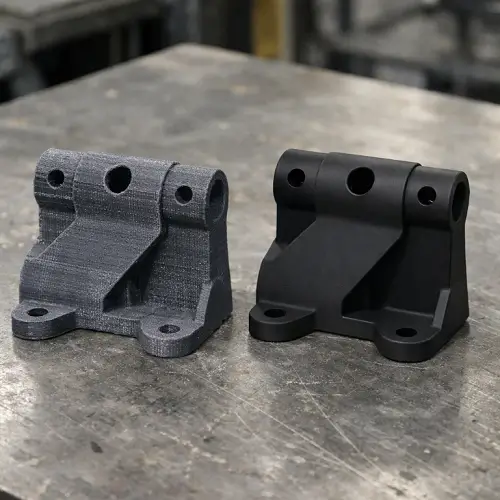
Injection molding and 3D printing follow different cost structures because one depends on upfront tooling investment while the other does not. Injection molding usually carries a higher initial cost but a much lower unit cost at scale. 3D printing avoids mold cost at the beginning, yet the cost of each part stays relatively high as production volume increases.
That difference starts with how each process is set up. Injection molding requires mold design, steel selection, machining, fitting, and sampling before stable production can begin. A large share of the budget is committed before the first qualified part is shipped. 3D printing removes that entire tooling stage, which is why it is often the lower-cost option for prototypes, early validation, or very small batches.
Once setup is complete, the cost behavior begins to separate even further. In injection molding, the major expense is concentrated at the front end. After the mold is built and the process is stabilized, each additional part is produced at a much lower incremental cost. In 3D printing, the first part is accessible because no tool exists, but the hundredth or thousandth part does not become dramatically cheaper in the same way.
This is where volume changes the financial picture. Injection molding benefits from repetition because tooling cost is distributed across total output. The more stable the production run, the more efficient the part price becomes. 3D printing remains closely tied to machine time, build speed, support structures, and post-processing effort, so scale does not reduce cost with the same efficiency.
Part geometry affects the two processes differently as well. In injection molding, once the mold is validated, complex features can often be repeated with high consistency and limited additional cost per cycle. In 3D printing, geometry continues to influence build time directly. Internal structures, support-heavy designs, or higher resolution requirements can extend print duration and raise the effective cost of each part.
For that reason, the comparison should not be reduced to which process is cheaper in general. The more accurate question is which process becomes more cost-efficient under the production conditions of a specific project. Injection molding tends to favor repeatable volume. 3D printing tends to favor flexibility, low initial commitment, and rapid iteration.
Upfront Cost in Injection Molding vs 3D Printing
Upfront cost is the biggest difference between injection molding and 3D printing cost. Injection molding requires mold tooling before production starts. 3D printing does not. That is why 3D printing is usually the lower-cost option for prototypes and small quantities.
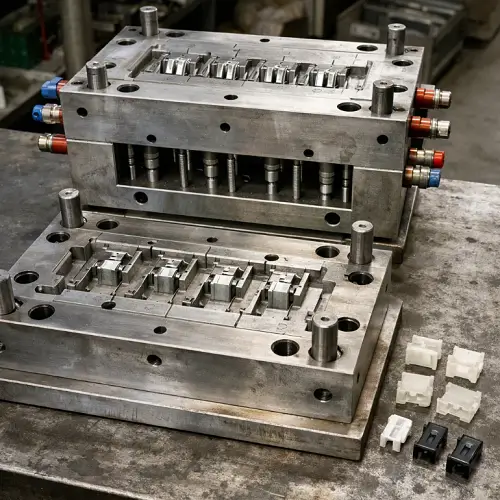
In injection molding, the upfront cost includes mold design, steel, CNC machining, EDM work, mold fitting, and sampling. Even a simple plastic part can require a significant tooling investment before the first production-ready parts are approved. This is the main reason injection molding cost looks high at the beginning of a project.
3D printing avoids mold cost completely. Parts can be produced directly from CAD data, which makes design changes much easier and less expensive in early development. If the part geometry is still changing, 3D printing usually carries much less financial risk than injection molding. In practical quoting, 3D printing cost also varies by process type, since FDM, SLA, SLS, and MJF do not follow the same material cost, surface finish, or post-processing model.
For many small to mid-sized plastic components, injection mold cost often starts at around $3,000 to $5,000 for basic prototype tooling. Production molds built for higher volume, tighter tolerance, or multi-cavity output can move well beyond $10,000, and more complex tools may go significantly higher. That range is the main reason injection molding cost looks expensive at low volume, while 3D printing often appears more affordable at the beginning of a project.
Once the design is stable and production volume increases, the cost logic starts to change. Injection molding becomes easier to justify because the tooling investment can be spread across many parts. 3D printing keeps the entry cost low, but it does not offer the same long-term cost advantage in repeat production.
Per-Part Cost in Injection Molding vs 3D Printing
Per-part cost changes much more in injection molding than in 3D printing. Injection molding usually starts with a high tooling cost, but the cost per part drops fast as volume increases. 3D printing avoids tooling, but the cost per part stays relatively high because each part still takes machine time to build.
In injection molding, unit pricing is mainly driven by cycle time, shot weight, material use, and machine rate. Once the mold is qualified and the process is stable, each additional part can be produced at a much lower incremental cost. That is why injection molding becomes more cost-effective in medium- to high-volume production.
In 3D printing, part cost is still tied to print time, layer height, support structures, material consumption, and post-processing labor. A second part is not dramatically cheaper than the first part in the way it can be with injection molding. The machine still has to build the geometry layer by layer, so scaling up does not reduce cost with the same efficiency.
A printed part that costs $8 to $15 each in low volume may be acceptable for prototypes, but the same geometry can drop sharply in molded production once tooling cost is distributed across several hundred or several thousand parts. That is why part quantity changes the economics so quickly between the two processes.
This is where the cost gap starts to widen. If a project only needs a few parts, 3D printing often keeps the total spend lower. Once quantities begin to rise, injection molding usually wins on unit cost because the tooling investment is spread across a larger number of parts. That shift is what makes production volume such an important part of any injection molding vs 3D printing cost comparison.
Break-Even Volume in Injection Molding vs 3D Printing Cost
Break-even volume is the point where injection molding becomes more cost-effective than 3D printing. Below that point, 3D printing often has the lower total cost because there is no mold investment. Above that point, injection molding usually becomes the better cost decision because the tooling cost is distributed across a larger production run.
The break-even point is not fixed. It depends on mold cost, part size, material choice, cycle time, print time, and total quantity. A simple plastic part with stable geometry may reach the break-even point much earlier than a complex part that still needs design changes. In practical terms, the comparison is never just about process type. It is about volume, part stability, and how quickly the project is moving toward repeat production.
This is where many teams misread injection molding cost. The first quote may look high because it includes tooling, while the 3D printing quote looks easier to accept because it only reflects part production. That comparison can be misleading if the project is expected to scale. Once the same part is produced hundreds or thousands of times, the injection molding cost per part often drops far below the 3D printing cost per part.
In many real projects, 3D printing remains the lower-total-cost option for a few parts or a few dozen parts. Once demand begins moving into the low hundreds and the design is no longer changing, injection molding often becomes the more economical choice, especially when production resin and repeat consistency are required.
That is why break-even volume matters more than headline pricing. A process that looks cheaper at the start may become the more expensive choice once production demand increases. In any injection molding vs 3D printing cost decision, volume is usually the turning point.
Material Choice and Production Volume: When 3D Printing or Injection Molding Makes More Sense
Material choice and production volume often determine the cost decision faster than process preference alone. In low-volume development, 3D printing usually makes more sense because it avoids mold tooling and allows faster design changes. In repeat production, injection molding becomes the stronger cost option when the part needs production-grade resin, stable quality, and lower unit pricing.
For early prototypes, fit checks, and short trial runs, 3D printing is often the more practical route. It works especially well when the design is still changing or when only a small number of parts are needed. In that stage, paying for mold tooling usually does not make financial sense.
The cost picture changes when material requirements become more demanding. Injection molding is usually the better choice for standard production resins such as PP, ABS, PC, PA, POM, HDPE, and TPE. It also makes more sense when the project needs better repeatability, tighter material consistency, or production-grade surface finish. For glass-filled materials or long-term volume programs, injection molding usually offers a more reliable cost structure than 3D printing.
Production quantity is the turning point. For a few parts or a few dozen parts, 3D printing often keeps the total project cost lower. Once demand moves into repeat orders or production quantities in the hundreds, injection molding starts to make more economic sense because the tooling cost is spread across more parts. There is no single break-even number for every project, but stable geometry and predictable demand are usually the signs that it is time to evaluate molding.
That is why material and quantity should be reviewed together. A nylon or TPU part may be a good candidate for 3D printing during development, but the same design may be a better fit for injection molding once the geometry is fixed and production demand becomes clear. In cost terms, the process decision becomes easier once the project shifts from design flexibility to repeatable manufacturing.
Lead Time and Cost in Injection Molding vs 3D Printing
Lead time affects injection molding vs 3D printing cost more than many buyers expect. 3D printing is usually faster at the beginning because no mold has to be built. Injection molding takes longer to launch, but it becomes far more efficient once production starts.
In early development, 3D printing often has the cost advantage because parts can be made directly from CAD data. There is no delay for mold design, steel machining, fitting, or sampling. That shorter startup time reduces both schedule pressure and early project cost, especially when the design is still changing.
Injection molding follows a slower front-end path. Tool design, mold manufacturing, and trial runs all add time before the first approved parts are ready. For that reason, injection molding vs 3D printing cost usually favors 3D printing during prototype stages or short validation runs.
The cost comparison changes after tooling is complete. Once the mold is qualified, injection molding can produce parts much faster and more consistently than 3D printing in repeat production. A project that needs a few parts quickly will often favor 3D printing. A project that needs hundreds or thousands of parts on a stable timeline will usually favor injection molding.
That is why lead time should be evaluated together with production volume. In injection molding vs 3D printing cost decisions, 3D printing usually wins on startup speed, while injection molding wins on production efficiency after design release.
Surface Finish, Tolerance, and Cost Tradeoffs in Injection Molding vs 3D Printing
Surface finish, tolerance, and production consistency can change the real cost difference between injection molding and 3D printing. Injection molding usually delivers better repeatability and a more stable surface finish in production. 3D printing offers more flexibility early on, but surface quality and dimensional consistency often require additional finishing work.
In injection molding, part quality becomes more predictable once the mold is qualified and the process window is stable. Surface texture, gloss level, part dimensions, and repeatability are all tied to mold quality, material behavior, and process control. That consistency is one reason injection molding becomes more cost effective in volume production, especially when the same part must be made again and again with limited variation.
In 3D printing, the quality result depends much more on print method, layer resolution, build orientation, and post-processing. A printed part may be acceptable for fit checks, concept validation, or short prototype use, but tighter cosmetic or dimensional requirements often add labor after printing. Sanding, support removal, surface treatment, or machining can all increase the final cost per part. That added finishing work is one reason 3D printing cost can rise quickly when cosmetic quality matters, even if the initial quote appears lower than injection molding.
Tolerance performance also affects the cost comparison. Injection molding usually offers better consistency across larger quantities once tooling and process settings are established. 3D printing can achieve useful accuracy for prototypes, but holding the same dimensional result across many parts is often more difficult and more process dependent. That becomes important when assemblies, mating features, or repeat production quality are part of the requirement.
This is why surface finish and tolerance should not be treated as secondary details in injection molding vs 3D printing cost decisions. A printed part may look less expensive at first, but finishing work and quality variation can reduce that advantage. When the project requires repeatable appearance, tighter consistency, and production level quality, injection molding often becomes the more practical cost decision.
When 3D Printing Is the Better Cost Choice
3D printing is the better cost choice when speed, flexibility, and low initial commitment matter more than long-term unit price. It usually makes more sense in early development, low-volume production, and projects where the design is still likely to change.
For prototypes, fit checks, and early functional testing, 3D printing avoids mold tooling and shortens the path from CAD to part. That keeps total project cost lower when only a small number of parts are needed. If the geometry is still being adjusted, 3D printing also reduces the financial risk of revision because there is no steel tool to modify.
3D printing also makes sense when quantities remain low and repeat production is uncertain. If a project only needs a few parts, a few dozen parts, or short bridge production before final release, injection molding often cannot recover tooling cost in a reasonable way. In that range, 3D printing usually offers the more practical cost structure.
Complex part development is another case where 3D printing can be the better option. Internal features, one-off geometries, and rapid iteration cycles are often easier to manage without mold design and mold revision. Even if the cost per part is higher, the total development cost may still be lower because the project moves faster and stays more flexible.
That is why 3D printing should not be viewed only as a prototype method. In injection molding vs 3D printing cost decisions, 3D printing is often the better choice when the project is still evolving, the quantity is limited, and the value of fast design response is greater than the benefit of lower production unit cost.
When Injection Molding Is the Better Cost Choice
Injection molding is the better cost choice when production volume is stable, part geometry is already fixed, and long-term unit price matters more than early tooling expense. It usually becomes the stronger option once a project moves beyond prototype quantity and into repeat manufacturing.
The biggest reason is cost distribution. Mold tooling raises the upfront investment, but that cost is spread across total output as production volume increases. Once the mold is built and the process is stable, injection molding can produce parts at a much lower unit cost than 3D printing. That cost advantage becomes more visible in the hundreds, thousands, or long-term repeat orders.
Injection molding also makes more sense when the part needs production-grade resin and stable repeatability. Materials such as PP, ABS, PC, PA, POM, HDPE, and TPE are commonly used in injection molding because they support consistent mechanical performance and repeat production quality. When the project requires tighter dimensional control, more uniform surface finish, or better part-to-part consistency, injection molding usually provides a more reliable cost structure.
The same logic applies when production efficiency matters. A mold that has already been qualified can run parts much faster than a print process building each piece layer by layer. That difference lowers machine cost per part and supports better scheduling in regular production. For parts that will be reordered or produced in batches over time, injection molding usually becomes the more economical decision.
This is why injection molding is rarely the cheapest option at the beginning, but often becomes the cheaper option over the life of a real production program. In injection molding vs 3D printing cost decisions, molding usually wins when the design is stable, demand is predictable, and the goal is efficient repeat manufacturing.
How to Choose Between Injection Molding and 3D Printing for Cost and Production Goals
The right choice depends on where the project is today, not on which process looks cheaper in a general comparison. In injection molding vs 3D printing cost decisions, the better option is usually the one that matches current quantity, design stability, material requirement, and production plan.
If the part is still changing, the quantity is low, and speed matters most, 3D printing is usually the better cost decision. It keeps upfront cost low, allows fast design changes, and avoids mold investment while the project is still in development. That makes it a practical option for prototypes, fit checks, early testing, and short bridge runs.
If the geometry is fixed, the material requirement is closer to final production, and repeat demand is becoming clear, injection molding usually becomes the better long term choice. The tooling cost is higher at the beginning, but the cost per part drops much faster once production starts. That makes injection molding more suitable for stable parts that will be produced again and again.
The most useful way to compare the two is to ask a few practical questions. Is the design still likely to change? How many parts are needed now, and how many may be needed later? Does the project require production resin, tighter consistency, or a better surface finish? Once those questions are answered, the cost decision usually becomes much clearer.
In real manufacturing programs, the process choice is rarely permanent. Many projects begin with 3D printing for speed and development flexibility, then move to injection molding once the design is validated and production demand justifies tooling. That transition is often the most cost efficient path.
Conclusion
Injection molding vs 3D printing cost is not a simple question of which process is cheaper. The answer depends on tooling investment, unit pricing, production volume, material choice, lead time, and how stable the part design has become.
3D printing usually makes more sense when the project is early, quantities are low, and design flexibility still matters. Injection molding usually makes more sense when the design is fixed, repeat production is expected, and lower long term unit cost becomes the priority.
The best process is the one that fits the real stage of the project. Cost decisions become much easier when quantity, material, and production goals are reviewed together instead of comparing quotes in isolation.
If you are comparing injection molding and 3D printing cost for an upcoming project, CAD files can be submitted for quotation and process evaluation based on part geometry, material requirements, and projected volume.
Frequently Asked Questions
Is injection molding cheaper than 3D printing?
Injection molding is usually not cheaper at the beginning of a project because mold tooling adds a significant upfront cost. Once production volume increases, injection molding often becomes cheaper than 3D printing on a per-part basis because the tooling investment is spread across more parts.
At what volume does injection molding become cost-effective?
There is no single break-even number for every part. Injection molding usually becomes more cost-effective when part geometry is stable, demand is predictable, and production moves beyond small prototype quantities. Mold cost, material choice, part size, and cycle time all affect the break-even point.
Is 3D printing better for prototypes?
3D printing is usually the better choice for prototypes when speed, design flexibility, and low initial cost matter most. It works especially well for concept models, fit checks, and early testing because parts can be made directly from CAD data without mold tooling.
Why is injection molding expensive at low volumes?
Injection molding is expensive at low volumes because the mold cost is carried by a small number of parts. Tool design, machining, fitting, and sampling all happen before stable production begins. When quantity is low, that tooling investment cannot be distributed efficiently, so the total cost per part remains high.