
Injection molding cost per part is one of the most misunderstood numbers in production quoting. Many buyers assume unit price is simply resin cost divided by quantity, but real part pricing is shaped by much more than material alone. Tooling allocation, cycle time, machine rate, scrap, and secondary operations all influence what each molded part actually costs.
This article looks at how injection molding cost per part is formed in real production. The focus is on the practical factors that move unit price from one project to another. Production volume, material choice, mold configuration, and process stability all determine whether a quoted part price is truly competitive or only appears reasonable at first glance.
For teams evaluating molded parts for repeat manufacturing, the useful question is not just how much one part costs today. What matters more is what is driving that number, how it changes with volume, and where cost can be reduced without creating quality problems later in production.
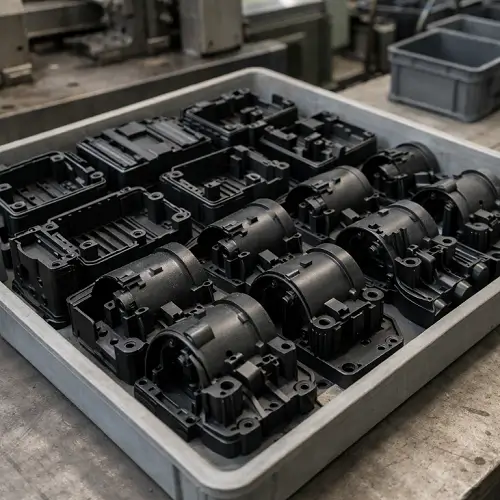
What Does Injection Molding Cost Per Part Actually Mean?
Injection molding cost per part is the real production cost of one molded component once a project moves beyond a simple material quote. It is not just the resin price. Unit price is shaped by tooling, material usage, cycle time, machine rate, scrap, labor, and any downstream work required after molding.
That is why the same plastic part can receive very different quotations from different suppliers. One supplier may include tooling allocation, startup loss, and inspection cost in the unit price. Another may quote only the molding operation and leave other costs outside the first number. On paper, both prices look like cost per part, but they may not represent the same cost structure.
In practical production, injection molding cost per part usually contains two layers. The first is direct molding cost, which includes material, machine time, and normal processing. The second is allocated cost, which may include mold amortization, setup loss, quality control, packaging, or secondary operations. Without separating those two layers, unit price comparisons become misleading very quickly.
Low-volume pricing often looks expensive for exactly that reason. When production quantity is still small, each part carries a larger share of tooling and setup cost. As volume increases, those fixed costs are spread across more parts, and the injection molding cost per part starts to fall.
A useful unit-price quote should reflect how the part will actually be produced, how many parts are expected, and what level of quality or finishing is required in real manufacturing.
Why Injection Molding Cost Per Part Changes with Production Volume
Injection molding cost per part changes with production volume because some costs are fixed and some are variable. Mold tooling, setup, sampling, and early process adjustment do not disappear just because the order is small. When quantity is low, those costs are carried by fewer parts, so the unit price stays high. As quantity increases, the same fixed cost is spread across more parts, and the cost per part drops.
This is the main reason low-volume injection molding often looks expensive at first. A mold that costs several thousand dollars can be manageable in a 5,000-piece program, but it looks heavy in a 50-piece order. The part itself may not be difficult to mold, yet the unit price still rises because the tooling burden is concentrated into a small batch.
Material and machine cost do not fall as sharply as tooling allocation, but volume still changes how efficiently the job runs. Larger production runs usually reduce setup interruption, improve machine utilization, and make scrap less damaging on a per-part basis. A short run may still require startup purging, machine stabilization, and inspection effort, even if only a limited number of parts are produced.
A simple example makes the point quickly. If tooling and setup add $4,000 to a project, that cost equals $80 per part at 50 pieces. At 500 pieces, the same cost drops to $8 per part. At 5,000 pieces, it falls to $0.80 per part. The molding process may be the same, but the injection molding cost per part changes completely because production volume changes how fixed cost is distributed.
For purchasing decisions, unit price should always be reviewed together with projected quantity. A quote that looks expensive at low volume may become very competitive once demand moves into repeat production. In real manufacturing, production volume is often the biggest reason one molded part costs more or less than expected.
Tooling Cost Allocation in Injection Molding Cost Per Part
Tooling cost allocation is one of the biggest reasons injection molding cost per part can look confusing. The mold is paid for before production begins, but that cost still has to be recovered somewhere. Some suppliers show it as a separate tooling charge. Others spread part of it into the unit price. Without knowing which method is being used, part-price comparisons can become misleading.
In a low-volume project, tooling has a strong effect on cost per part because the mold cost is divided by a small number of parts. A $3,000 mold adds $30 per part in a 100-piece run. The same mold adds only $3 per part in a 1,000-piece run. That difference has nothing to do with resin or machine time. It is simply tooling cost being spread across different quantities.
Prototype tooling and production tooling change the picture again. A basic prototype mold may cost less at the beginning, but it may not support higher cavity count, longer mold life, or tighter production control. A production mold usually costs more because it is built for repeat output, better durability, and more stable process performance. That higher tooling cost can still make financial sense when the part will be ordered again and again.
When reviewing injection molding cost per part, buyers should ask one practical question: is mold cost included in the unit price, partially allocated, or quoted separately? Without that answer, two quotations may look comparable while using completely different cost structures.
In real production planning, tooling cost allocation is not just an accounting detail. It changes how part price is understood, how low-volume orders are judged, and when injection molding starts to make financial sense compared with other manufacturing options.
How Material Cost Affects Injection Molding Cost Per Part
Material cost has a direct effect on injection molding cost per part because resin is consumed in every cycle. The more material each part uses, the more visible that cost becomes. Resin price, shot weight, scrap, and material type all change the final unit price.
The simplest part of the calculation is resin price per kilogram. Commodity materials such as PP or ABS usually keep injection molding cost per part more predictable. Engineering materials such as PC, PA, POM, or glass-filled grades push unit price higher because the raw material itself costs more. In some cases, the difference in resin cost is large enough to change whether the quoted part price still makes sense for the target market.
Shot weight matters just as much as resin type. A part with unnecessary wall thickness uses more material in every cycle, which raises cost part by part over the life of the project. A design that removes excess mass without hurting function can reduce injection molding cost per part more effectively than trying to negotiate a lower material rate.
Material waste also needs to be considered. Startup purging, runners, rejected parts, and color changes all consume resin that does not become sellable output. Some projects can reuse part of that waste, while others cannot because of cosmetic, dimensional, or material-performance requirements. That is one reason the same nominal material can still produce different part prices in different molding programs.
Certain materials affect cost indirectly as well. Glass-filled resin may improve part strength, but it can also increase mold wear. Moisture-sensitive materials such as nylon require drying control before molding. Those factors influence more than material handling alone. They can also change scrap rate, process stability, and long-term production efficiency.
Material cost cannot be reduced to resin price alone. In real production, injection molding cost per part is shaped by material selection, part weight, waste rate, and how well the chosen resin fits the part design and production requirement.
Cycle Time and Machine Rate in Injection Molding Cost Per Part
Cycle time and machine rate have a direct effect on injection molding cost per part because they determine how much production time is spent on each molded part. If the cycle is slow or the machine cost is high, the unit price rises even when the material stays the same.
Cycle time includes filling, packing, cooling, mold opening, ejection, and mold closing. In most plastic parts, cooling takes the largest share of that time. A part with thick walls or poor thermal balance usually runs slower, which means fewer parts are produced per hour. That pushes injection molding cost per part higher immediately.
Machine rate works the same way. A small part running on a lower-tonnage press usually costs less per hour than a large part that needs a bigger machine. If the part design forces the project onto a larger press than necessary, the unit price goes up even if the geometry looks simple. Clamp tonnage, machine availability, and regional shop rates all affect this number.
Cavity count changes the economics too. A higher-cavity mold raises tooling cost at the beginning, but it can reduce machine cost per part by producing more parts in the same cycle once production volume justifies the investment. That tradeoff is one reason low-volume and high-volume programs rarely carry the same unit-price logic.
A small cycle-time difference adds up quickly in production. If a part runs at 20 seconds instead of 30 seconds, that change affects every part in the order. Over a few hundred parts, the impact may look moderate. Over several thousand parts, the difference becomes a major part of the total molding cost.
Two suppliers may use the same material and the same cavity count, yet still arrive at different unit prices because one expects a faster cycle or a lower machine-hour cost. Buyers looking at injection molding cost per part should always understand that machine time is one of the biggest drivers behind the final number.
In practical terms, lower unit price usually comes from stable geometry, realistic wall thickness, and a process that can run efficiently on the right machine. When cycle time drops and machine use is better matched to the part, injection molding cost per part becomes much easier to control.
Scrap Rate, Rework, and Hidden Production Losses
Scrap rate, rework, and hidden production losses can raise injection molding cost per part even when the quoted material and machine cost look reasonable. When more parts are rejected, reworked, or lost during startup, the sellable output drops while production cost stays in the system.
Scrap is one of the clearest examples. If a run produces 1,000 parts but 50 are rejected for flash, short shots, warpage, or dimensional issues, the real cost is carried by the remaining good parts. Material, machine time, and labor were still spent on all 1,000 cycles, but only 950 parts can be shipped. That pushes injection molding cost per part higher immediately.
Rework creates the same problem in a different form. Manual trimming, surface correction, or secondary inspection may recover a part, but they still add labor that was not part of the original molding cycle. A unit price that looks acceptable on paper can become much less competitive once rework becomes part of normal production.
Hidden losses often begin before stable output is reached. Startup purging, mold warm-up, color change waste, machine adjustment, and first-article inspection all consume time and material. In a long production run, those losses are spread across many parts and become less visible. In a short run, they have a much stronger effect on injection molding cost per part because the project has fewer good parts to absorb them.
Process stability matters just as much as quoted machine rate. A part that runs cleanly with low scrap and little adjustment usually holds a better unit price over time. A part that looks simple but causes frequent rejection or rework can become more expensive than expected very quickly.
Injection molding cost per part is not only driven by what the process should cost under ideal conditions. It is also shaped by how much output is actually sellable once scrap, rework, and startup loss are taken into account.
Secondary Operations That Increase Unit Price
Secondary operations increase injection molding cost per part because the molding cycle is no longer the only production step. Once a part needs extra handling after ejection, unit price starts to rise through added labor, equipment time, and inspection work.
Some of these operations are easy to overlook during quoting. Manual trimming, gate removal, insert installation, ultrasonic welding, pad printing, painting, assembly, and custom packaging all add cost beyond basic molding. A part may look simple in the mold, but the final shipped unit can still carry much higher cost if those extra steps are required on every piece.
Labor is often the biggest factor here. A molded part that drops out of the tool and goes straight to packaging will always have a cleaner cost structure than a part that must be hand-trimmed, inspected, assembled, or marked one by one. Even a few seconds of extra handling per part becomes expensive when production volume increases.
Some secondary operations create indirect cost as well. Extra handling raises the chance of cosmetic damage, mix-ups, or dimensional variation after molding. That can lead to more inspection, more rejection, and more rework, all of which push injection molding cost per part higher than the original molding cycle alone would suggest.
Unit price should never be judged only by resin, cycle time, and machine rate. If the part requires downstream work after molding, that work is part of the real production cost. In many projects, secondary operations are the reason a molded part costs more than expected even when the molding process itself is stable.
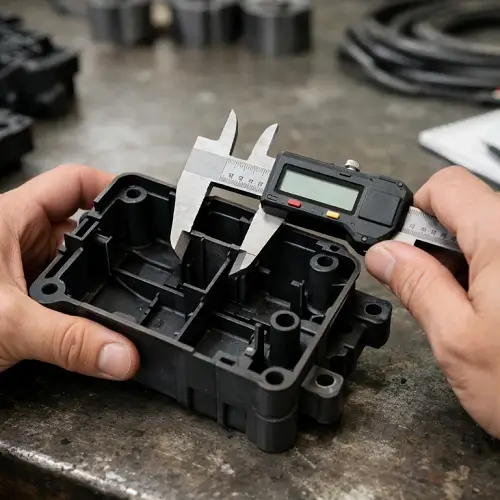
A Simple Example of How Injection Molding Cost Per Part Is Calculated
A simple example makes injection molding cost per part easier to understand. Assume a plastic part uses 50 grams of material, runs on a single-cavity mold, and is produced in a batch of 1,000 pieces. The mold cost is $4,000, material cost is $2.50 per kilogram, and the molding cycle runs at 30 seconds on a machine that costs $50 per hour.
The material cost per part is straightforward. At 50 grams per part, each unit uses 0.05 kilograms of resin. At $2.50 per kilogram, the raw material cost is about $0.125 per part before scrap is considered.
Machine time is the next layer. A 30-second cycle produces 120 cycles per hour. If the machine rate is $50 per hour, the molding machine cost is about $0.42 per part on a single-cavity mold, assuming stable production and no major interruptions.
Tooling changes the picture again. If the $4,000 mold is allocated across 1,000 parts, it adds $4.00 per part. In that case, the tooling share is much larger than the resin cost or the direct machine cost. If the same mold is later used for 10,000 parts, the tooling share drops to $0.40 per part, and the total unit price changes dramatically.
Now add normal production reality. A small scrap allowance, inspection effort, packaging, and handling may push the real injection molding cost per part beyond the basic resin-plus-machine calculation. Material cost alone is never enough to judge whether a quoted unit price is realistic.
The example is simple, but the logic is clear. Injection molding cost per part is built from material, machine time, tooling allocation, and production losses. Change the volume, and the number changes with it.
When Injection Molding Cost Per Part Starts to Make Financial Sense
Injection molding cost per part starts to make financial sense when the part design is stable, production volume is no longer very low, and repeat demand is expected. At that point, the mold cost can be spread across enough parts to bring the unit price down to a practical level.
This usually does not happen in the first few prototype parts. If a project only needs 20, 50, or even 100 pieces, tooling cost can still dominate the quote. In that range, the unit price may look high even if the molding process itself is efficient. The picture changes once the order moves into repeat batches or larger production quantities. Then the fixed cost of tooling stops weighing so heavily on each part.
The real turning point depends on the part. A simple plastic component with low mold cost may start to make sense at a lower quantity than a larger or more complex part with expensive tooling. Material choice matters too. A part made from commodity resin may reach a competitive unit price sooner than one using a higher-cost engineering material.
Buyers should not ask whether injection molding is cheap or expensive in general. A better question is whether the project has reached the volume where molding begins to outperform other options on a per-part basis. If the geometry is fixed, the material is close to final production, and the same part is likely to be ordered again, injection molding cost per part usually becomes much more competitive.
In practical terms, injection molding starts to make financial sense when the project shifts from experimentation to repeat manufacturing. That is the stage where lower unit price begins to offset the earlier tooling investment.
How to Reduce Injection Molding Cost Per Part Without Hurting Quality
Reducing injection molding cost per part usually starts with design and process control, not with aggressive price negotiation. The most effective savings come from removing unnecessary cost drivers while keeping the part functional and the process stable.
Wall thickness is one of the first places to look. Extra material increases shot weight and usually extends cooling time, which raises both resin cost and machine cost per part. A part with more balanced wall sections often runs faster, wastes less material, and holds dimensions more consistently. That kind of improvement lowers unit price without weakening the part when the design is done correctly.
Tolerance strategy matters just as much. Tight tolerances on non-critical features force a narrower process window and often increase inspection effort. When tolerances match real assembly and performance needs, the molding process becomes easier to control and the part price becomes more competitive. The goal is not lower quality. The goal is to apply tighter control only where it actually matters.
Material selection is another practical lever. Engineering resins are necessary in many projects, but over-specifying material can push injection molding cost per part higher than needed. If a lower-cost resin still meets thermal, mechanical, and dimensional requirements, the unit price usually improves immediately. The same logic applies to glass-filled materials, which can add both resin cost and mold wear.
Cycle time reduction has a strong effect on part price as well. A part that cools faster and ejects cleanly will always be easier to mold economically. Better gate location, more realistic wall design, and stable process settings all help reduce cycle time without hurting output quality. Even a small time reduction becomes meaningful over large production volumes.
Scrap control matters just as much as direct cost reduction. A part with lower rejection, less flash, and fewer startup problems protects unit price far better than a part that looks efficient only under ideal conditions. Stable geometry, practical tolerances, and early DFM review usually save more money over time than chasing the lowest quoted rate at the beginning.
The best way to reduce injection molding cost per part is not to push every number down at once. It is to remove avoidable waste from the part design, the material choice, and the molding process while keeping the production program stable enough to hold quality from run to run.
Conclusion
Injection molding cost per part is never just a material number. Real unit pricing is shaped by tooling allocation, production volume, cycle time, machine rate, scrap, and any secondary work required after molding. That is why the same part can look inexpensive in one quote and much more expensive in another, even before material differences are considered.
For buyers evaluating molded parts for repeat production, the most useful question is not simply how much one part costs today. What matters more is what is driving that unit price, how that number changes as volume increases, and whether the quoted cost structure still makes sense once the project moves into stable manufacturing.
In practical production, injection molding cost per part becomes more competitive when the design is fixed, the process is stable, and demand is large enough to spread tooling and setup cost across repeat output. At that stage, unit pricing is no longer dominated by startup cost. It becomes a reflection of material efficiency, cycle performance, and overall production discipline.
A good part price is not created by cutting numbers blindly. It comes from matching the mold strategy, material choice, and production plan to the real requirements of the project. When those factors are aligned early, the quoted unit price is much more likely to remain realistic throughout production.
If you are evaluating injection molding cost per part for an upcoming project, CAD files can be submitted for quotation and production review based on material, volume, and part geometry.
Frequently Asked Questions
What is included in injection molding cost per part?
Injection molding cost per part usually includes material usage, machine time, and normal molding labor. Depending on the quotation method, it may also include tooling allocation, scrap allowance, inspection, packaging, and secondary operations.
Why does injection molding cost per part drop at higher volumes?
Injection molding cost per part drops at higher volumes because fixed costs such as tooling, setup, and early process adjustment are spread across more parts. The molding cycle may stay the same, but the cost carried by each part becomes much lower as output increases.
Does mold cost affect injection molding unit price?
Yes. Mold cost can affect unit price directly when tooling is allocated across production quantity. In low-volume programs, that tooling share can be a major part of the cost per part. In higher-volume production, the same mold cost becomes much less significant on each unit.
How can injection molding cost per part be reduced?
Injection molding cost per part is usually reduced through better wall thickness control, realistic tolerances, material selection that matches actual performance needs, lower scrap, and a more stable molding process. Early DFM review is often one of the most effective ways to remove unnecessary cost before production begins.