
As an advanced injection molding technology, overmolding is a multifunctional combination of one material injected into another, creating a multifunctional composite structural product. The perfect combination of different materials can realize the performance that can not be achieved by a single material. Whether the product is in the automotive, medical, or consumer electronics and other fields, overmolding technology has an irreplaceable role. It not only enhances the functionality and durability, but also improves the user experience and product aesthetics.
As overmolding breaks down the characteristics of a single material and enables multifunctional materials to be combined, reducing the number of subsequent components and improving production efficiency, overmolding has become one of the key technologies for engineers to solve complex design challenges and differentiate their products due to the market’s ever-increasing demands on product performance and functionality.
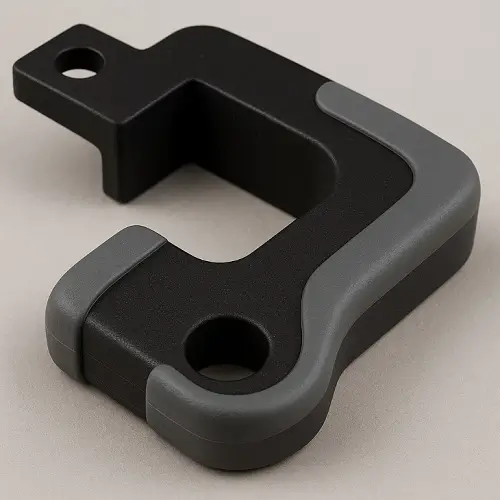
What is Overmolding
Overmolding, as a manufacturing process, is where a material is molded over an existing substrate part to form a permanently bonded composite structure. Engineers typically think of the process as involving two steps: one is the creation of a substrate part (often referred to as a base plate or substrate), which is then placed in a mold, and a second material is injected to cover a specific area of the substrate. Cladding or wrapping is performed to form the new part.
Process Definition
In a real manufacturing environment, the overmolding process has stringent requirements for mold accuracy, material compatibility, and process parameters. The substrate (i.e., the starting material) material can be plastic, metal, or other materials, while the overmolding material is usually an elastomer or soft polymer, such as thermoplastic elastomer (TPE) or thermoplastic polyurethane (TPU). These two materials form a strong connection through chemical bonding, mechanical interlocking, or a combination of both.
Unlike a simple assembly of parts, the overmolding process creates an integrated structure in which the quality of the interfacial bond between the different materials directly determines the performance and longevity of the final product. This requires engineers to consider not only the properties of a single material, but also the compatibility of the materials, the matching of the coefficients of thermal expansion, and the interfacial bonding mechanism. Several types of bonding are indispensable.
Advantages and disadvantages of overmolding
Advantages
Anti-slip
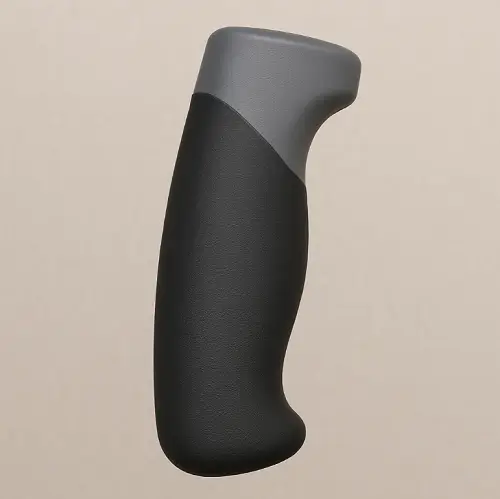
Enhances anti-slip properties. In products such as medical and consumer electronics, the appearance is specific to soft materials, which improves grip, feel, and more.
Strong sealing properties
Since most overmolded exteriors are soft materials, this also allows for a good degree of sealing, providing protection against water, moisture, dust, etc., which greatly improves product longevity.
Aesthetics
The nature of overmolding is the integration of multiple materials, with multiple texture effects and colors, which improves the aesthetics and recognition for customers.
Simplified Assembly
Elimination of separate assembly steps (mentioned earlier) reduces the number of parts and assembly time, lowering overall production costs.
Disadvantages
Material Stability
Can cause delamination or peeling problems between different materials. This is a prerequisite for process parameters not being tuned properly.
Material selectivity
The essence of overmolding is to combine two materials, but not all materials are chemically compatible (even if two plastic materials are overmolded), which limits our freedom in designing products.
Complex mold structure
Overmolding molds are generally more complex than traditional injection molds, requiring precise centering mechanisms and special runner systems, which increase the cost and difficulty of mold manufacturing. Investment is also higher
High process control requirements
In the final analysis, it is the setting of parameters such as melt temperature, injection speed and cooling rate, the quality of interlayer bonding and the dimensional stability of the part.
Overmolding vs Insert Molding vs Two-shot Molding Process Selection Guide
Overmolding is best suited for applications where a soft material needs to be bonded to a hard substrate, especially if the product needs to have enhanced ergonomics, anti-slip properties, or sealing protection. The advantage is that it can be done in steps, reducing mold complexity.
Insert Molding is primarily suited for applications where metal components are embedded in plastic parts, such as threaded inserts, electrical contacts and structural reinforcements. This process creates a robust metal-plastic composite structure and avoids subsequent assembly steps.
Two-shot Molding is the most efficient method of producing high-precision, two-color parts and is commonly used in high-volume production for consumer electronics housings and automotive light covers. The main feature is that the two injection stages are done in the same molding cycle, either by rotating the mold or switching cavities.
Let’s consider from a cost perspective, Insert Molding usually has the lowest tooling investment but may involve higher labor costs (if inserts are placed manually.) Overmolding requires a moderate tooling investment, while Two-shot Molding usually requires expensive specialized tooling and equipment but has the lowest cost per part in high volume production.
Common Materials Used in Overmolding
The base material for overmolding processes is generally a rigid plastic material that is needed to provide mechanical strength to the product structure. Follow jeek below to see some of the commonly used base materials.
ABS (Acrylonitrile Butadiene Styrene)
With good mechanical strength, surface quality and processing performance, it is a common choice for overmolding with soft materials.
PC (Polycarbonate)
Excellent impact strength, transparency and high temperature resistance, suitable for applications requiring high structural strength.
PA (Polyamide, Nylon)
Provides excellent abrasion resistance, chemical resistance and mechanical strength and is commonly used in automotive and industrial components.
PBT (polybutylene terephthalate)
offers excellent dimensional stability, chemical resistance and electrical properties, suitable for applications such as electronic connectors.
PP (Polypropylene)
lower cost, good chemical resistance and processing performance, but lower surface energy, may require physical or chemical treatment to improve adhesion.
Commonly used cladding materials
This is the second material that needs to be bonded after the base material, usually a flexible or elastic material that provides a hand feel and comfort aspect to facilitate compatibility.
TPE (Thermoplastic Elastomer)
It is the most commonly used Overmolding material, offering good elasticity, anti-slip properties and a wide range of hardness options.
TPU (Thermoplastic Polyurethane)
offers excellent abrasion, tear and oil resistance, with mechanical properties superior to TPE.
TPV (Thermoplastic Vulcanized Rubber)
Combines the performance of traditional rubber with the processing convenience of thermoplastics, and has excellent weather and high temperature resistance.
Overmolding Common Material Combinations and Adhesion Levels
| Substrate Material | Coating Material | Adhesion Rating | Application Recommendations |
|---|---|---|---|
| ABS | TPE | Excellent | Suitable for most consumer products and tool grips |
| PC | TPU | Excellent | Suitable for high-strength, high abrasion applications |
| PA | TPV | Good to Excellent | Recommended for automotive and industrial environments |
| PP | TPE | Poor to Fair | Mechanical interlocking design required or use of modified PP base material |
| PBT | TPU | Good | Suitable for electronic connectors and automotive components |
Note: Adhesion ratings are dependent on material formulation, surface treatment, and surface finish. Note: Adhesion levels are affected by material formulation, surface treatment and process parameters and must be verified experimentally prior to actual application.
Overmolding Design Guidelines
Designing by Soft Adhesive Thickness
The thickness of the flexible material layer has a direct impact on product performance and durability. The recommended soft rubber thickness is 1.0-2.5mm. too thin a soft rubber layer may also lead to underfill or cosmetic defects, while too thick a layer will increase cooling time and cost, and may cause shrinkage problems. For applications requiring additional cushioning or soft-touch feel, the apparent thickness can be increased by designing reinforcements or textures that do not increase the solid material thickness.
Design by Adhesion Area and Interface
One is a mechanically interlocking structure, where inverts, grooves or holes are designed into the substrate to allow the wrap material to form a mechanical lock. Furthermore, the contact area can be increased, using rough surfaces or micro textures can significantly increase the effective contact area and improve the bond strength. It is also possible to design smooth transitions at the interface edges rather than sharp edges to reduce the risk of stress concentrations and delamination.
Draft angle
For soft material cladding parts, which are more elastic, we can use a smaller extraction angle (0.5°-1°). If the part is based on a rigid substrate, an extraction angle of 1°-2° can be used. In deep cavities or highly textured surfaces, it may be necessary to increase the draw angle appropriately.
Rib and Reinforcement Design
The thickness of ribs in the matrix section should not exceed 60% of the adjacent wall thickness, shrink marks can be avoided. Ribs for cladding materials can be slightly thicker (up to 70% of the substrate wall thickness), as flexible materials are less likely to produce visible shrink marks. The height of the ribs should not exceed 3 times the thickness of the substrate wall to ensure adequate filling and structural stability.
Gating and venting design
The gate should be positioned so that the melt flow is parallel to the material bonding interface rather than striking the interface perpendicularly, thus avoiding turbulence and interface instability. Especially in the material bonding area, the venting system must be adequate to prevent burnout or underfilling resulting in product failure. It is recommended that exhaust slots be provided in the final fill area of the cladding material, usually at a depth of 0.015-0.025mm.
Finally, the appearance of the texture
For soft wrapping materials, leather grain, dotted grain or stripes can be used to enhance grip and aesthetics. Texture depths are typically 0.01-0.05mm, depending on material flow and release requirements. High-contrast textures near the bonding interface should be avoided as they may affect material flow and bonding quality.
Overmolding process at a glance
Substrate Molding
Rigid substrate parts are produced using a conventional injection molding process. At this stage it is necessary to ensure the dimensional stability and surface quality of the substrate in order to prepare it for the subsequent overmolding process.
Placement into the secondary mold
The molded substrate is precisely placed into the overmolding mold. This step can be accomplished by automated robots or mold rotation systems to ensure that accuracy is not compromised.
Injection of Soft Gel
A molten soft material is injected into the mold to cover a predetermined area of the substrate. Precise control of melt temperature, injection speed and pressure is required to ensure good material bonding and complete filling.
Cooling
The composite structure is allowed to cool sufficiently in the mold to allow the two materials to cure and bond. Cooling times need to be optimized; too short a time can lead to distortion, while too long a time reduces productivity.
Removal and trimming
The finished product is removed from the mold to remove the sprue and any fretting that may have occurred. For products with high quality requirements, visual inspection and functional testing may also be required.
Overmolding common defects and solutions
Delamination
Delamination is one of the most serious defects in overmolding and is manifested by the separation of hard and soft materials at the interface. Typical causes include insufficient material compatibility, low melt temperature, insufficient mold temperature, insufficient injection pressure, or contamination of the substrate. To avoid delamination, it is necessary to increase the melt and mold temperatures, increase the injection and holding pressures, and ensure that the substrate surface is clean. If chemical bonding is relied upon, the chemical compatibility of the materials must be confirmed in advance, and the cooling system must be optimized to avoid stress concentrations caused by rapid cooling.
Flow Marks
Flow marks are usually found in the flow path of soft gels in the form of ripples or slight color differences. The causes are mostly related to insufficient melt temperature, slow injection speed, small size of runner or gate, or uneven temperature distribution in the mold. Solutions include increasing the melt and mold temperatures, increasing the injection rate, and re-sizing and repositioning the runners and gates to ensure consistent flow resistance.
Warpage
Warpage is the bending or deformation of a part after cooling. The root causes are usually uneven cooling, large differences in shrinkage rates between hard and soft materials, internal stress buildup, or insufficient pressure retention. Improvements include optimizing the mold cooling system, improving cooling uniformity, extending or increasing holding pressure, and designing to reduce thickness variation. Additionally, choose a combination of materials with closer shrinkage rates when possible.
Flash
Flash is a thin sheet of material that spills out of the parting surfaces or gaps, often caused by high injection pressures, insufficient clamping force, mold wear, or the use of low-viscosity materials. Improvement strategies include lowering the injection pressure, increasing the clamping force, and repairing or replacing the aging mold if necessary. The risk of overflow can also be reduced by adjusting the material viscosity.
Uneven Soft Layer
Uneven soft layer thickness is often related to mold design, gate location, material flow and injection speed settings. When the soft layer is locally too thick or too thin, the runner and gate layout should be checked to ensure that the soft gel enters all areas evenly. You can also choose a material with better fluidity and readjust the injection speed profile as needed to allow the soft gel to spread steadily in the mold cavity.
Bubbles
Bubbles usually occur within or at the interface of the softgel and are typically a gas retention problem. The main causes include water content in the material, thermal decomposition due to overheating, poor venting, or disturbances caused by injection speed. Treatment includes sufficient drying of the material, lowering of the processing temperature, improvement of the exhaust structure of the mold, and adjustment of the injection speed according to the material properties.
Visible Weld Lines between Hard and Soft Rubber
Visible weld lines between hard and soft materials in the area of convergence may affect the appearance and may also reduce the local strength under stress conditions. Visible weld lines are often caused by insufficient melt front temperatures, long flow distances or poor venting conditions. Improvements can be made by increasing the temperature of the mold and melt, increasing the injection rate appropriately, repositioning the gates to shorten the flow path, and optimizing the venting system to reduce the traces of cold material.
Overmolding Application Cases (Partial)
ABS shell overmolded with TPE to form a flexible button area for remote control to enhance the touch and durability.
PA66 substrate overmolded with TPU for soft touch surfaces on switches in cars to improve abrasion resistance and feel.
PC+ABS shell with secondary coating of medical grade TPE is used for surgical instrument grips to enhance non-slip properties and facilitate sterilization.
Nylon structural components are coated with TPU to create a shock-absorbing soft grip, commonly used for high vibration tools such as drills and impact wrenches.
As a professional manufacturing service provider, Jeek has comprehensive technical and production capabilities in the Overmolding field:
Injection Molding Machine Tonnage
With multiple injection molding machines ranging from 68 tons to 350 tons, we are able to handle a wide range of Overmolding needs from small precision parts to large structural components.
Supported Materials
Our material database covers nine types of engineering plastics and elastomers, including PP, ABS, PC, PA, PBT, TPE, TPU, etc., with proven process parameter packages.
Molding Capabilities
Integrated SLS/SLA dual-mode printing system supports 24-hour continuous production of rapid injection molds, as well as traditional steel mold processing capabilities.
Prototype Cycle Time
With our rapid mold technology, we are able to achieve the new industry standard of 72 hours quotation + 7 days delivery, significantly shortening our customers’ product development cycle.
Quality Inspection
Each finished injection molding specimen comes with a 3D scanning report to ensure that the dimensional accuracy reaches ±0.1mm.
Batch Flexibility
Our flexible production cell supports the same day switching of 5 sets of different rapid prototyping injection molds in mixed line production, which can support from 50-500 pieces of small quantities to tens of thousands of pieces of mass production.
If you also need overmolding projects in injection molding, you can send us your CAD files, and we will reply to you promptly with a quote!