
Most commercial plastic is made from a base polymer combined with additives, pigments, fillers, or reinforcing materials. The polymer provides the main molecular structure, while the formulation controls properties such as color, stiffness, flexibility, heat resistance, flame performance, surface appearance, and processing behavior.
Understanding what plastics are made from and how plastic is made also helps explain why materials with the same general name can behave differently during injection molding. Many polymers begin with chemical feedstocks derived from crude oil or natural gas, while bio-based and recycled sources are also available. The polymer is then compounded into a specific material grade and commonly supplied to molding factories as resin pellets.
For an injection molded product, the polymer name is only the starting point. Two grades both described as ABS, PP, nylon, or polycarbonate may have different melt flow, shrinkage, reinforcement, drying requirements, molding temperatures, and final part performance. These differences can change the gate design, mold dimensions, cooling system, surface quality, production stability, and part cost.
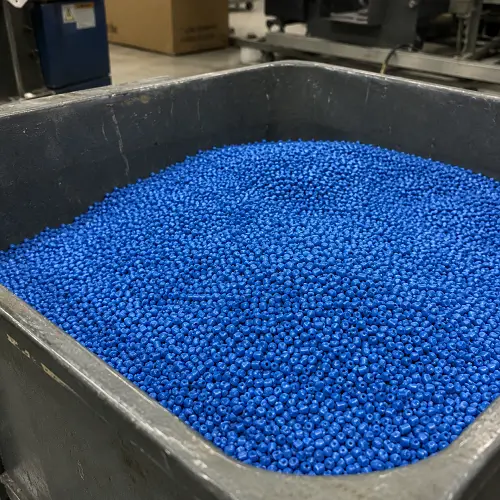
What Is Plastic Made Of?
Commercial plastic usually contains a polymer together with other ingredients selected for the product and manufacturing process. The polymer determines the material family, while the complete formulation determines whether the finished plastic is rigid, flexible, transparent, impact resistant, UV stable, flame retardant, reinforced, or suitable for thin-wall injection molding.
Polyethylene, polypropylene, ABS, polycarbonate, nylon, POM, PBT, PPS, and PEEK are common polymer families used for molded plastic parts. Each family includes many commercial grades rather than one uniform material.
One PP grade may be designed for high flow and thin container walls. Another may contain mineral filler to increase stiffness or control shrinkage. Nylon can be supplied unfilled, impact modified, flame retardant, or reinforced with glass fiber. These products may share the same general polymer name but behave very differently inside a mold.
A typical plastic formulation may include a base polymer, colorants, stabilizers, impact modifiers, plasticizers, flame retardants, fibers, mineral fillers, processing aids, or recycled material. The type and amount of each ingredient affect how the resin melts, fills the cavity, shrinks during cooling, releases from the mold, reproduces surface texture, and performs during use.
What Is Injection Molding Plastic Made Of?
Plastic used for injection molding is normally supplied as a specific resin grade, most often in pellet form. Some grades consist mainly of unfilled polymer and a small stabilizer package, while engineering grades may contain substantial amounts of glass fiber, minerals, flame retardants, impact modifiers, or other ingredients.
The material supplier or compounder normally prepares the formulation before it reaches the molding factory. The pellets arrive with recommended drying conditions, melt-temperature ranges, mold-temperature ranges, shrinkage data, mechanical properties, and other processing information.
Color may already be compounded into the material, or natural resin may be mixed with color masterbatch during production. The selected masterbatch and mixing ratio can influence color consistency, opacity, visible weld lines, heat absorption, and sometimes the flow or shrinkage of the material.
This is why “black nylon” or “white plastic” is not a complete material specification. The injection molding company may also need to know the polymer family, exact resin grade, fiber percentage, flame rating, recycled-content requirement, color standard, regulatory requirement, and operating environment.
What Raw Materials Are Used to Make Plastic?
The raw materials used to make plastic generally come from fossil-based chemical feedstocks, renewable biological sources, or recovered plastic waste. These sources provide the starting materials, but they do not go directly into an injection molding machine.
Crude oil and natural gas provide many of the chemical building blocks used for conventional plastics. Refining and chemical-processing operations convert these resources into smaller molecules that can be used to manufacture polymers such as PE, PP, PVC, PS, ABS, PET, nylon, and polycarbonate.
Renewable sources include sugarcane, starch, cellulose, plant oils, and other biomass. These raw materials can support the production of selected bio-based polymers or bio-based versions of conventional plastics.
Recycled plastic provides another feedstock. Manufacturing scrap or used plastic products can be sorted, cleaned, filtered, melted, and converted into recycled resin pellets. Recycled material may be used alone or blended with virgin resin, depending on the required quality and part application.
Regardless of the original source, an injection molding factory normally receives a prepared resin grade rather than crude oil, natural gas, plant material, or unsorted waste. The resin formulation, moisture condition, cleanliness, and batch consistency have a more direct effect on production.
Is Plastic Made From Oil?
A large share of conventional plastic begins with chemical feedstocks derived from crude oil or natural gas, but the finished material is several manufacturing stages removed from the original resource.
Crude oil is refined into useful hydrocarbon fractions, while natural-gas liquids can provide materials such as ethane and propane. Chemical processing then converts these feedstocks into smaller building blocks used to produce monomers.
Ethylene is used to manufacture polyethylene, while propylene is used for polypropylene. Styrene contributes to polystyrene and ABS, and different chemical routes produce PET, nylon, polycarbonate, POM, and other engineering polymers.
These monomers are joined into long polymer chains. The polymer is then stabilized, modified, colored, reinforced, or filled before being converted into a commercial plastic grade.
It is therefore more accurate to say that many plastics are produced from petrochemical or natural-gas feedstocks than to say that a molded plastic part is simply made from oil.
Are Bio-Based Plastics Made Without Oil?
Some bio-based plastics are made partly or completely from renewable feedstocks, although the percentage and production route vary by material.
PLA, for example, is commonly associated with plant-derived sugars that are fermented and converted into lactic-acid-based building blocks. Bio-based polyethylene can be manufactured using plant-derived ethanol as a route to ethylene.
The source of the feedstock and the behavior of the finished plastic are separate issues. Bio-based PE can have essentially the same polymer structure as conventional PE and can be processed using similar injection molding equipment.
Bio-based also does not automatically mean biodegradable. A bio-based material may remain durable for many years, while a biodegradable plastic may contain some fossil-derived ingredients. Material origin, biodegradability, recyclability, and injection molding performance should be evaluated separately.
How Is Plastic Made from Raw Materials?
Plastic is made by converting raw feedstocks into monomers, joining those monomers into polymers, and then compounding the polymer with the ingredients required for the finished material. For injection molding, the completed formulation is commonly pelletized so it can be transported, dried, measured, melted, and fed consistently into a molding machine.
The general route can be summarized as:
Feedstock → chemical building blocks → monomers → polymer → compounding → resin pellets
The feedstock is first converted into useful chemical building blocks. These are processed into monomers, which are smaller molecules capable of joining together.
Polymerization connects the monomers into long molecular chains. The structure of these chains helps determine the material’s stiffness, flexibility, thermal behavior, chemical resistance, crystallinity, and processing temperature.
The base polymer is then compounded with pigments, stabilizers, fillers, fibers, or other additives. This stage converts a general polymer into a commercial grade designed for a particular performance or manufacturing requirement.
The compounded material is finally converted into pellets, powder, or another suitable form. Thermoplastic pellets are the most familiar raw material for conventional injection molding.
What Is Polymerization?
Polymerization creates the long molecular chains that form the base of a plastic material. Different monomers and reaction routes produce different polymer families, which is why PE, PP, ABS, nylon, POM, and PEEK do not have the same properties or molding requirements.
Addition polymerization is commonly associated with plastics such as PE, PP, PVC, PS, and PMMA. During this process, monomers join together to form longer chains without releasing a small by-product molecule.
Condensation-type polymerization is used for materials such as PET and several polyamides. In these reactions, different chemical building blocks join while a smaller molecule may be released.
Injection molding companies do not normally carry out polymerization. They purchase finished resin grades from material suppliers. For molding production, the more immediate concerns are the exact grade, moisture level, melt flow, shrinkage, reinforcement, thermal stability, and supplier processing recommendations.
How Are Plastic Pellets Made for Injection Molding?
Plastic pellets are commonly produced by feeding the base polymer and selected additives into an extrusion compounding line. Rotating screws apply heat and shear, melting the polymer and distributing pigments, fibers, fillers, stabilizers, or other ingredients throughout the material.
The mixed polymer melt is pushed through a die. In strand pelletizing, continuous strands are cooled, dried, and cut into short pellets. Other systems cut the material close to the die face, sometimes while the pellets are submerged in cooling water.
The pellets are then separated, dried, screened, tested, and packaged. Suppliers may inspect melt flow, moisture, density, color, contamination, fiber content, particle size, and mechanical properties, depending on the grade.
Consistent pellet shape and composition help an injection molding machine feed and plasticize the resin evenly. Excess moisture, contamination, irregular pellet size, or poor additive distribution can contribute to unstable flow, color variation, surface defects, and inconsistent part performance.
What Are Plastic Pellets Made Of?
Some plastic pellets contain a relatively simple unfilled polymer, while others are complete engineering formulations containing several ingredients.
Natural PP pellets may mainly contain polypropylene with stabilizers and processing aids. A glass-filled PA66 pellet contains a nylon matrix, chopped glass fibers, and additives selected to support processing and long-term performance. A flame-retardant PBT grade may combine polymer, reinforcement, flame retardants, stabilizers, and pigments.
Plastic pellets may contain:
- Unfilled virgin polymer
- Polymer with color pigments
- Glass-fiber-reinforced resin
- Carbon-fiber-reinforced resin
- Mineral-filled material
- Flame-retardant additives
- Impact modifiers
- UV stabilizers
- Conductive additives
- Recycled polymer
- Blends of compatible polymers
Pellet appearance cannot reliably identify the material. Clear pellets may be PC, PMMA, PET, or another transparent polymer. White pellets could be PP, ABS, PA, POM, PBT, or a filled material.
Supplier labels, batch records, technical datasheets, certificates, and material testing are more reliable than visual inspection.
What Is Added to Plastic Before Injection Molding?
Additives help adapt a base polymer to the product’s performance, appearance, safety, and manufacturing requirements. They can improve one property while also changing flow, shrinkage, gas generation, tool wear, or surface quality.
| Ingredient | Why It Is Used | Possible Injection Molding Effect |
|---|---|---|
| Color masterbatch | Produces the required color and opacity | May affect color consistency, weld-line visibility and heat absorption |
| Glass fiber | Increases stiffness and strength | Changes flow, directional shrinkage, warpage and tool wear |
| Mineral filler | Adjusts stiffness, density, shrinkage or cost | Can change surface finish, weight and melt flow |
| Impact modifier | Improves toughness | May reduce stiffness or change processing behavior |
| Flame retardant | Helps meet flammability requirements | Can increase gas, mold deposits and venting requirements |
| Plasticizer | Increases flexibility | Changes hardness, shrinkage and long-term performance |
| UV stabilizer | Reduces degradation during outdoor use | Helps maintain appearance and performance over time |
| Processing aid | Supports flow or mold release | Excessive levels may affect bonding, painting or appearance |
| Recycled resin | Reduces virgin material use | May increase color, viscosity and batch variation |
Glass fiber, for example, can increase stiffness and reduce shrinkage in the flow direction, but it may also create uneven shrinkage across the part. The resulting fiber orientation can change warpage, strength, surface texture, and gate-design requirements.
Flame-retardant grades may help an electrical housing meet a required rating, but they can also produce more gas or deposits during molding. Better mold venting and tighter control of melt temperature and residence time may be needed.
The material should therefore be approved as a complete commercial grade rather than as a base polymer with individually selected claims.
How Do Plastic Pellets Become Injection Molded Parts?
Plastic pellets are loaded into the hopper of an injection molding machine. Materials that absorb moisture, including many nylon, PC, PET, PBT, TPU, and high-performance grades, normally require controlled drying before entering the barrel.
A rotating screw moves the pellets through the heated barrel. Heat from the barrel and mechanical shear from the screw soften or melt the polymer, mix the material, and prepare a measured shot for the next cycle.
After the mold closes, the machine pushes the molten plastic through the nozzle, runner, and gate into the cavity. Packing pressure continues to feed material into the part as the plastic begins shrinking.
The mold then removes heat until the part becomes rigid enough for ejection. Depending on the polymer, the cooling stage may also influence crystallinity, shrinkage, stiffness, internal stress, and dimensional stability.
The formulation affects every stage. Moisture can damage the polymer, reinforcement changes flow direction, filler content affects shrinkage, pigments influence appearance, and recycled material may change viscosity or color consistency.
How Does Plastic Composition Affect Injection Molding?
The general polymer name cannot fully predict how a resin will behave in production. Melt-flow grade, molecular weight, reinforcement, additive package, moisture level, and recycled content can all change the mold-filling process and finished part.
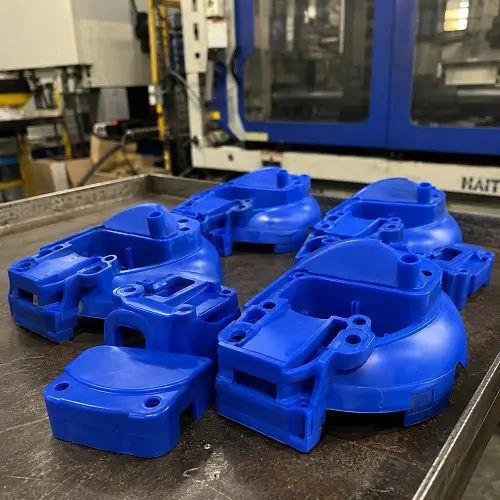
Melt Flow and Mold Filling
Higher-flow grades can fill thin walls, narrow ribs, small features, and long flow paths more easily. They may reduce injection pressure and make complex cavities easier to fill.
However, higher flow does not automatically mean better overall performance. A high-flow grade may not provide the same impact strength, chemical resistance, or long-term mechanical properties as another grade from the same polymer family.
A low-flow or heavily reinforced material may require a larger gate, shorter flow path, higher melt temperature, or different gate location. Increasing injection pressure alone cannot always correct a mismatch between the resin and part geometry.
Shrinkage and Part Dimensions
Plastic shrinks as it cools, but the amount and direction depend on polymer structure, crystallinity, reinforcement, packing pressure, mold temperature, cooling rate, and part geometry.
PP, PE, and POM commonly show greater molding shrinkage than ABS or PC. Glass fiber can reduce shrinkage along the direction of flow while creating different shrinkage across the flow direction.
This directional behavior can produce warpage even when the average shrinkage value is lower. Cavity dimensions and shrinkage allowance should therefore be based on the exact resin grade rather than a generic value for “nylon” or “PP.”
Moisture and Material Degradation
Hygroscopic plastics absorb moisture from the surrounding air. When wet material enters a hot barrel, the moisture may turn into vapor or react with the polymer.
Possible results include silver streaks, bubbles, reduced viscosity, brittle parts, lower strength, poor surface quality, and unstable dimensions.
Drying conditions must match the exact resin. A hotter dryer does not always provide a safer or faster result, and dried material can absorb moisture again when left exposed to humid air.
Glass Fiber, Flow Direction and Warpage
Glass fibers tend to align with the direction of the flowing melt. Gate location therefore affects fiber direction, part strength, shrinkage, and warpage.
A poorly positioned gate can create a stiff section in one direction and a more flexible section in another. It can also produce twisted housings, dimensional variation, visible fiber patterns, or weak weld-line areas.
Reinforced grades are also more abrasive. Long production runs may require more wear-resistant gate inserts, mold steels, surface treatments, screws, and barrels.
Additives, Gas and Mold Venting
Flame retardants, pigments, recycled content, and other additives can change gas generation during cavity filling.
If the air and gas cannot escape, the part may show burns, short shots, weak weld lines, deposits, odor, or rough surfaces. Raising injection pressure can worsen the problem by compressing trapped gas more aggressively.
Vent depth, vent position, injection speed, material temperature, and mold maintenance should be matched to the resin grade and part geometry.
Surface Appearance and Color
Fillers, fibers, pigments, recycled resin, and flow direction can all change the visible surface of a molded part.
Glass-filled plastic may show exposed fibers or uneven gloss around gates and weld lines. Mineral-filled grades may have a different texture from unfilled resin. Recycled material may produce small color variations, contamination points, or odor.
Transparent parts require especially careful material drying, handling, mold polishing, gate placement, flow balance, and temperature control. A transparent resin does not automatically produce an optically clear part.
Can the Same Plastic Have Different Properties?
A single polymer name can cover many material grades with different formulations and performance.
ABS may be supplied as a high-flow grade, heat-resistant grade, flame-retardant grade, plating grade, transparent grade, or impact-modified material. PP may be a homopolymer, random copolymer, impact copolymer, mineral-filled grade, glass-filled grade, or medical formulation.
Nylon includes PA6, PA66, PA12, PA46, PPA, and other polyamide families. These materials have different melting behavior, moisture absorption, strength, shrinkage, chemical resistance, and molding conditions.
Manufacturers also produce grades designed for thin walls, low warpage, high impact, high temperatures, UV exposure, electrical conductivity, food contact, medical use, low friction, flame resistance, or recycled content.
This is why “ABS,” “PP,” or “nylon” is not enough information for final mold design. The exact grade may affect cavity shrinkage, gate size, mold temperature, drying equipment, venting, tool wear, and cycle time.
What Are Common Injection Molding Plastics Made From?
Polypropylene
Polypropylene is produced from propylene and is commonly supplied with stabilizers, pigments, impact modifiers, mineral fillers, or glass fiber.
Unfilled PP offers good flow and is used for containers, living hinges, housings, automotive parts, and consumer products. Filled grades provide greater stiffness or reduced shrinkage but can produce different surface texture and warpage.
ABS
ABS combines acrylonitrile, butadiene, and styrene. The balance between these components influences toughness, rigidity, chemical resistance, heat performance, and appearance.
Commercial grades can be designed for high flow, heat resistance, impact strength, plating, or flame performance. ABS usually provides a good cosmetic surface, but overheating or poor venting may cause discoloration, burns, gas, or deposits.
Nylon
Nylon describes a family of polyamides rather than one uniform plastic. PA6 and PA66 are widely used in injection molding, while PA12, PA46, and PPA support other moisture, temperature, and performance requirements.
Glass-filled nylon provides much greater stiffness but requires controlled drying, suitable gates, appropriate shrinkage allowance, and careful warpage management.
Polycarbonate
Polycarbonate is an amorphous engineering plastic used for impact-resistant, transparent, dimensional, and heat-related applications.
PC grades may contain UV stabilizers, flame retardants, pigments, glass fiber, or impact modifiers. The material normally requires drying and controlled processing temperature to avoid degradation and appearance defects.
POM
POM is based on formaldehyde-related polymer chemistry and is commonly used for gears, clips, latches, bearings, and precision mechanical parts.
It provides low friction and good wear performance but is sensitive to excessive temperature and contamination by incompatible materials. Gate position and cooling balance influence dimensional stability.
PBT
PBT is an engineering polyester commonly combined with glass fiber and flame-retardant additives for connectors, sensors, electrical housings, and automotive components.
The material normally requires drying. Reinforcement can improve stiffness and dimensional performance while increasing tool wear and directional shrinkage.
PPS and PEEK
PPS and PEEK are high-performance polymers used for demanding thermal, chemical, medical, electrical, and mechanical applications.
Their high processing and mold temperatures may require specialized heaters, high-temperature hot runners, suitable tool materials, controlled venting, and carefully designed gates. Reinforced grades can also create greater abrasion and visible fiber orientation.
Virgin Plastic vs Recycled Plastic for Injection Molding
Virgin plastic is made from new feedstock and normally provides more controlled color, viscosity, contamination levels, mechanical properties, and batch consistency.
Recycled resin may come from post-industrial manufacturing waste or post-consumer products. Clean runners and rejected parts from a known production stream are generally easier to control than mixed post-consumer waste.
Repeated heat exposure and contamination can change melt flow, impact strength, odor, color, additive performance, and mechanical consistency. Even a small amount of an incompatible polymer may create weak areas, delamination, black specks, or unstable flow.
A hidden internal cover may tolerate more recycled material than a transparent lens, medical component, food-contact part, electrical safety component, or precision gear.
The acceptable percentage should be defined before production and verified through molding trials and part testing. Adding an uncontrolled amount of regrind makes part dimensions and mechanical performance more difficult to predict.
How Can Plastic Material Change a Mold Design?
Changing the material after mold design has begun can affect the cavity dimensions, gate design, cooling system, venting, ejection, steel selection, and machine requirements.
A new resin may have different shrinkage, flow, thermal behavior, abrasion, moisture sensitivity, and surface characteristics. The original gate may be too small, the mold temperature system may be unsuitable, or the cavity shrinkage allowance may no longer produce the required dimensions.
Changing from unfilled ABS to glass-filled PA66 is a practical example. The PA66 grade requires drying and higher processing temperatures, while the glass fiber changes flow orientation, shrinkage, warpage, tool wear, and surface appearance.
A gate position that worked for ABS may produce excessive fiber alignment or distortion in the nylon part. The mold temperature and cavity allowance may also need to change.
Material selection should therefore be confirmed before final cavity dimensions, gate location, tool steel, venting, and cooling circuits are approved.
What Material Information Is Needed for an Injection Molding Quote?
A drawing that states only “plastic” does not provide enough information for an accurate mold or production quotation.
Useful project information includes:
- Polymer family
- Exact supplier grade or acceptable equivalent
- Color and surface requirement
- Glass-fiber or mineral percentage
- Flame rating
- UV or heat-resistance requirement
- Virgin or recycled-content requirement
- Food-contact, medical, or electrical standard
- Operating temperature
- Chemical exposure
- Required mechanical performance
- Expected production quantity
When the exact grade has not been selected, the product environment and performance requirements should be provided so suitable materials can be compared.
A plastic suitable for an indoor decorative cover may not be suitable for a loaded bracket, hot-water fitting, chemical pump part, outdoor enclosure, or electrical connector.
How to Choose Plastic Material for Injection Molding
Plastic material selection should begin with the conditions the molded part must withstand rather than with the lowest resin price or the most familiar polymer name.
Operating temperature, mechanical load, impact, chemicals, moisture, UV exposure, friction, transparency, flame requirements, dimensional tolerance, and applicable regulations all influence the choice.
Part geometry also matters. Thin walls and long flow paths may require a higher-flow material. Snap fits require suitable strain capability. Gears need controlled shrinkage and wear resistance. Cosmetic housings need stable color, predictable weld lines, and suitable surface quality.
The molding process must also be capable of handling the material. High-performance plastics may require controlled drying, higher barrel temperatures, heated molds, high-temperature hot runners, or abrasion-resistant tooling.
Resin cost should be considered together with tool construction, drying, machine requirements, cycle time, scrap risk, inspection, and expected product life. A cheaper resin can create a more expensive project when it produces unstable molding or premature part failure.
Conclusion
Plastic used for injection molding is normally made from a base polymer combined with additives, pigments, fillers, reinforcement, or recycled content. These ingredients determine not only the finished part’s strength, color, flexibility, heat resistance, and safety performance, but also how the material flows, shrinks, cools, vents, and releases from the mold.
Many polymers originate from chemical feedstocks derived from crude oil or natural gas, while renewable and recycled sources provide additional routes. These raw materials are converted into polymers, compounded into commercial grades, and commonly supplied to injection molding factories as resin pellets.
The general plastic name is not enough for mold design or production. The exact grade can change drying, melt flow, shrinkage allowance, gate dimensions, mold temperature, tool wear, warpage, surface appearance, and cycle time.
JeekMould supports plastic material selection, injection molding DFM, mold manufacturing, mold trials, and plastic part production. Upload the CAD model together with the operating environment, material requirements, expected quantity, and appearance standards for a project review and quotation.