
Plastic housings are used in products people interact with every day. Electronic devices, industrial controllers, medical equipment, sensors, handheld tools, lighting products, and automotive electronics all rely on plastic housings to protect internal components and support assembly.
A plastic housing may look simple from the outside, but the material choice can affect durability, appearance, production cost, and long-term performance. A housing used in an office environment often requires different materials than a housing exposed to heat, vibration, chemicals, or outdoor conditions.
Choosing the right material early in the design stage can help avoid unnecessary tooling changes, assembly issues, and production delays.
What Is a Custom Plastic Housing?
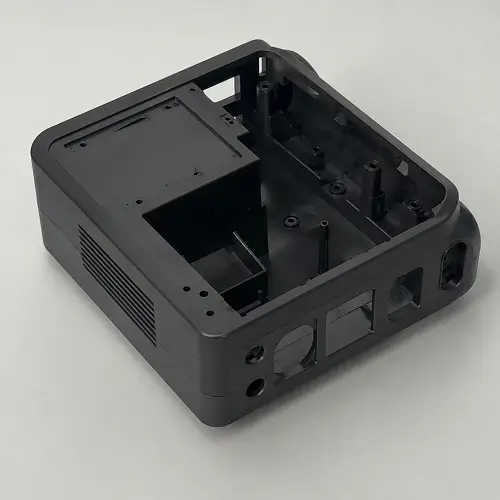
A custom plastic housing is a molded enclosure designed to fit a specific product or assembly. Unlike standard off-the-shelf enclosures, custom housings are designed around the dimensions, functions, and appearance requirements of the final product.
Many custom plastic housings include mounting features, screw bosses, snap fits, ventilation openings, cable exits, display windows, and other functional details that support assembly and product use.
Custom plastic housings are used in many products, including consumer electronics, medical devices, industrial equipment, automotive electronics, communication systems, and smart home products. In many cases, the housing does more than cover internal components. It also supports assembly, protects sensitive electronics, and affects the overall appearance of the finished product.
Injection molding is often the preferred manufacturing method because it can produce complex housing designs with consistent quality and low part cost in medium and high production volumes.
Why Material Choice Matters for Plastic Housings
The same housing design can perform very differently depending on the material.
A housing that looks good on a desk may fail when exposed to sunlight. A housing that survives impact testing may become too expensive for a consumer product. A material that works well indoors may warp when exposed to heat from electronic components.
Material selection affects the surface appearance, impact resistance, heat resistance, chemical resistance, dimensional stability, weight, manufacturing cost, and long-term durability of a plastic housing. The goal is not to choose the strongest material. The goal is to choose a material that matches the actual application.
ABS for Plastic Housings
ABS is one of the most common materials used for custom plastic housings. It offers a good balance between appearance, strength, cost, and manufacturability.
ABS can produce clean surface finishes and molded textures, making it a popular choice for electronic housings, consumer products, appliance covers, control box covers, and indoor equipment enclosures. For many indoor products, ABS remains one of the most practical housing materials because it balances appearance, durability, and manufacturing cost.
Because ABS is relatively easy to mold, it can help reduce manufacturing risks and tooling adjustments during production.
ABS is generally not the best choice for long-term outdoor exposure or environments with high temperatures. When additional durability is required, PC/ABS or polycarbonate may be a better option.
PC and PC/ABS for Stronger Housings
Polycarbonate (PC) and PC/ABS blends are often selected when a housing needs better impact resistance than ABS.
These materials are commonly used for industrial equipment, automotive electronics, medical device covers, power tool enclosures, and protective housings where the part may face impact, heat, or rough handling.
PC offers excellent toughness and can withstand impacts that might crack other plastics. PC/ABS combines the strength of polycarbonate with the processing advantages of ABS, creating a balance between durability and appearance.
These materials cost more than ABS but often provide better long-term durability in demanding environments.
PP and Nylon for Functional Parts
Not every housing requires a premium cosmetic finish. For applications where function is more important than appearance, PP and nylon can be practical choices.
Polypropylene (PP) is lightweight, chemically resistant, and cost-effective. It is often used for utility products, industrial containers, battery covers, and housings exposed to moisture or mild chemicals.
Nylon provides higher strength and wear resistance. It is often selected for housings that include structural mounting features, mechanical loads, or exposure to elevated temperatures. Nylon is stronger than PP but generally requires more attention during molding because of moisture absorption and shrinkage behavior.
PMMA for Transparent Plastic Housings
Some products require visibility instead of complete protection.
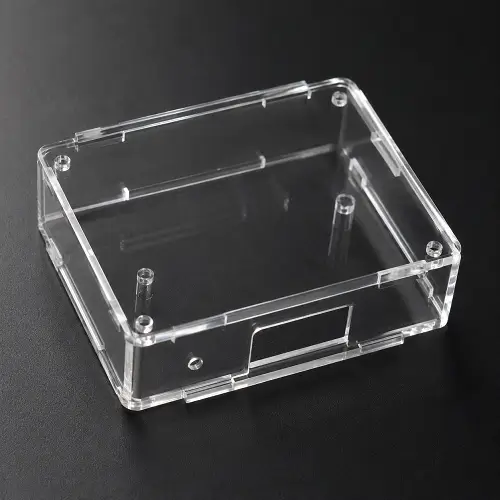
PMMA, commonly known as acrylic, is widely used for transparent plastic housings, viewing windows, display covers, and lighting components. Its glass-like clarity makes it a popular option when customers want visibility without using actual glass.
The biggest advantage of PMMA is optical clarity. It provides a clean transparent appearance while remaining lighter than glass.
Compared with polycarbonate, PMMA offers better visual clarity but lower impact resistance. If the housing may experience impacts or rough handling, polycarbonate is often the safer choice.
Which Plastic Housing Material Is Best?
There is no single material that works best for every plastic housing. The right choice depends on how the product will be used, the appearance requirements, and the expected production environment.
For many indoor electronic products, ABS is often the most practical option because it offers a good balance between appearance, durability, and cost.
When a housing needs better impact resistance or may experience rough handling, PC or PC/ABS is often preferred. These materials are commonly used in industrial equipment, automotive electronics, and products that require additional toughness.
For transparent housings, PMMA is usually selected when optical clarity is the priority. If the housing must also resist impacts, polycarbonate is often the better choice.
PP is commonly used when low cost, light weight, and chemical resistance are more important than appearance. Nylon is typically selected for housings that require additional strength, wear resistance, or exposure to elevated temperatures.
The best material is usually the one that meets the actual application requirements without adding unnecessary manufacturing cost.
Common Mistakes When Choosing Housing Materials
Many housing projects run into problems because material selection is based only on cost or appearance.
ABS may work well for an indoor control panel but may not be the best choice for long-term outdoor exposure. PMMA provides excellent transparency but can crack more easily than polycarbonate when impact resistance is required.
Some projects use engineering plastics such as nylon even though a lower-cost material could meet the same requirements. In other cases, a low-cost material is selected first and later creates assembly, durability, or heat-resistance issues.
A material should be selected based on the actual use environment, mechanical requirements, appearance expectations, and production goals. Spending more on material does not always create a better product, and choosing the cheapest option can sometimes increase overall project costs.
Common Design Features in Injection Molded Housings
A plastic housing is more than an outer shell. Internal design features play a major role in product assembly and durability.
Screw Bosses
Screw bosses allow components and housing halves to be fastened together using screws. Proper boss design helps prevent cracking and improves assembly reliability.
Snap Fits
Snap fits allow parts to lock together without screws. They reduce assembly time and are widely used in consumer electronics and plastic enclosures.
Ribs
Ribs increase stiffness without adding excessive wall thickness. They help improve structural strength while controlling part weight and material usage.
Ventilation Openings
Many electronic products generate heat. Vent slots and ventilation features help improve airflow and thermal management.
Mounting Features
Mounting tabs, locating pins, clips, and brackets help secure the housing within a larger assembly.
Well-designed housing features can improve product quality while reducing manufacturing and assembly costs.
Plastic Housing vs Plastic Enclosure
The terms “plastic housing” and “plastic enclosure” are often used interchangeably, but there can be small differences depending on the industry.
A housing typically refers to a component that surrounds or supports internal parts within a product.
An enclosure often refers to a complete protective box designed to isolate electronics, wiring, or equipment from the external environment.
In practice, many customers use both terms to describe the same product, and both are commonly manufactured using injection molding.
What Affects the Cost of a Custom Plastic Housing?
Two plastic housings can look similar from the outside but have very different production costs. Material selection is one factor, but mold complexity, part size, surface finish, production quantity, and secondary operations can have an even larger impact on the final quote.
Larger housings consume more resin and often require larger molds. Complex geometry, slides, lifters, inserts, and undercut features can increase tooling cost. Cosmetic textures, polished surfaces, painted finishes, printing, ultrasonic welding, assembly, and special packaging may also add cost.
Production quantity matters as well. Injection molding becomes more economical when the tooling cost can be spread across a larger number of parts. For very low quantities, CNC machining, vacuum casting, or 3D printing may be more practical before moving to injection molding.
Understanding these factors early helps avoid surprises during quotation and production.
When Injection Molding Is the Right Choice
Injection molding is usually the preferred manufacturing method when a plastic housing includes complex geometry, integrated snap fits, screw bosses, cosmetic surfaces, and production volumes large enough to justify tooling investment.
It allows manufacturers to produce consistent parts while keeping the cost per unit low in volume production. For prototypes or very low quantities, alternatives such as CNC machining, vacuum casting, or 3D printing may be more practical. Once production volumes increase, injection molding usually becomes the most cost-effective manufacturing method.
Request a Factory Quote for a Custom Plastic Housing
Material selection, wall thickness, assembly features, and production quantity all influence the success of a plastic housing project.
JeekMould can review your CAD file, housing design, material requirements, and production volume before tooling begins. The engineering team can help evaluate material options, identify molding concerns, and recommend practical manufacturing solutions based on the intended application.
Request a factory quote to compare material options, tooling requirements, and production costs for your custom plastic housing project.