
Mold design has a direct effect on injection molding cost because the mold is not just a production tool. It is the mechanical system that controls how the part fills, cools, ejects, and repeats over time. When mold design becomes more complex, tooling cost rises first, and part cost often follows.
That cost increase usually begins long before production starts. Undercuts, moving components, higher cavity count, difficult gating, and tighter tolerance requirements all add machining time, fitting work, and mold development effort. A part may look simple in CAD, yet the mold required to produce it can be far more expensive than expected.
This article looks at the mold design choices that increase injection molding cost in real production. The goal is not to explain mold design in general, but to show how specific design decisions affect tooling investment, process stability, and the final cost per part.
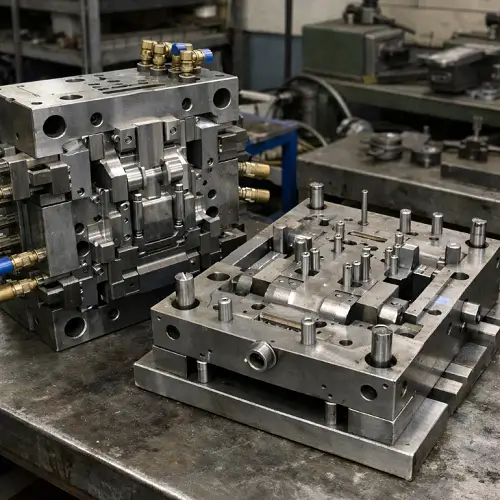
Why Mold Design Has Such a Strong Impact on Injection Molding Cost
Mold design has such a strong impact on injection molding cost because it determines how difficult the tool is to build and how efficiently the part can run after the tool is finished. A more demanding mold usually means more machining time, more fitting work, more debugging, and more risk during production.
The part itself is only one side of the cost. The mold has to open and close reliably, fill the cavity evenly, cool the part fast enough, and eject it without damage. When the design makes any of those steps harder, tooling cost goes up immediately. In many projects, the mold becomes expensive not because the part is large, but because the mold has to solve too many problems at once.
Complex mold design also affects cost after the tool is built. A mold with difficult shut-offs, unstable flow, weak cooling, or sensitive ejection may require more sampling, more adjustment, and more maintenance. That adds cost before production starts and can keep adding cost later through slower cycles, more scrap, and less stable output.
Mold design should never be treated as a background detail in injection molding quoting. It shapes the cost of steel, machining, assembly, tuning, and long-term production performance. When mold design gets more complicated, injection molding cost usually rises in two places at the same time: upfront tooling investment and ongoing part price.
Simple Mold Cost Guide
The table below gives a simple reference range for how mold design complexity can change tooling cost in real projects.
| Mold Type | Typical Starting Cost |
|---|---|
| Simple single-cavity prototype mold | $3,000–$5,000 |
| Standard production mold | $5,000–$15,000 |
| Multi-cavity or more complex production mold | $10,000+ |
| Mold with slides or lifters | usually several thousand dollars more than a simple mold |
| High-polish or tighter cosmetic mold | usually higher than a standard mold |
Actual mold pricing still depends on part size, geometry, cavity count, steel choice, and production volume.
How Part Geometry Increases Mold Cost
Part geometry increases mold cost because the mold has to reproduce every feature in steel and keep that geometry stable through repeated cycles. The more difficult the part is to mold, the more difficult the tool becomes to machine, fit, and run.
Undercuts are one of the most common cost drivers. A part that cannot release straight from the mold usually needs extra mechanisms such as slides or lifters. Those features add machining time, moving components, and more assembly work inside the tool. Even when the part itself looks small, the mold cost can rise quickly once side actions are involved.
Deep ribs and tall bosses can create similar problems. They may look harmless in CAD, but in the mold they can increase machining difficulty, cooling imbalance, and ejection risk. Thin shut-offs around these features also demand more precision during mold fitting. That extra effort shows up in both tooling price and mold development time.
Threads, sharp corners, and difficult parting lines push cost up for the same reason. The mold has to form those features cleanly and release the part without damaging it. Some geometries require more EDM work, more polishing, or tighter alignment between mold components. Those are real shop hours, not abstract design penalties.
Part size is not the only issue. A small part with awkward geometry can be more expensive to tool than a larger part with clean draft, simple shut-offs, and a straightforward parting line. Mold cost is often driven more by geometry complexity than by part volume alone.
In practical quoting, part geometry is usually the first place where mold design starts adding cost. Once the geometry forces side actions, difficult shut-offs, or extra precision work, the mold moves out of the simple category and the injection molding cost usually follows.
How Cavity Count Changes Tooling Cost and Unit Price
Cavity count changes injection molding cost in two different ways. It raises tooling cost at the beginning, but it can lower unit price later if production volume is high enough. That is why a single-cavity mold and a multi-cavity mold can produce the same part with very different cost structures.
A single-cavity mold is usually simpler and cheaper to build. It needs less steel, less machining, and less balancing work. For low-volume production or early projects, that often makes more sense because the upfront investment stays under control. The tradeoff is output. One cycle only produces one part, so machine time per finished part stays relatively high.
A multi-cavity mold changes that math. Four cavities can produce four parts in one cycle. Eight cavities can produce eight. That improves output and can reduce machine cost per part in repeat production. The problem is that the mold itself becomes more expensive. Mold size increases, runner design becomes more important, cooling has to stay balanced, and cavity-to-cavity consistency becomes harder to control.
In real quoting, this tradeoff can be significant. A single-cavity mold may keep tooling cost in a lower range for an early program, while a four-cavity version can push the initial investment much higher even though it lowers machine cost per part later. When production volume is strong enough, that extra mold cost can be justified. When demand is still uncertain, it often is not.
A higher-cavity mold is not automatically the better choice. If the order volume is still uncertain, the extra tooling cost may never be recovered. On the other hand, a low-cavity mold can look cheaper at first but become inefficient once the part moves into larger production demand.
Cavity count should match realistic volume, not optimistic volume. In real projects, the right cavity strategy depends on how many parts are actually expected, how stable the part design is, and how quickly the tooling investment needs to pay back. When cavity count is matched to real demand, mold design supports both tooling control and long-term part cost.
Why Slides, Lifters, and Other Moving Components Raise Mold Cost
Slides, lifters, and other moving mold components raise cost because they turn a simple tool into a mechanical system. Once the part can no longer release straight out of the mold, the tool needs extra motion, extra machining, and much tighter fitting work.
Slides are a common example. They are used when a side feature or undercut cannot be formed with a straight pull. A slide needs its own guided movement, wear surfaces, locking support, and reliable reset. That adds steel, machining time, assembly effort, and future maintenance. The mold does not just get more expensive to build. It also gets more sensitive to wear and alignment over time.
Lifters create similar cost pressure. They are often used to release internal undercuts or features that cannot be cleared with standard ejection. A lifter has to move in a controlled angle while still supporting the part during ejection. That sounds simple in theory, but in practice it adds fitting time, tuning work, and more risk during trial runs.
Other moving components can push cost even higher. Unscrewing mechanisms, collapsing cores, spring-loaded actions, and special ejection systems are not just design upgrades. They are cost multipliers. Each added mechanism means more precision parts inside the mold, more assembly steps in the toolroom, and more chances for production instability if the system is not tuned correctly.
Moving components are often necessary, but they are never free. When part geometry forces slides, lifters, or other side actions, injection molding cost usually rises in three places at once: tooling price, mold development time, and long-term maintenance burden.
How Cooling, Ejection, and Gate Design Affect Production Cost
Cooling, ejection, and gate design affect production cost because they control how fast the mold runs and how stable the part remains from cycle to cycle. A mold can look acceptable on paper and still become expensive in production if cooling is uneven, ejection is unstable, or the gate location creates filling problems.
Cooling design has the strongest effect on cycle time. If heat is removed slowly or unevenly, the part needs more time in the mold before it can be ejected safely. That increases machine time on every cycle. Over a long production run, even a few extra seconds can raise injection molding cost far more than many buyers expect.
Ejection design affects cost in a different way. A part that sticks, distorts, or ejects unevenly usually needs more tuning, more inspection, and sometimes more manual handling. Poor ejector layout can also leave marks on cosmetic surfaces or create stress in thin sections. What looks like a small design choice in the mold can turn into scrap, rework, or slower production later.
Gate design has the same kind of downstream effect. Gate location controls how material enters the cavity, how the part packs, and where cosmetic marks appear. A poor gate position can increase warpage, flow imbalance, weld lines, or filling pressure. That does not only affect part quality. It can also make the process harder to stabilize, which pushes up cost through slower cycles and more rejected parts.
These features are easy to underestimate because they are not always obvious in the quotation sheet. Cooling layout, ejection reliability, and gate design do not just affect mold design quality. They directly influence cycle time, scrap rate, and production consistency. When those three areas are handled well, the mold usually costs less to run over time even if the initial tool design requires more thought and more precision.
How Mold Design Affects Injection Molding Cost Per Part
Mold design affects injection molding cost per part because the tool controls far more than the upfront mold price. It also controls cycle time, scrap rate, part consistency, and how much manual correction is needed after molding. A mold that is expensive to build may still lower total production cost if it runs cleanly and efficiently. A cheaper mold can do the opposite.
Mold cost and part cost cannot be separated completely. Better cavity balance, stronger cooling, cleaner ejection, and a more stable gate layout usually help reduce variation from part to part. That means fewer rejected pieces, fewer machine adjustments, and less downtime during production. Over a long run, those gains show up directly in the unit price.
The reverse is also true. A mold with weak cooling, difficult shut-offs, unstable filling, or sensitive side actions may still produce the part, but it often does so with slower cycles and more troubleshooting. That pushes injection molding cost per part higher even if the original tooling quote looked attractive.
Cavity count is a good example of this tradeoff. A higher-cavity mold costs more at the beginning, but it can reduce machine cost per part if the part is running at real production volume. The same logic applies to cooling and ejection. More thoughtful mold design can increase tooling investment while lowering long-term production cost.
For buyers, this is one of the most important points in mold quoting. A low mold price does not always mean a lower total project cost. In many real programs, mold design is the reason one supplier offers a cheaper tool while another supplier offers a more stable long-term part price.
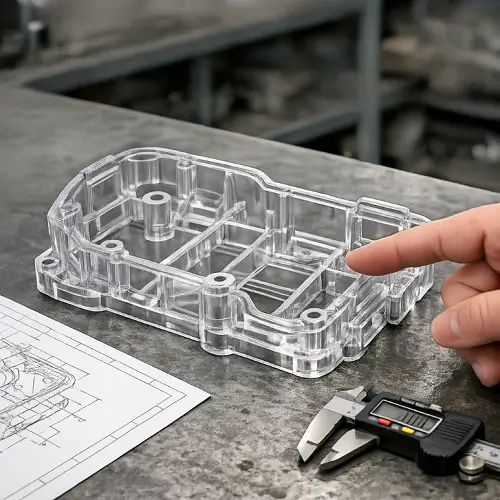
How to Reduce Injection Molding Cost Through Better Mold Design
Reducing injection molding cost through better mold design usually starts with simplifying what the tool has to do. The less motion, the fewer critical shut-offs, and the more stable the parting line, the easier the mold becomes to build and run.
Part geometry is the first place to look. Unnecessary undercuts, deep ribs, sharp internal corners, and difficult threads often force added mold complexity without improving part function. When those features are reduced early, tooling cost usually drops before steel is even cut.
Cavity count should also match real production demand. A multi-cavity mold can lower cost per part in repeat production, but it only works when volume is high enough to justify the added tooling cost. If demand is still uncertain, a simpler cavity strategy often makes more financial sense.
Cooling and ejection deserve the same attention. Better wall balance, more realistic draft, and cleaner release surfaces help the mold cycle faster and eject more consistently. That protects part price later by reducing scrap, rework, and unnecessary machine time.
Tolerance and cosmetic expectations should stay practical. Tight control and high-polish surfaces are sometimes necessary, but they should be applied where the part truly needs them. Over-specifying these requirements is one of the easiest ways to raise mold cost without adding real production value.
The best cost reduction usually comes from early DFM review. Once geometry, cavity strategy, gate location, and ejection logic are reviewed before tooling release, many avoidable cost drivers can be removed while changes are still inexpensive. In real projects, that is where better mold design saves the most money.
Conclusion
Mold design affects injection molding cost far more than many buyers expect. The mold is not only a tooling expense at the start of a project. It also determines how the part fills, cools, ejects, and repeats in production. Mold design can raise cost in two places at once: upfront tooling investment and long-term part price.
Part geometry, cavity count, side actions, cooling layout, ejection design, gate position, and tolerance requirements all shape how expensive the tool becomes to build and how stable the process remains after launch. A cheaper mold is not always the lower-cost solution. In many real production programs, better mold design leads to fewer problems, faster cycles, lower scrap, and a more competitive cost per part over time.
For purchasing and product teams, the main question is not whether mold design affects cost. The real question is which mold design choices are necessary for the part and which ones are adding complexity without adding value. Once that difference is clear, cost decisions become much easier and far more reliable.
Good mold design is not about making the tool as simple as possible. It is about making the tool as efficient as the part and production plan actually require. That is where tooling cost, part quality, and long-term manufacturing cost start to align.
Frequently Asked Questions
Why does complex mold design increase injection molding cost?
Complex mold design increases injection molding cost because it adds machining time, fitting work, mold components, and development effort. Features such as undercuts, side actions, difficult shut-offs, and tighter tolerance requirements make the tool harder to build and harder to stabilize in production.
Do slides and lifters make molds much more expensive?
Yes. Slides and lifters usually make molds more expensive because they add moving components, tighter fitting work, and more maintenance risk. They are often necessary, but they increase both tooling cost and mold development complexity.
Does cavity count reduce part cost?
It can. Higher cavity count usually increases tooling cost at the beginning, but it can reduce machine cost per part by producing more parts in each cycle. That only makes sense when production volume is high enough to recover the added tooling investment.
Can better mold design lower unit price?
Yes. Better mold design can lower unit price by improving cooling, stabilizing filling, reducing scrap, and making ejection more reliable. A mold that runs faster and more consistently usually produces parts at a lower long-term cost.